Key takeaways:
- President Trump faces congressional skepticism and public disapproval over the military campaign against Iran, with lawmakers demanding clearer justification and strategy, and concerns about deploying ground troops.
- The conflict has caused significant economic impacts, including stock market declines and sharp increases in oil and gasoline prices, while Trump downplays energy cost concerns and pauses attacks on Iran’s energy infrastructure temporarily.
- The administration is embroiled in election security controversies, proposing ICE monitoring at polling places amid debates on voter intimidation, while Trump’s own mail-in voting has drawn criticism, highlighting tensions ahead of the midterms.
President Donald Trump faces significant challenges in advancing the U.S. military campaign against Iran, as congressional support remains uncertain and public opinion grows increasingly skeptical. During a recent classified briefing with the House Armed Services Committee, bipartisan lawmakers expressed frustration over the administration’s lack of clarity regarding the war’s justification, strategy, and the potential deployment of ground troops. Representative Nancy Mace, a Republican from South Carolina, publicly stated she would not support sending U.S. forces on the ground in Iran, citing concerns raised during the briefing.
Congressional involvement remains crucial despite the president’s broad war-making powers. The Pentagon has requested an emergency spending package of $200 billion to fund the conflict, a figure surpassing individual appropriations for previous wars in Afghanistan and Iraq. However, securing this funding will be difficult amid widespread public disapproval. Recent polls indicate that approximately 58-59% of Americans disapprove of the military action in Iran, with many believing U.S. involvement has escalated too far. Members of Congress, particularly Republicans who largely support Trump, are hesitant to champion a war that lacks clear objectives and broad public backing, especially with midterm elections approaching and the party’s control of Congress at risk.
The economic impact of the conflict is also evident in recent market fluctuations. U.S. stock indices, including the S&P 500 and Nasdaq Composite, experienced significant declines, with the Nasdaq entering correction territory after falling more than 10% from its recent high. Meanwhile, oil prices surged, with U.S. crude rising above $95 per barrel and Brent crude exceeding $109 per barrel, marking increases of over 40% since the war began. Heating oil prices also spiked, contributing to a nationwide average gasoline price of nearly $4 per gallon. Despite these trends, President Trump downplayed the severity of rising energy costs and expressed cautious optimism about ongoing negotiations with Iran, announcing a temporary pause on attacks targeting Iran’s energy infrastructure until April 6.
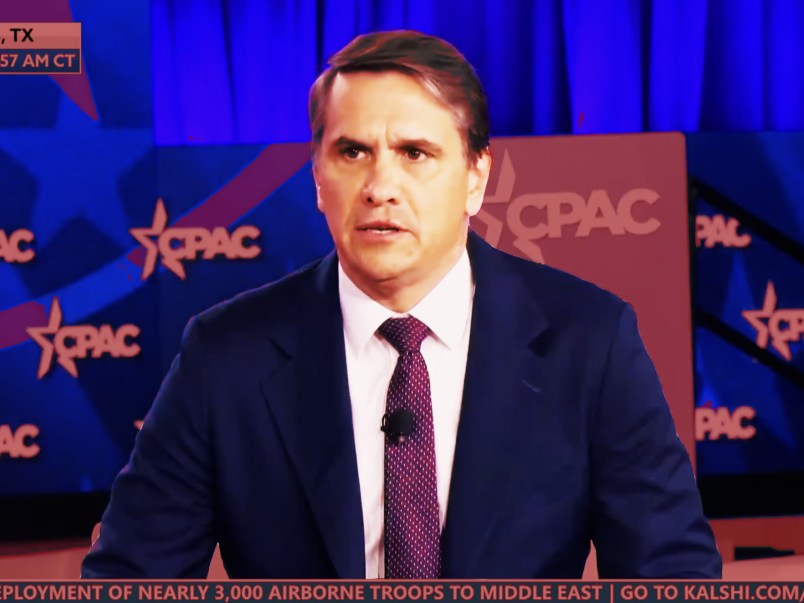
Separately, the Trump administration continues to grapple with controversies surrounding election security and voting practices. Officials have floated the idea of deploying Immigration and Customs Enforcement (ICE) officers to monitor polling places during the upcoming midterm elections, a proposal that has sparked debate and concern over potential voter intimidation. Deputy Attorney General Todd Blanche defended the concept at the Conservative Political Action Conference, arguing that illegal voting is a legitimate concern. Meanwhile, President Trump faced criticism for voting by mail in Florida despite publicly denouncing mail-in voting as fraudulent. These developments underscore ongoing tensions within the administration’s approach to election integrity and its broader political strategy ahead of the November elections.






Be First to Comment