Key takeaways:
- Jon Kyl died Thursday at 84 from complications of a neurological disease after announcing in December 2025 that he had dementia.
- Kyl served eight years in the U.S. House, 18 years in the Senate and a brief 2018 Senate term after John McCain’s death.
- Kyl authored a 2004 tribal water rights settlement for the Gila River Indian Community and later helped guide Brett Kavanaugh’s Supreme Court confirmation.
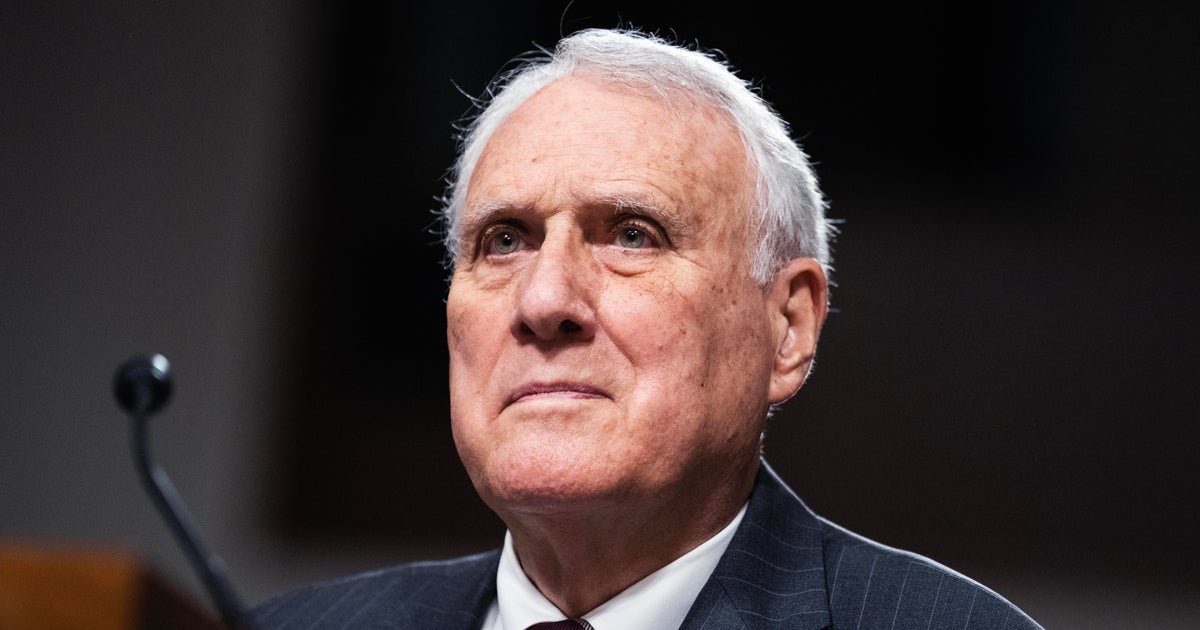
Jon Kyl, the former Republican senator from Arizona who rose to a top Senate leadership post, shaped major Western water policy and later helped guide Brett Kavanaugh’s confirmation to the U.S. Supreme Court, has died at 84.
Kyl died Thursday from complications of a neurological disease, his family said. He had announced in December 2025 that he had been diagnosed with dementia and had withdrawn from public life.
“We know that Jon belonged to all of Arizona, a state he loved and explored with vigor, curiosity and wonder,” his family said in a statement. “Serving his state and nation in Congress was a privilege and responsibility he honored and respected.”
Kyl spent nearly three decades in Congress across two stretches of service: eight years in the House, 18 years in the Senate and a brief return in 2018 to fill the seat left vacant by the death of Sen. John McCain. His political career began during Ronald Reagan’s presidency and ended during President Donald Trump’s first term, a period in which he watched the Republican Party change dramatically.
Born in Oakland, Nebraska, on April 25, 1942, Kyl grew up in a rural farming district in Iowa represented in the U.S. House by his father. At 18, he moved to Arizona to attend the University of Arizona, where he met his wife, Caryll, and earned a law degree.
Before entering Congress, Kyl worked as an attorney and played a key role in shaping Arizona’s 1980 groundwater code while representing a large water utility. The code created a regulatory framework for managing groundwater in the drought-stricken state, with much of its focus on population centers such as Phoenix and Tucson.
Kyl won election to the U.S. House in 1986 and began serving in 1987. He was elected to the Senate in 1994 and served three full terms, eventually becoming the Republican whip while his party was in the minority. Former Republican Arizona Gov. Doug Ducey, who considered Kyl a mentor, described him in a February 2025 interview with The Associated Press as a true statesman and a “workhorse” among Washington’s show horses.
“If you saw him on the plane, he was sitting in the aisle, in coach, and he was reading,” Ducey said. “And he was reading potential bills or Senate business.”
In the Senate, Kyl was closely associated with water policy. In 2004, he authored legislation providing one of the largest tribal water rights settlements, giving the Gila River Indian Community enough water each year to fill nearly 313,500 Olympic-sized swimming pools after a decades-long fight. Mitch McConnell, who later became Senate majority leader, said in a 2012 floor speech that Kyl’s work ethic was “legendary” and that he had labored mostly behind the scenes for 15 years on the settlement.
“It was one of the hardest things I’ve ever done, but I was in a position to be the catalyst,” Kyl told the Phoenix New Times in 2006. “There wasn’t anybody else who could do that water deal. And it had to be done.”
Arizona State University’s Kyl Center for Water Policy is named for him. Its director, Sarah Porter, said Kyl was generous with his time and took a practical approach to water issues. “He’s always sort of cared about the public good and been able to think about, ‘What will this mean for the generations to come?’” Porter said.
Kyl also helped hold Republicans together in opposition to Obamacare, strongly supported Israel and backed legislation authorizing hundreds of miles of fencing along the U.S.-Mexico border. He later joined Democrats in supporting a proposal that would have provided a path to citizenship and temporary guest-worker status for people in the country without authorization, though the bill failed.
After leaving the Senate in 2013, Kyl became a lobbyist and lawyer. He returned to public attention in 2018 as Kavanaugh’s “Sherpa,” the informal term for a Supreme Court nominee’s guide through the Senate confirmation process. Ducey then appointed him to McCain’s seat, and Kyl served for the final months of the year, voted to confirm Kavanaugh and resigned before Republican Martha McSally replaced him.
Trump praised the appointment at the time, saying he looked forward to working with “the extraordinary senator.”
Arizona Gov. Katie Hobbs, a Democrat, called Kyl “a dedicated statesman who always cared deeply for our state.” Senate Majority Leader John Thune said Kyl “loved his state of Arizona and was a true legislator’s legislator,” adding, “He was an incredibly hard worker and honorably returned to service when his state called. He was a dear friend and will be missed.”
In a statement disclosing his dementia diagnosis, Kyl recalled Reagan’s words when the former president revealed his Alzheimer’s diagnosis. Kyl said he shared Reagan’s confidence in Arizona and the nation’s future and, despite his diagnosis, was a “very fortunate man.”








Be First to Comment