Key takeaways:
- The House passed the Ratepayer Protection Act 417-3 under a fast-track procedure requiring two-thirds support.
- The bill would encourage state utility regulators to require large data centers and other high-power customers to pay for needed power generation, transmission and infrastructure upgrades.
- The International Energy Agency estimated U.S. data center electricity use could more than double from 2024 levels by the end of the decade.
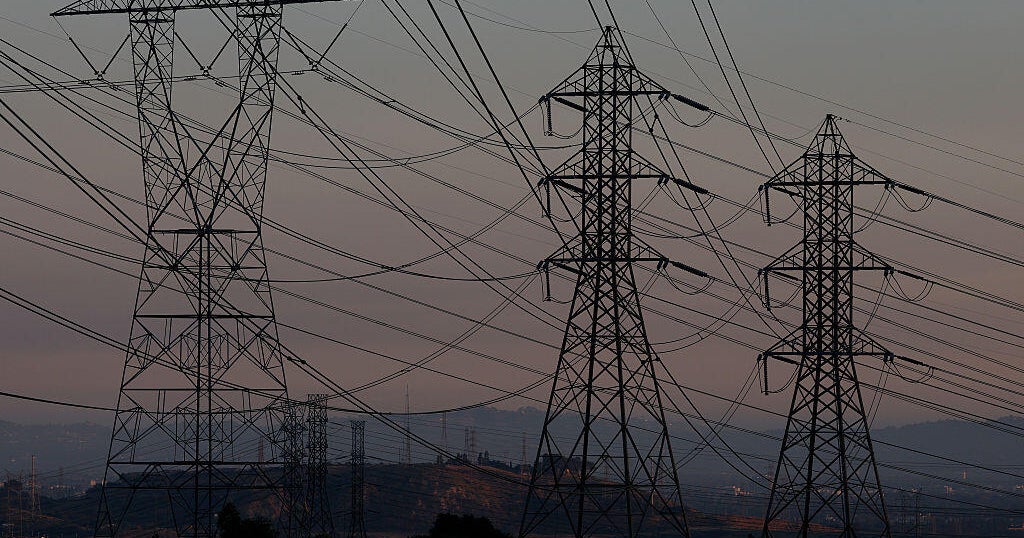
The House overwhelmingly passed bipartisan legislation Wednesday aimed at preventing households and businesses from paying for power grid upgrades needed by large data centers, a response to growing concern that the artificial intelligence boom could drive up electric bills.
The Ratepayer Protection Act passed 417-3 after Republican leaders brought it to the floor under a fast-track procedure requiring support from two-thirds of voting lawmakers. The bill now goes to the Senate, where its prospects are unclear. NBC News reported that the Senate has its own set of data center bills but has not advanced any of them.
The measure, introduced by Rep. Gabe Evans, R-Colo., and co-sponsored by Rep. Kathy Castor, D-Fla., would push state utility regulators to set standards requiring “large-load customers,” including large-scale data centers, to pay for the electricity generation, transmission lines and other infrastructure upgrades needed to serve them. Supporters say the goal is to place those costs on technology and data center companies rather than consumers.
“Hardworking families should not have to subsidize the energy demands of data centers,” Evans said after the vote. “America needs the infrastructure to lead the world in AI and outcompete Communist China, but we cannot have that growth at the expense of hardworking families, farmers, seniors, and small businesses.”
Data centers provide computing power and storage for artificial intelligence, and their rapid growth has become a political issue as communities push back against new projects. The International Energy Agency estimated last year that electricity use by U.S. data centers could more than double from 2024 levels by the end of the decade. Other estimates cited by CBS News have found the facilities could consume more than 10% of U.S. power demand by 2030.
President Donald Trump has strongly supported new data center construction, saying it is needed for U.S. AI companies to compete with China. CBS News reported that Trump has urged data center developers and technology firms to pledge to build or purchase their own power supply, and that the White House says hundreds of utility companies, dozens of data center operators and major AI companies have signed on.
The bill moved as lawmakers faced pressure from voters over data centers, energy prices and AI. Evans, a first-term Republican, is running in a competitive Colorado race that the Cook Political Report has rated a toss-up, according to NBC News. Several other Republicans in difficult reelection contests recently signed on as co-sponsors.
A recent NBC News Decision Desk poll powered by SurveyMonkey found that nearly 70% of respondents oppose the construction of AI data centers in their neighborhood, with 45% saying they were strongly opposed.
Democrats largely supported the bill but described it as limited. House Minority Leader Hakeem Jeffries, D-N.Y., called it “a step forward” but said “more clearly needs to be done.” Rep. Frank Pallone of New Jersey, the top Democrat on the House Energy and Commerce Committee, called the measure “imperfect” and said it “only addresses one small part of the puzzle.”
“Americans across the country are furious about the unchecked development of data centers and artificial intelligence,” Pallone said on the House floor. “Furious about what it means for their communities, for their jobs, or even for their lives. And I want to promise that this bill is not the end of our focus on these issues. It’s only the beginning.”
Rep. Veronica Escobar, D-Texas, told NBC News before the vote that she would support the bill but called it “the bare minimum.” She added, “My community does not want data centers, loudly and clearly, and I agree with my community.”
Republicans framed the legislation as a way to keep costs down while supporting domestic AI development. Rep. Brett Guthrie, R-Ky., chairman of the House Energy and Commerce Committee, said the bill “takes action on behalf of our constituents so we may keep costs low while ensuring the U.S. leads in the next-generation economy.”











Be First to Comment