Key takeaways:
- India is hosting the two-day BRICS summit in New Delhi on Sept. 12 and 13 with leaders including Vladimir Putin, Xi Jinping and Masoud Pezeshkian attending.
- BRICS has expanded to 11 members and represents roughly 49 percent of the world’s population and about 40 percent of global GDP, according to Al Jazeera.
- Leaders are expected to discuss trade in national currencies, cross-border payments, energy cooperation, supply chains and conflicts in Iran and Ukraine.
BRICS leaders gathered in New Delhi on Saturday for a summit shaped by war, sanctions and rising tension with the United States, as the expanded bloc seeks a larger role for emerging and developing economies.
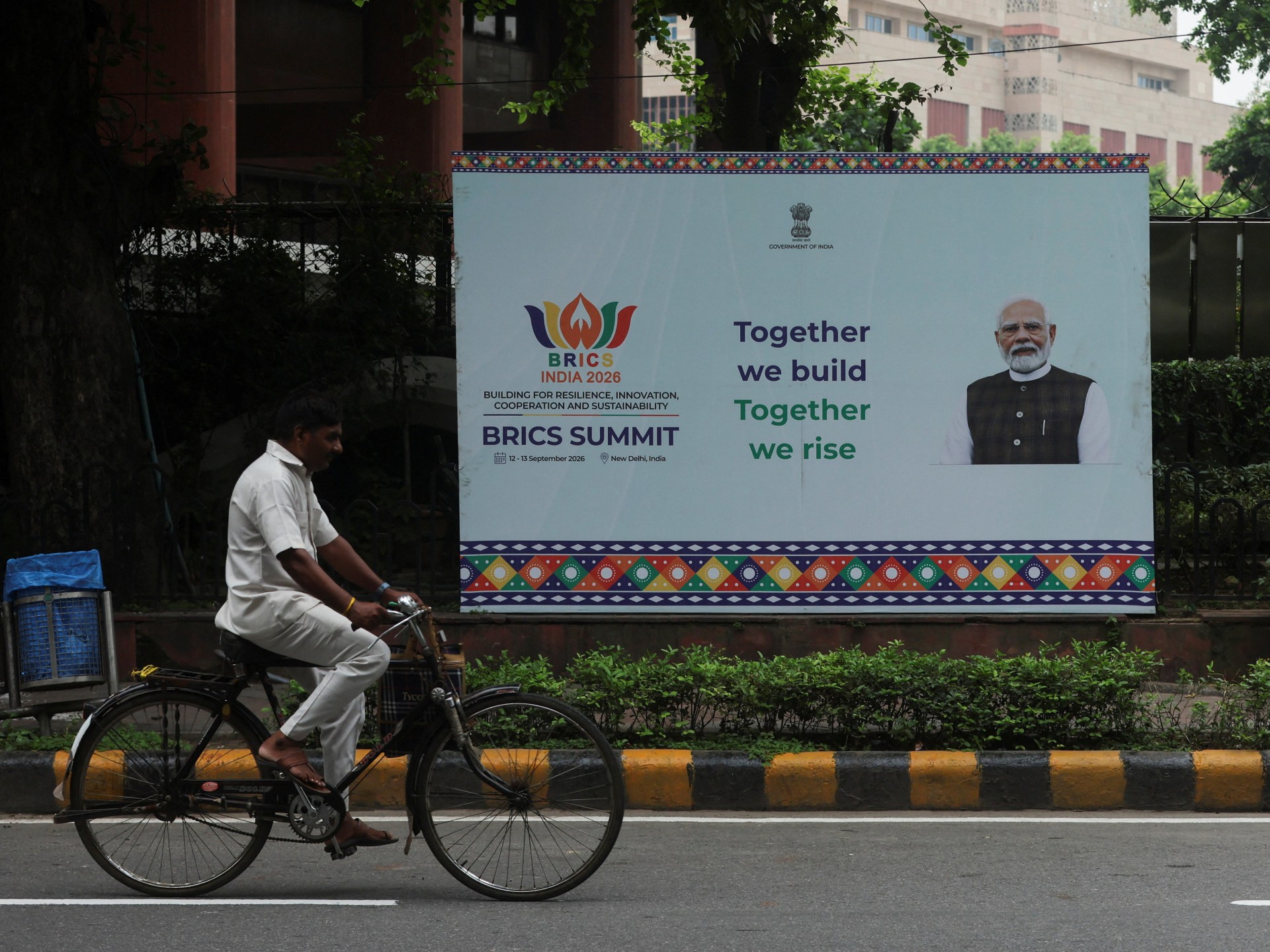
Indian Prime Minister Narendra Modi is hosting the two-day meeting on Sept. 12 and 13, with Russian President Vladimir Putin, Chinese President Xi Jinping, Iranian President Masoud Pezeshkian and leaders from other member states in attendance. The summit is expected to focus on trade, investment, energy, food security, technology, supply chains and reforms to global institutions.
Security was tight across the Indian capital. NPR reported that thousands of police and paramilitary personnel were deployed around the summit venue and other parts of New Delhi, with traffic restrictions and diversions in place. Al Jazeera reported that about 30,000 additional security personnel were deployed and streets near hotels housing dignitaries were closed to traffic.
BRICS was founded in 2006 by Brazil, Russia, India and China, with South Africa joining in 2010. The bloc has since expanded to 11 members, including Egypt, Ethiopia, Iran, Saudi Arabia, the United Arab Emirates and Indonesia. Al Jazeera reported that BRICS now accounts for roughly 49 percent of the world’s population and about 40 percent of global gross domestic product.
The summit’s theme under India’s presidency is “Building for Resilience, Innovation, Cooperation, and Sustainability,” according to New Delhi’s BRICS presidency documents cited by Al Jazeera. The bloc has increasingly called for greater representation for developing countries in global institutions and is widely viewed as a counterweight to Western-dominated economic alliances.
Reducing reliance on the U.S. dollar is expected to be a priority. Members are promoting greater use of national currencies in trade and payments and exploring alternatives to Western-dominated financial systems. Russia and Iran, both under heavy Western sanctions, have pushed for mechanisms that would help shield members from economic pressure.
Putin told a BRICS Business Forum in New Delhi on Friday that the grouping was not aimed at any country and that Moscow remained open to cooperation. “We are in favor of our interests,” he said.
Pezeshkian also backed expanding trade in national currencies. “One of the most important steps is to expand the use of national currencies in trade among the members,” he told reporters Friday.
Al Jazeera reported that the Kremlin said Russia would discuss trade settlements in digital currencies with BRICS partner countries during the summit. Alicia García-Herrero, chief economist for Asia Pacific at Natixis, told Al Jazeera that leaders would discuss cross-border payments amid sanctions on Russia and Iran, but added: “But they will not try to substitute the dollar.”
Wars in Ukraine and the Middle East are testing the bloc’s ability to agree on common positions. BRICS foreign ministers failed in May to agree on a joint statement over the Iran war, forcing India to issue a chair’s summary instead, NPR reported. Al Jazeera reported that the meeting failed to jointly condemn the war on Iran.
Pezeshkian is expected to discuss the conflict during his first visit to India as Iranian president. Al Jazeera, citing Alejandro Reyes of the University of Hong Kong, reported that the war is affecting trade routes, energy access and markets, complicating efforts to find common language. Al Jazeera also reported that Iran has targeted U.S. military assets and civilian infrastructure across the Gulf, including in the UAE, and that the UAE announced an indefinite trade embargo on Iran in August.
India is using the summit to balance longstanding ties with Russia and Iran while expanding relations with the U.S. and Europe. Modi met Putin and Pezeshkian separately on Friday. Modi and Xi are also expected to hold talks, a meeting that could build on a diplomatic thaw after India-China border tensions escalated in 2020.
The outcome may hinge on whether India can secure a joint statement from leaders despite divisions over Iran, Ukraine and relations with Washington.





Be First to Comment