Key takeaways:
- Iranian Deputy Foreign Minister Kazem Gharibabadi said the temporary Hormuz corridor would be seven miles wide and pass partly through Iranian territorial waters.
- Omani Foreign Minister Badr Albusaidi said he hoped the countries would soon announce the corridor and arrangements to restore safe navigation.
- Tehran says the strait will not reopen until the United States fulfils commitments including sanctions relief and the release of frozen Iranian assets.
Iran and Oman have agreed on a temporary shipping route through the Strait of Hormuz, but Tehran says the vital waterway will not reopen until the United States meets commitments under a June interim peace deal.
Kazem Gharibabadi, Iran’s deputy foreign minister for legal and international affairs, said Tuesday that the new corridor’s entry “would be through our territorial waters, and part of the exit route would also be through our territorial waters.” He said the agreed transit corridor would be seven miles, or 11.3 kilometers, wide.
“The agreed-upon transit route with Oman is a temporary route,” Gharibabadi said on Iranian state television.
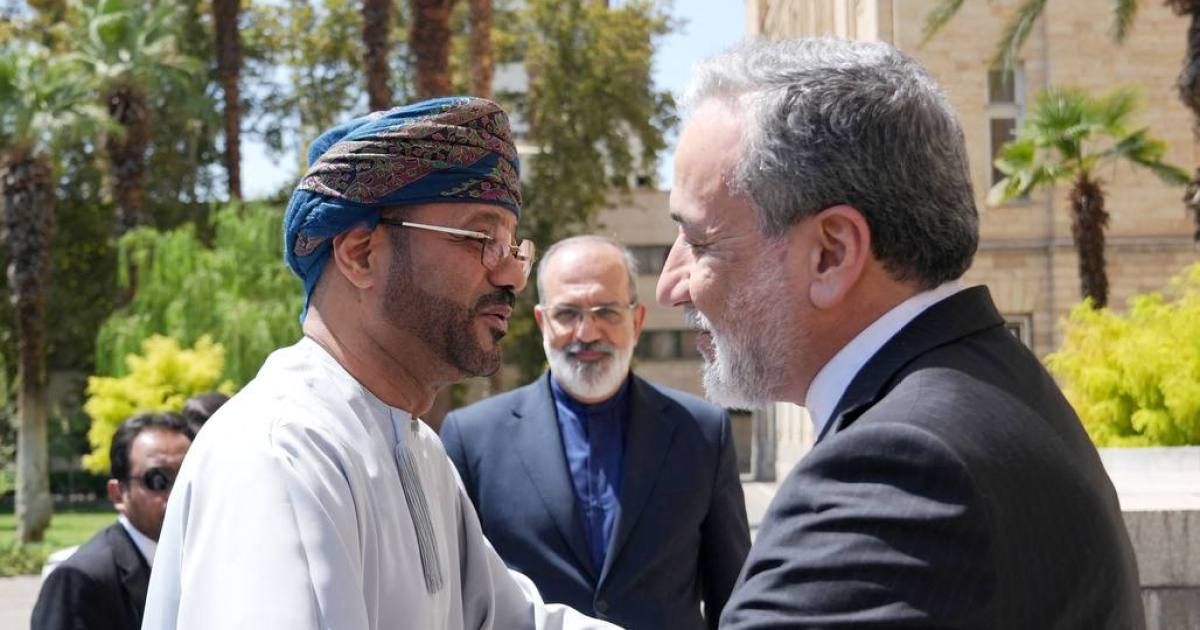
The comments followed talks in Tehran between Iranian Foreign Minister Abbas Araghchi and Omani Foreign Minister Badr Albusaidi, who discussed the temporary navigation corridor and a project to clear mines from the strait, according to a joint statement. Oman and Iran, both coastal states on the strait, have held regular meetings on how to manage the waterway under a memorandum of understanding signed in June.
Albusaidi wrote on X that he was “hopeful” the countries would “soon announce” the temporary corridor and practical steps to restore safe navigation. “Future management of the strait and a permanent solution will follow in due course,” he said.
Technical talks are expected to continue on a longer-term arrangement, including information sharing and navigational and security services.
The Strait of Hormuz handled one-fifth of global oil and liquefied natural gas shipments before the U.S.-Israel war on Tehran began in February, Al Jazeera reported. Most shipping through the strait has been shut down since then.
The waterway became a flashpoint after Tehran responded to the war by closing it. Iran later announced a new shipping route through its territorial waters, bypassing the internationally recognized Traffic Separation Scheme adopted by the International Maritime Organization in 1968, and said that route had been mined.
In June, after Iran and the United States signed a memorandum of understanding to end the war, Oman and the IMO announced a U.S.-backed transit corridor near the Omani coast. Iran said that southern route violated the agreement and launched attacks on ships using it, causing the interim deal to collapse, Al Jazeera reported.
Gharibabadi said Iran would not consider the strait open despite the agreement with Oman. CBS News reported that he warned Wednesday that “before any action is taken to reopen the Strait of Hormuz, the United States must fully implement all of the commitments it has violated.” He said those commitments include sanctions relief and the release of frozen Iranian assets.
The dispute has unfolded alongside new U.S. economic pressure. Treasury Secretary Scott Bessent on Monday described plans for the “economic asphyxiation” of Iran, saying the “objective is to sever every economic lifeline that sustains this tyrannical regime.” President Donald Trump last week announced what he called the “most crushing economic operation ever” against Iran and threatened sanctions against countries that do business with it.
Gharibabadi urged countries not to yield to U.S. pressure. “We are urging countries not to succumb to American pressure regarding the sanctions that Washington wants to impose on us,” he said, adding that Washington was “mistaken about its ability to enforce its sanctions against our neighbours.” He also said, “The new American sanctions are doomed to failure, and we have our own methods to counter them.”
China pushed back Tuesday against possible U.S. measures tied to trade with Iran. Foreign Ministry spokesperson Lin Jian said Beijing opposes “illegal unilateral sanctions” without U.N. Security Council authorization and said China’s cooperation with Iran has “always been conducted within the framework of international law and should not be disrupted or undermined,” according to China’s state-run Xinhua news agency.
Trump said Tuesday the United States would take a “Zero Tolerance” approach to Iranian ships placing mines in the strait, saying they would be “immediately and systematically destroyed.” He also claimed all mines had been removed or destroyed. Gharibabadi dismissed that claim as “only aimed at calming the markets” and warned that U.S. mine-detection vessels would become “very good targets” if they entered the area.
Shipping risks remain. The United Kingdom’s maritime trade watchdog said an oil tanker was disabled Tuesday by an unidentified projectile near Oman’s Ash Shishah, close to the strait’s entrance.
In Tehran, the latest U.S. sanctions announcement sparked long lines at gas stations Tuesday, CBS News reported. “Naturally, sanctions affect people’s lives,” realtor Mehdi Yazdian, 55, told AFP. English teacher Kia Farahani, 45, said, “I think that this war will be more economic and will cause people to feel a lot of pressure.”






Be First to Comment