Key takeaways:
- The U.S. military said it carried out a 13th consecutive night of strikes on Iran, targeting command centers, drone storage sites, communications networks and maritime capabilities.
- Trump said ship and cargo damages would be paid from Iranian money held and controlled by the United States, a move Iran’s foreign minister called an “incendiary precedent.”
- Reuters reported that only one tanker crossed the Strait of Hormuz on Thursday, the lowest level since May 7, while crude oil rose above $100 a barrel.
President Donald Trump said the United States will use frozen Iranian assets to pay for damage to ships and cargo as U.S. forces carried out strikes on Iran for a 13th consecutive night and tensions spread across key shipping lanes in the region.
The U.S. military said its latest strikes were intended to degrade Iran’s ability to threaten civilian shipping in regional waters. U.S. Central Command said it targeted “Iranian military command centers, drone storage facilities, communication networks, coastal surveillance sites and maritime capabilities.”
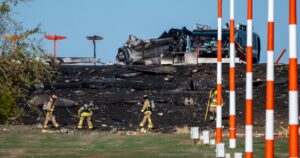
Iranian state media said four people were killed and five injured. It also reported explosions at key military and commercial sites in southern Iran, including the port city of Bandar Abbas and Qeshm Island.
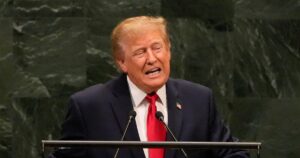
Trump, writing on Truth Social, said damage to “Ships, Cargo, or anything related thereto” would be paid for by “Iranian Money that the United States has in its possession, and controls.” He said the amount could be “very substantial” and called the move “the fair and equitable thing to do.”
Iranian Foreign Minister Abbas Araghchi condemned the threat, saying seizing another country’s assets to “pay for unrelated future claims is an incendiary precedent.” In a post on X, he added: “Those who celebrate or profit from such funds should remember: once governments normalize confiscation, no one’s assets are safe. Ensuing chaos will not be pretty or peaceful.”
The frozen assets had been part of discussions in a memorandum of understanding signed by Washington and Tehran in June, which was intended to halt military operations, reopen the Strait of Hormuz and create a pathway to end the war within 60 days. One provision said the United States would make “fully available for use the frozen or restricted funds and assets of the Islamic Republic of Iran.”
Three weeks after the agreement was signed, Trump declared the ceasefire “over” after Iranian attacks on ships in Hormuz and U.S. strikes in response. Al Jazeera reported that the United States and other governments have frozen Iranian assets for decades, with some estimates placing the total at about $100 billion. It said Washington first froze Iranian funds in 1979 after U.S. citizens were taken hostage at the U.S. embassy in Tehran.
The latest escalation followed claims by Yemen’s Iran-backed Houthis that they had attacked two Saudi tankers in the Red Sea. Trump had earlier promised “major military punishment” against Iran and the Houthis.
Shipping concerns have intensified in both the Red Sea and the Strait of Hormuz, a crucial maritime route. Reuters reported, citing ship-tracking data, that only one tanker passed through the Strait of Hormuz on Thursday, the lowest level since May 7. The disruption helped push crude oil prices back above $100 a barrel, the highest level since May.
Al Jazeera reported that the Iranian army announced a new wave of drone attacks on U.S. military installations in Bahrain and Jordan in a statement carried by Iran’s Mehr News Agency. Bahrain’s Interior Ministry said air sirens had sounded, while Iranian state media also said alarms had been activated in Jordan.
Washington said its campaign is aimed at restoring control and protecting civilian shipping. Tehran has framed Trump’s asset threat as a dangerous escalation in a conflict that has already shaken regional security and global energy markets.






Be First to Comment