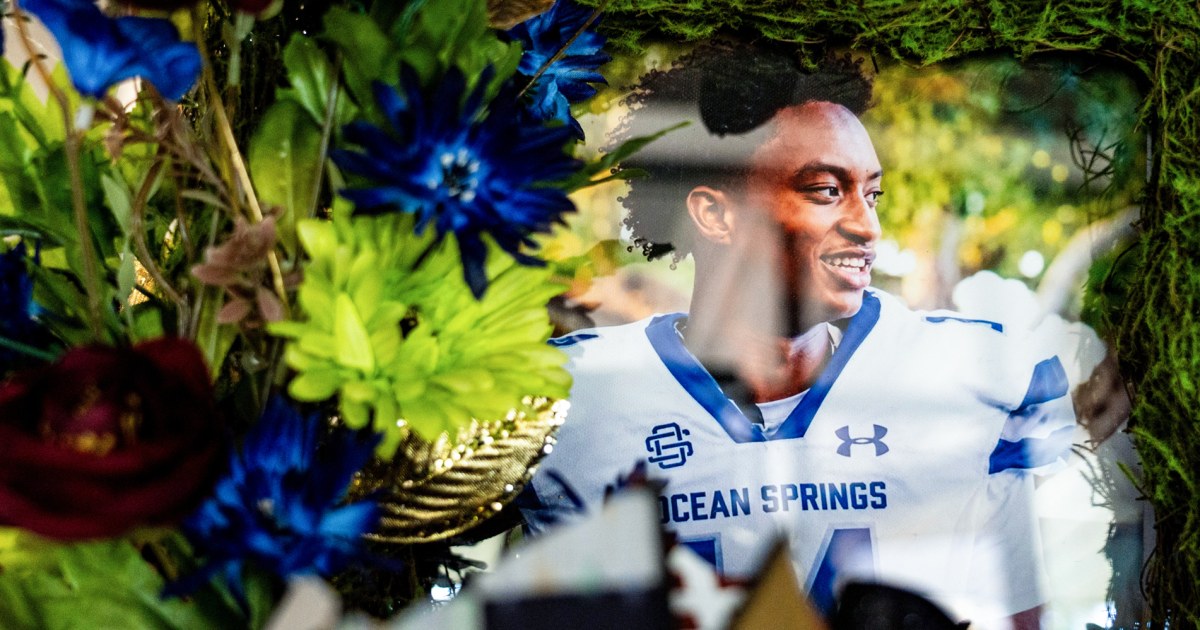
Key takeaways:
- The grand jury returned a “no true bill,” finding insufficient evidence to charge anyone in Nolan Wells’ death.
- District Attorney Angel Myers McIlrath said there was “absolutely no evidence” Wells’ disappearance and death were racially motivated.
- The grand jury report said the circumstances were consistent with drowning, but medical examiners for the state and family found the cause and manner of death undetermined.
A Mississippi grand jury declined to indict anyone in the death of Nolan Wells, an 18-year-old who disappeared during a Fourth of July outing on Horn Island, rejecting allegations that criminal conduct or racial motivation played a role, Jackson County District Attorney Angel Myers McIlrath said Monday.
The grand jury returned a “no true bill,” meaning it found insufficient evidence to charge anyone with a crime. McIlrath announced the decision in a video message and released a partially redacted grand jury report on her office’s Facebook page.
“There is absolutely no evidence to support the allegations that Nolan’s disappearance and death were racially motivated,” McIlrath said. “Nolan’s friends loved Nolan, and Nolan loved them. Nolan chose to stay on the island that day, and there is not a scintilla of evidence to contradict that.”
Wells had gone to Horn Island, a barrier island off Mississippi accessible only by boat, with friends to celebrate July Fourth. He was last seen on the island that afternoon. His body was found July 6 near the northwestern tip of the island, according to his family’s attorney, civil rights lawyer Ben Crump. CBS News reported that the island is about 10 miles south of the Mississippi mainland.
Friends told authorities their boat began taking on water and they left early, while Wells chose to remain on the island and return later with others. The grand jury report said it was common for visitors to Horn Island to “socialize on boats and in the water” and “not unusual or suspicious” for people to return on different boats. CBS News reported that friends said Wells stayed behind to speak with a girl.
The report said the grand jury found “no credible evidence to support the public allegations that any persons who rode to or from Horn Island on July 4, 2026, on the Triton, the Palm Beach, or the Tideline engaged in any criminal conduct related to the death of Mr. Wells.” It added that allegations against occupants of those boats were “not based in truth, and are solely the result of public clamor and private malice.”
“In addition to bringing prosecutions against the guilty, the grand jury must also exonerate those who have been falsely accused,” McIlrath said.
The grand jury issued 132 subpoenas, heard from 43 witnesses and invited seven people to testify, according to the report. It was made up of 23 Jackson County residents between 27 and 68 years old: 13 men and 10 women, including 12 Caucasians, five African Americans, one Asian, two Hispanics, two Native Americans and one person who preferred “other.”
The report said there was no evidence Wells had been in a physical altercation or argument that day. It concluded that the “position of, condition of, time of discovery, and location of Mr. Wells’ body is consistent with drowning.”
But the cause and manner of death have not been definitively determined. An independent autopsy commissioned by the family’s legal team found the cause and manner of death were “undetermined.” The grand jury report said both the state’s chief medical examiner and a forensic pathologist retained by Wells’ family found the cause and manner undetermined and described drowning as a diagnosis of exclusion, while neither ruled out accidental drowning.
Crump and Wells’ family have questioned whether he drowned, saying he was athletic and a strong swimmer. Wells’ parents, Christine and Elmore Wonsley, previously told “CBS Mornings” they did not believe their son would have stayed behind by choice.
“No, he wouldn’t. Nolan always stays with the group,” Elmore Wonsley said.
Crump said Monday the decision should not end scrutiny of the case. “No True Bill Does Not Resolve How Nolan Wells Died,” he wrote on Instagram. In a separate statement reported by CBS News, he said, “We don’t know how Nolan died, and neither does the State of Mississippi. Mississippi must keep investigating, and if it will not pursue this to the end, the Department of Justice should.”










Be First to Comment