Key takeaways:
- An amfAR survey of 166 organizations in 46 countries found more than 1,700 HIV clinics and service sites closed after PEPFAR funding delays or cancellations.
- More than 16,000 full-time staff lost their jobs, and services for people at highest risk of HIV were among the most likely to end.
- UNAIDS warned permanent cuts could lead to 6.6 million more HIV infections and 4.2 million more AIDS deaths by 2029.
U.S. funding cuts to the President’s Emergency Plan for AIDS Relief have forced clinics to close, staff to lose jobs and HIV services to shrink across dozens of countries, according to a new report from the HIV charity amfAR.
The report, based on a survey of 166 organizations in 46 countries that had been due to receive PEPFAR funding in 2025, found that no part of the U.S.-backed anti-HIV program avoided disruption. More than 1,700 clinics, drop-in centers and other service sites closed, and more than 16,000 full-time staff lost their jobs after grants were delayed or terminated, the researchers said.
“Disruption was incredibly widespread,” said Elise Lankiewicz, an amfAR policy associate and co-lead author of the report. “No part of the programme really escaped unscathed – and that includes areas of the programme that this administration intended to protect.”
PEPFAR, launched in 2003 under President George W. Bush, is credited with saving more than 26 million lives worldwide. The program works through partner organizations that provide HIV testing, prevention tools such as condoms and medicines, and treatment for people living with the virus.
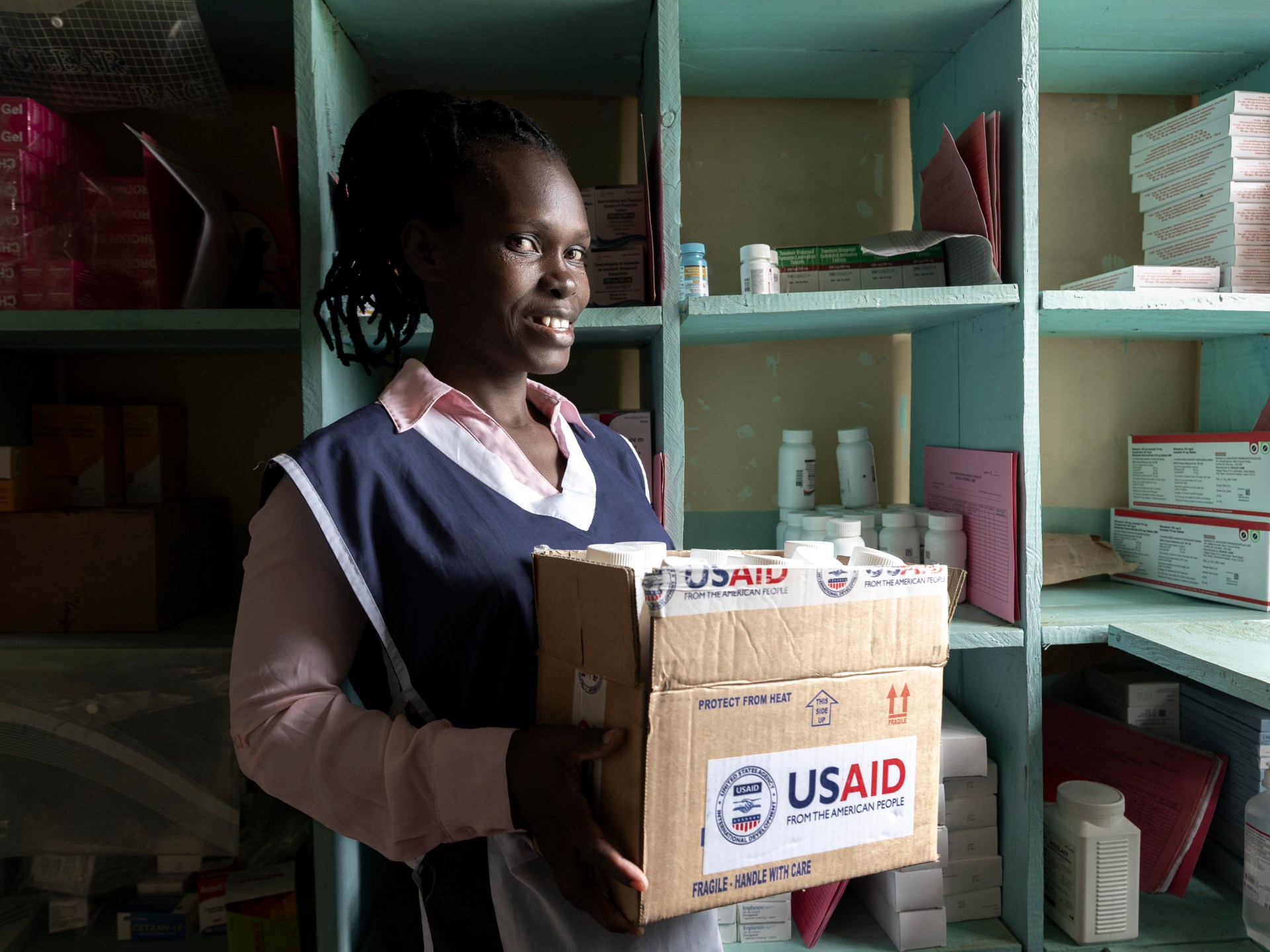
Many PEPFAR grants were abruptly withdrawn by the Trump administration in 2025, The Guardian reported. More than half had been managed through USAID, the agency dissolved by Trump in July 2025. A waiver issued in February 2025 was intended to allow programs providing life-saving treatment or preventing mother-to-child HIV transmission to continue.
“The reality is it’s incredibly hard to cut one award without there being ripple effects throughout the system,” Lankiewicz said.
The report found prevention services were especially affected. Almost two-thirds of organizations providing services to prevent mother-to-child HIV transmission reported disruption, and one-fifth ended those services entirely. One-fifth of organizations providing HIV care and treatment stopped at least one service. Many organizations said they could not obtain laboratory supplies, condoms or drugs.
Children also lost access to treatment, according to Al Jazeera, which reported that PEPFAR-supported treatment reached about 77,000 fewer children in 2025, a 14 percent decline.
Services for people at highest risk of HIV, including sex workers, transgender people, gay men and people who inject drugs, were among the most likely to end. Al Jazeera reported that about three-quarters of surveyed organizations stopped serving those groups.
Nearly four in five respondents said they had been asked to restrict their work to comply with additional U.S. policies, usually anti-diversity, equity and inclusion executive orders, as well as an expanded “global gag rule,” Lankiewicz said. She said some organizations made “pretty dramatic shifts to their programming,” including ending services tailored to sex workers and support for victims of gender-based violence.
Five surveyed organizations had closed, three directly because of the loss of PEPFAR funding. Researchers said that was likely an undercount because closed organizations may no longer have active email accounts to receive the survey.
The U.S. Department of State has disputed the findings, according to The Associated Press, cited by Al Jazeera. The department said PEPFAR has grown “stronger” under clearer “strategic direction” and pointed to one quarter of 2025 data showing treatment held steady. Researchers said that snapshot masks a larger decline visible only when a full year of data is combined.
Greg Millett, a member of the study team, said the report provides “some of the first real-world data” on recent PEPFAR disruptions. “These disruptions threaten to reverse progress toward controlling the HIV epidemic,” he told a briefing ahead of the 26th International AIDS Conference in Rio de Janeiro.
UNAIDS has warned that if the cuts become permanent, the world could see 6.6 million more HIV infections and 4.2 million more AIDS deaths by 2029. Its executive director, Winnie Byanyima, told AFP that UNAIDS lost about 25 percent of its funding last year and said Africa, the region with the world’s highest HIV burden, must adapt quickly.
“There is a need for Africa to quickly adapt its systems for health in order to keep its people alive and to work towards health sovereignty,” Byanyima said, calling it “a moment of radical change” with no time to lose.








Be First to Comment