Key takeaways:
- At least 1,430 people have been confirmed dead after Wednesday’s 7.2 and 7.5 magnitude earthquakes in Venezuela.
- More than 51,000 people have been reported missing, while more than 3,300 were injured as of midday Friday.
- Venezuelan officials said hundreds of aftershocks have followed the main quakes, and a magnitude 4.8 quake struck near Aragua state Saturday.
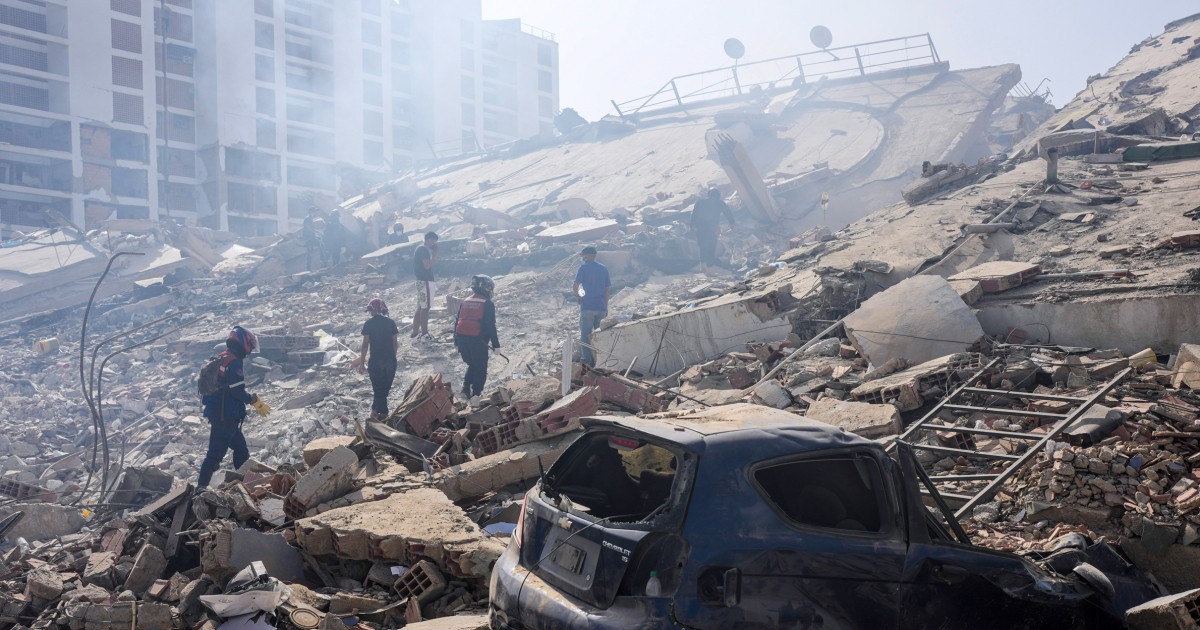
Rescuers in Venezuela raced against time Saturday to find survivors beneath collapsed homes and apartment buildings after twin earthquakes killed at least 1,430 people and left more than 51,000 reported missing.
The search entered its third day as another earthquake, a magnitude 4.8, struck near the country’s northern Aragua state at 3:20 p.m. local time, according to the European-Mediterranean Seismological Centre. The quake was centered about 70 kilometers, or 43 miles, west of Caracas. No damage from the latest quake was immediately reported.
Wednesday’s 7.2 and 7.5 magnitude earthquakes caused the heaviest destruction in La Guaira state, while some neighborhoods in Caracas were also badly hit. In La Guaira, one of the worst-affected areas, international rescue teams, residents searching for relatives and neighbors dug through piles of concrete with shovels, heavy equipment, ropes and their bare hands.
Aid agencies say the first 48 to 72 hours after an earthquake are crucial for pulling people out alive, though survival is possible for longer if those trapped have access to food and water. Authorities have also said the chances of finding survivors diminish sharply after 72 hours.
Jorge Rodríguez, the president of Venezuela’s National Assembly, said Saturday on state television that the country had recorded 432 seismic events so far: the two major quakes and 430 aftershocks. Al Jazeera reported that residents have complained of poor organization in the government’s recovery effort, a situation made worse by mobile and internet outages in some areas.
Acting President Delcy Rodríguez said more than 14,000 military and police personnel were patrolling the disaster zone, where access has been blocked and special permits are required to enter. She said the government was mounting a full response during these “critical hours for rescuing people alive.” Government forces distributed food and water to survivors in La Guaira.
Jorge Rodríguez said more than 2,000 rescue units from 21 international organizations were on the ground or on their way. Al Jazeera reported that Venezuela’s government said 1,600 members of foreign rescue teams had arrived in the country.
A senior U.S. official, speaking anonymously to brief reporters, said one runway at the heavily damaged Simón Bolívar International Airport, which serves Caracas, was operating Saturday. The official said the United States had deployed 80-person search-and-rescue teams from Los Angeles and Fairfax County, Virginia, with dogs and equipment, and that teams from Miami were also en route. The official said the U.S. had pushed out $150 million toward disaster relief and was working on another nine-figure package. Starlink has agreed to provide free emergency satellite internet during recovery efforts.
The number of injured stood at more than 3,300 as of midday Friday, and authorities said 243 people had been rescued. Jorge Rodríguez said Saturday that more than 3,000 families had been affected and more than 7,500 people were in hospitals. The International Organization for Migration said up to 6.76 million people could be affected, including about 2 million in Caracas.
Many survivors remained outside, afraid to return to damaged buildings. “People are still terrified to reenter what were their homes,” said Loyce Pace, the International Red Cross’ regional director for the Americas.
In Maiquetia, residents lined up outside stores and pharmacies that served customers one by one behind closed doors. In Catia La Mar, some people carried away basic goods from stores, including toilet paper and food. A pharmacy parking lot became a makeshift shelter with tarps, hammocks and tents.
Nearby, Yuleidy Cadenas, 28, waited across from a collapsed public housing building where her son, mother and brother were missing. She said she had fled barefoot from another building as it collapsed Wednesday, then found her mother’s 12-story apartment tower pancaked.
“I got on top of the rubble and told them to yell back, and nobody did, not my brother, nor my son or my mother,” Cadenas said.





Be First to Comment