Key takeaways:
- Newsom proposed a federal minimum tax on billionaires and people worth at least $100 million, along with changes to inheritance and corporate tax rules.
- He said he will vote against California’s one-time 5% tax on residents with more than $1.1 billion in assets, arguing the issue belongs at the federal level.
- Newsom’s AI equity fund would seek to give Americans a stake in the AI economy and fund benefits for workers displaced by the technology.
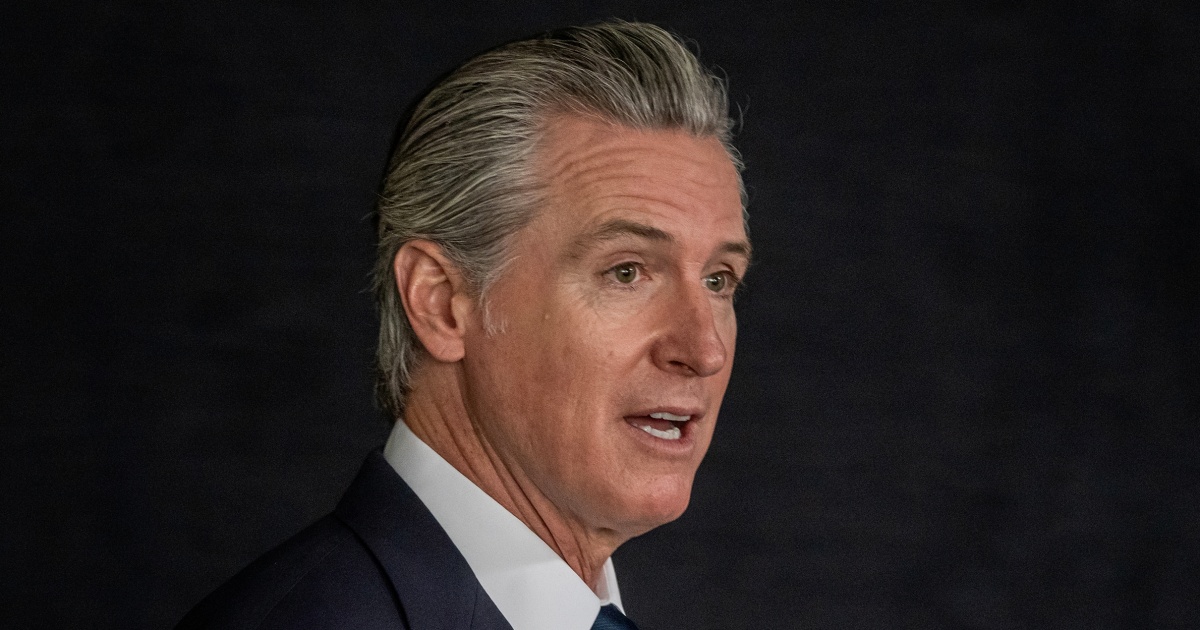
California Gov. Gavin Newsom proposed a national minimum tax on billionaires and a federal fund to give Americans a stake in wealth created by artificial intelligence, even as he said he will oppose a billionaire tax headed to the ballot in his own state.
Newsom laid out the plan Friday in a Substack essay and video, calling for a “true minimum tax on billionaires — a modern Buffett rule — that ensures the people at the very top pay at least the tax rate their own workers pay.” The proposal would apply to billionaires and people with a net worth of at least $100 million, NBC News reported.
“Today, the office worker can shoulder a higher tax rate than the heiress,” Newsom wrote. “The construction worker could pay a higher rate than the developer. And the delivery driver can end up paying a higher rate than the founder of the company whose packages he delivers.”
Newsom, a Democrat who is term-limited and set to leave office in January 2027, is widely viewed as a potential candidate for the 2028 Democratic presidential nomination. His proposal enters a party debate over wealth inequality, artificial intelligence and economic insecurity.
“When 10% of the people in this country own two-thirds of the wealth, when we have minted the first trillionaire in human history, and yet your wages have stagnated, and your healthcare costs have skyrocketed, something is fundamentally broken,” Newsom wrote. “Over the decades, the American economy has been engineered for the very top, a story as old as time: Money buys influence, and influence rewrites the rules. Those rewritten rules funnel even more wealth to the few. Under this weight, democracy itself starts to buckle.”
The proposal came one day after a union-backed California billionaire tax measure qualified for the November ballot. Newsom opposes that state initiative, arguing that taxing the ultrawealthy should be handled by the federal government because billionaires can relocate to avoid taxes imposed by a single state.
The California measure would impose a one-time 5% tax on the assets of Californians with a net worth above $1.1 billion, NBC News reported. It would direct 90% of new revenue to health care, with the remaining 10% split between education and food assistance programs.
Newsom said he objects to that spending structure, saying it leaves out other priorities. “It ignores our public schools,” he wrote, and said the measure also overlooks women’s health clinics, housing and child care. He argued that budget decisions should be made by the Legislature, not by a single stakeholder, “no matter how worthy the cause.”
Other California Democrats are split. Xavier Becerra, the former U.S. health secretary and a leading candidate to succeed Newsom as governor, also opposes the state measure. Rep. Ro Khanna, another potential 2028 presidential candidate, and billionaire activist Tom Steyer have backed it, according to NBC News.
Newsom’s federal tax proposal would target what he called the “tax-free lifestyle loan,” in which wealthy people borrow against stock holdings, report little or no taxable income and pass appreciated assets to heirs untaxed. He also called for rewriting inheritance rules ahead of what he described as a $124 trillion generational wealth transfer over the next two decades, warning it could lock in “a permanent American aristocracy of inherited wealth.”
He proposed restoring corporate tax rates that existed before the 2017 Trump tax cuts and closing offshore loopholes that allow multinational companies to shift profits on paper.
His AI plan would create a national public equity fund that takes a major stake in the artificial intelligence economy. Newsom said the money would help workers displaced by AI through severance, portable benefits and enhanced unemployment insurance, and would support universal child care, tuition-free higher education, career training, health care and industrial policy for what he called the “AI century.”
“We need to ensure every American owns a stake in the future being built by AI through a national public equity fund that takes a major stake in the new economy,” Newsom wrote. “As artificial intelligence reshapes the country, every American should own a piece of the future it builds.”









Be First to Comment