Key takeaways:
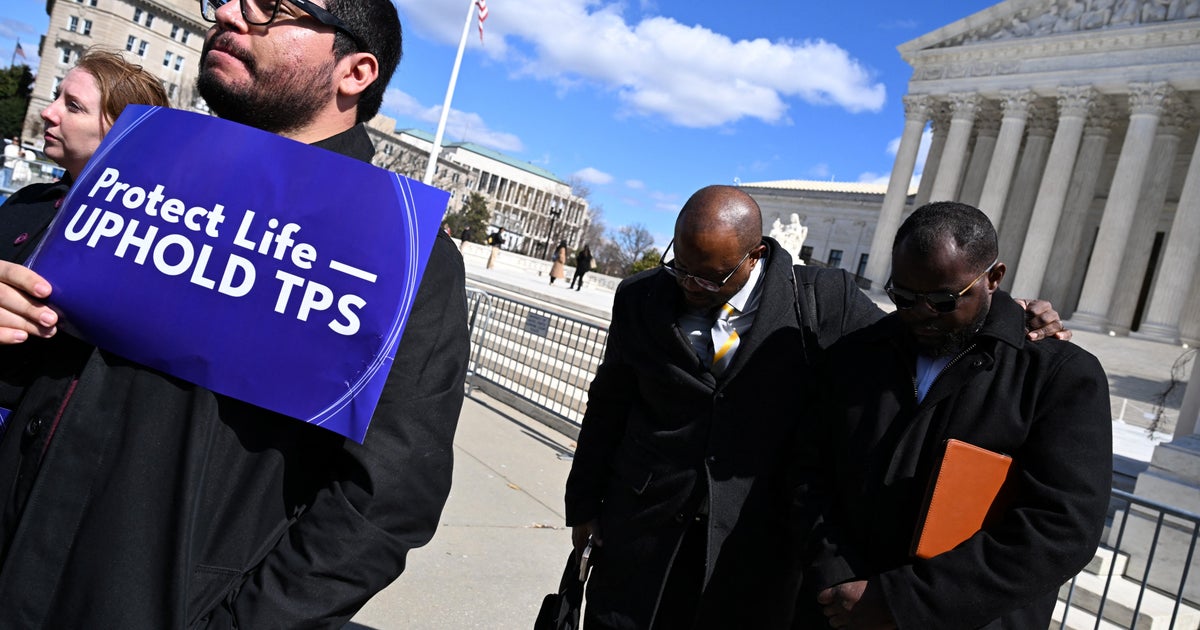
- The Supreme Court ruled 6-3 that courts largely cannot review the Trump administration’s termination of TPS for Haitians and Syrians.
- The ruling affects about 350,000 Haitians and 6,000 Syrians, though NPR reported lower figures of 330,000 Haitians and roughly 3,800 Syrians.
- The State Department currently advises Americans not to travel to Haiti or Syria, saying Haiti faces armed crime and that no part of Syria is safe from violence.
The Supreme Court cleared the way Thursday for the Trump administration to end temporary legal protections for hundreds of thousands of Haitians and thousands of Syrians living in the United States, exposing them to possible deportation after years of being allowed to live and work legally in the country.
The justices ruled 6-3 along ideological lines for the administration in two cases involving Temporary Protected Status, or TPS, for immigrants from Haiti and Syria. Lower courts had blocked the Department of Homeland Security from terminating the protections, but the Supreme Court reversed those orders.
Writing for the majority, Justice Samuel Alito said the TPS law limits courts’ ability to review the administration’s decisions. “The TPS statute plainly bars consideration of respondents’ non-constitutional claims,” the court said, according to CBS News. The conservative majority also rejected the Haitian plaintiffs’ equal protection claim, finding they were unlikely to succeed in arguing that the decision was discriminatory.
The rulings affect about 350,000 Haitians and 6,000 Syrians, according to NBC News and The Guardian. NPR reported slightly different figures, saying the cases involved 330,000 Haitians and roughly 3,800 Syrians. CBS News put the combined total at more than 356,000 people.
TPS was created by Congress in 1990 to protect people already in the United States from deportation when war, natural disasters or other extraordinary conditions make return unsafe. The designation allows recipients to remain in the country and apply for work authorization in increments of up to 18 months, subject to renewal. It does not provide a path to citizenship.
Haiti first received TPS in 2010 after a devastating earthquake, and the designation was extended repeatedly amid economic, health and political crises, including after the assassination of its president in 2021. Syria was first designated in 2012 after former President Bashar al-Assad’s crackdown on anti-government protests and during the civil war that followed.
Then-Homeland Security Secretary Kristi Noem concluded that neither Haiti nor Syria still met the criteria for protected status and moved to rescind the designations. The administration argued that the secretary’s TPS determinations are not reviewable by courts and said claims of racial animus were false.
Lawyers for Haitian TPS holders said Noem’s decision was not based on a serious assessment of conditions in Haiti. A Washington-based federal judge ruled in February that Noem had failed to follow proper procedures and found evidence the decision was based on “anti-black and anti-Haitian animus,” citing, among other things, Noem’s December post on X saying of immigrants generally, “WE DON’T WANT THEM. NOT ONE,” and President Donald Trump’s 2018 description of Haiti as a “shithole country.” Lawyers also pointed to Trump’s baseless 2024 campaign claim that Haitian immigrants in Springfield, Ohio, were eating residents’ pets.
Syrian plaintiffs argued that conditions in the region remained unsafe and questioned the administration’s emergency request to the court, noting that some Syrians with TPS have lived in the United States for more than a decade.
The State Department currently advises Americans not to travel to either country. Its Haiti advisory says, “Haiti has been under a State of Emergency since March 2024. Crimes involving firearms are common in Haiti. They include robbery, carjackings, sexual assault, and kidnappings for ransom.” For Syria, the department says that “no part of Syria is safe from violence.”
Without TPS, affected immigrants may be placed in normal deportation proceedings, though they can seek other forms of relief, including asylum.
The decision follows earlier Supreme Court actions allowing the Trump administration to end TPS for more than 600,000 Venezuelans while litigation continued. The administration has also moved to rescind protections for people from 13 of 17 TPS-designated countries, according to CBS News and NPR. As of March 2025, about 1.3 million people from 17 countries had TPS, according to the National Immigration Forum, cited by NBC News.
Immigrant rights advocates criticized the ruling. Todd Schulte of FWD.us said in a statement quoted by NPR, “Revoking TPS protection is not just cruel; it is economic self-sabotage that will rip billions out of the U.S. economy and destabilize communities nationwide.” FWD.us said 200,000 Haitian TPS holders are in the U.S. workforce, including 15,000 agricultural workers, 13,000 nursing assistants and 8,000 caregivers, and that TPS holders generate an estimated $5.9 billion for the U.S. economy each year while paying $1.5 billion in federal and state taxes annually.




Be First to Comment