Key takeaways:
- Brent crude fell to $78.24 a barrel by Wednesday, its lowest level since March 3, after sharp declines earlier in the week.
- Trump said the Strait of Hormuz would reopen after a Friday signing, but details on timing, safe passage and conditions remain unclear.
- Shipping disruptions persist, with 38 Japanese-linked vessels reported stranded and more than 500 vessels estimated to be waiting to exit the Gulf.
Oil prices fell to their lowest levels since early March and global stock markets rallied as investors bet that a preliminary US-Iran agreement could reopen the Strait of Hormuz and ease a months-long disruption to Gulf energy exports.
Brent crude dropped about 4% on Monday to roughly $83 a barrel, The Guardian reported, extending a sharp retreat from $93 on Thursday and $87.50 on Friday. By Wednesday, Brent futures for August delivery had slipped nearly 1% more to $78.24 a barrel as of 08:00 GMT, Al Jazeera reported, after declines of about 5% on each of the previous two days.
The fall marks a rapid reversal for crude, which had risen more than 50% during the conflict. By Wednesday afternoon in Asia, Al Jazeera reported, oil was only about 7% above its level before the US and Israel launched attacks on Iran on February 28.
Markets moved after US President Donald Trump said Sunday that a deal was “now complete,” despite recent Israeli airstrikes on Beirut that had threatened to undermine negotiations. Trump wrote on social media: “I hereby fully authorize the toll free opening of the Strait of Hormuz, and, simultaneously herewith, authorize the immediate removal of the United States Naval blockade. Ships of the World, start your engines. Let the oil flow!”
An hour later, he clarified that the strait would open after the peace deal was signed on Friday and “for purposes of mine removal, oil will flow on both ends again for the Region, and the World!”
Many details remain uncertain, including the exact timing of any reopening, who would oversee safe passage and whether conditions would apply. Iranian authorities have said there would be a 60-day negotiating period for a final agreement addressing broader issues, including Tehran’s nuclear programme and sanctions relief. Al Jazeera reported that Iran is expected to end its near-total closure of the strait in exchange for the US lifting its blockade of Iranian ports, among other concessions.
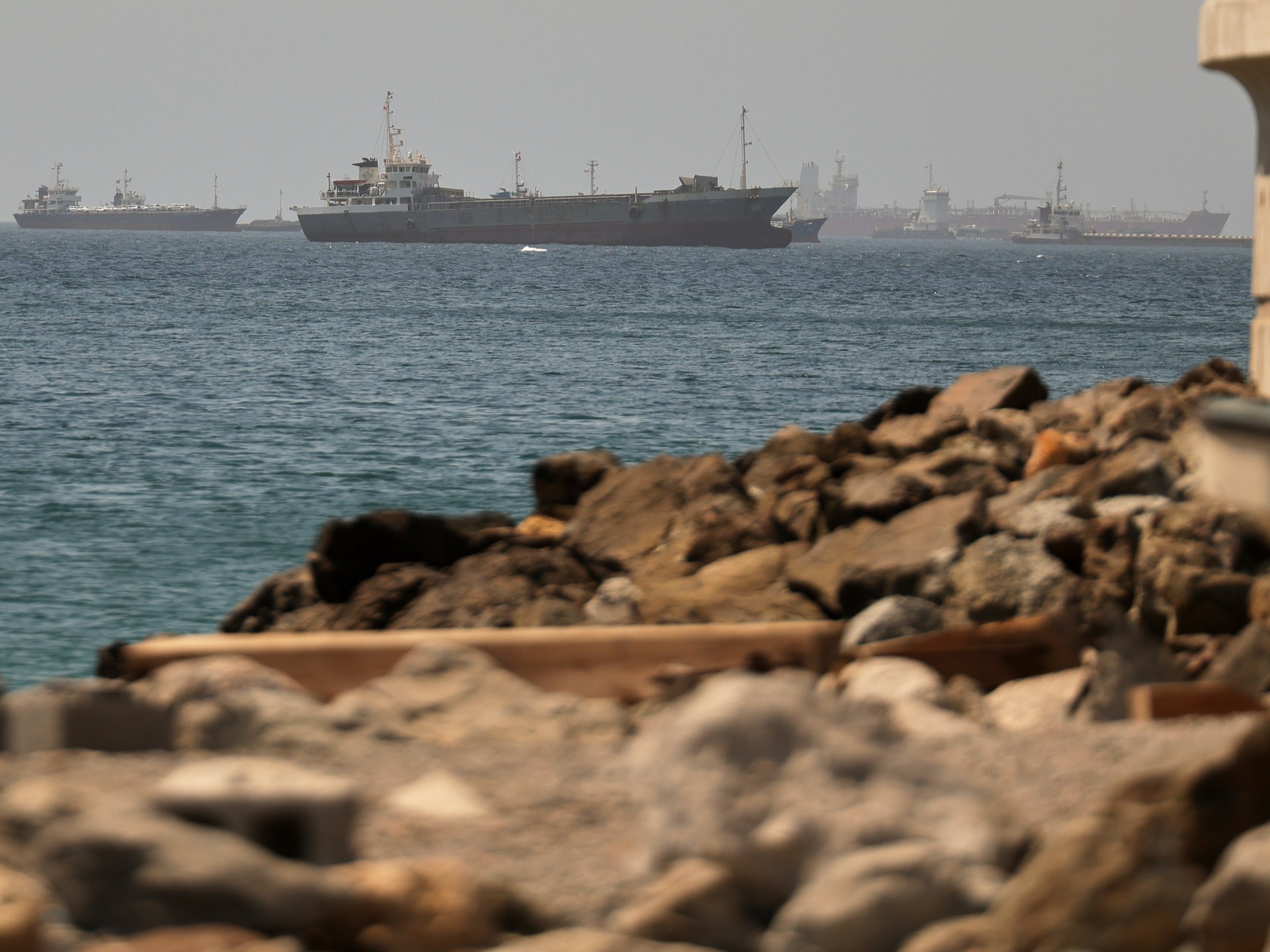
The Strait of Hormuz, between Iran and Oman, has seen traffic reduced sharply because of threats from missiles, drones and mines. The Guardian reported that Gulf oil exports through the route halted in early March, removing about 20 million barrels a day from the market, or one-fifth of global supply. Al Jazeera put the estimated reduction in global oil supply at 14 million barrels a day.
The disruption has not ended. The Japanese Shipowners’ Association said Monday that 38 Japanese-linked vessels remained stranded in the channel, while Al Jazeera reported that more than 500 vessels are estimated to be waiting to exit the Gulf through the strait. A Japanese Shipowners’ Association spokesperson said the group wanted to “wait a little longer for more concrete information” about the agreement.
Stephen Cotton, general secretary of the International Transport Workers’ Federation, said the signing ceremony scheduled for Geneva, Switzerland, would be “at best the beginning” of normalisation. “The backlog of stranded vessels and the need for crew changes and rest mean a realistic return to normal shipping patterns is weeks, if not months, away,” Cotton said.
Stocks rose as energy prices fell. On Wall Street, the Dow closed up about 1% at a record high Monday, while the Russell 2000 index of small US companies also hit a new high, rising about 0.8%. In Asia, Japan’s Nikkei and South Korea’s Kospi jumped 5%, while China’s CSI 300 rose 1.9%. In Europe, the FTSE 100 opened up 0.8% before easing to broadly flat, while France’s Cac 40 and Germany’s Dax rose just over 1%. Shares in oil companies including BP and Shell fell sharply.
“The immediate prognosis, it seems, is optimistic and assumes no significant setbacks,” Tamas Varga, an analyst at PVM Oil Associates in London, said in commentary cited by Al Jazeera. Vandana Hari, founder of Vanda Insights, told Al Jazeera that “crude’s slide is entirely sentiment-driven” and warned that markets may not be fully accounting for logistics problems or renewed geopolitical tensions.
Tony Sycamore, an analyst at IG, said countries would likely use any reopening to rebuild depleted stockpiles and strategic reserves. He said the talks remained complex, especially on nuclear issues, making it “hard to see crude falling much further from here in the near term.”







Be First to Comment