
Joran van der Sloot, the prime suspect in the 2005 disappearance of Alabama teenager Natalee Holloway, pleaded not guilty to extortion and fraud charges in a Birmingham courtroom on Friday. He is accused of attempting to extort money from Holloway's mother and faces up to 20 years in prison if convicted. Van der Sloot is currently serving a 28-year prison sentence in Peru after confessing to killing a Peruvian woman in 2010. A trial date has not yet been set.
Posts tagged as “Peru”

Joran van der Sloot, the prime suspect in the 2005 disappearance of American Natalee Holloway, has been transferred to the United States to face charges of extortion and wire fraud. He was taken from a Peruvian prison to the U.S. where he will face charges related to promises he allegedly made to Holloway's family. The U.S. Department of Justice has not yet released details of the charges, and it is unclear what information he may have provided about Holloway's disappearance.

Joran van der Sloot, the main suspect in the unsolved 2005 disappearance of American student Natalee Holloway, will not be extradited to the United States as planned on Thursday due to a court action filed by his lawyer, Máximo Altez. Altez has called the extradition an “abuse of authority” that violates his client’s rights, and van der Sloot has reversed course following a meeting with Dutch diplomats. The court action has yet to be heard, and it is unclear when a decision will be made.

Peruvian authorities have issued an order allowing Joran van der Sloot, the prime suspect in the disappearance of Natalee Holloway, to be temporarily extradited to the United States to face charges of extortion. Van der Sloot is currently serving a 28-year sentence in Peru for unrelated charges, and his attorney has said he plans to fight the extradition order. Natalee's mother, Beth Holloway, expressed her gratitude to U.S. and Peruvian authorities and hopes that van der Sloot will "answer for his crimes" in the U.S. The extradition has brought the mystery surrounding Natalee Holloway's disappearance back into the spotlight, but it is unclear when the extradition will take place.

Joran van der Sloot, the suspect in the 2005 disappearance of Natalee Holloway, will be temporarily extradited to the U.S. to face charges of extortion and wire fraud related to Holloway's mother. Van der Sloot is currently serving a 28-year sentence in Peru for the 2010 killing of a college student, and it is unclear how long he will remain in the U.S. or if he will be returned to Peru to serve out the remainder of his sentence.
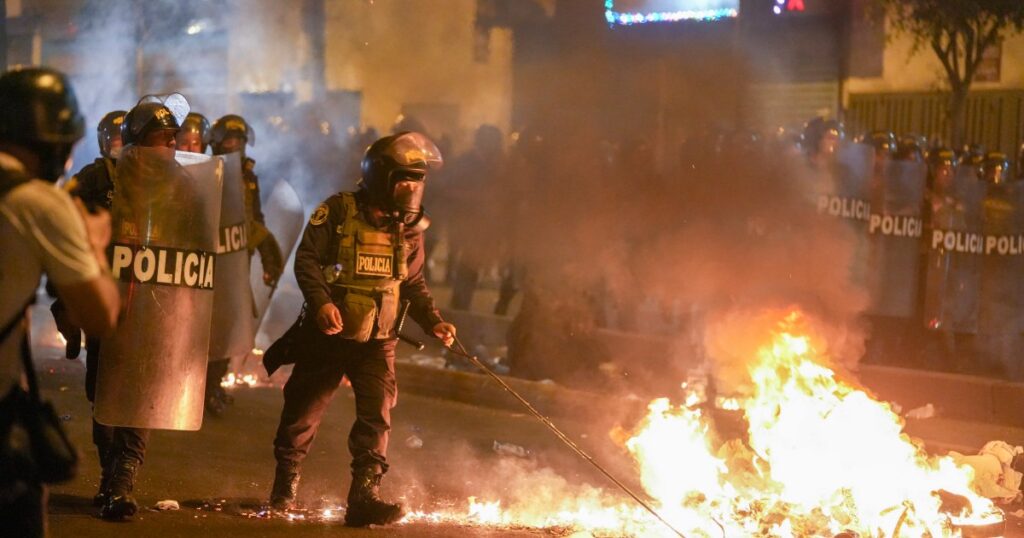
Peru's ancient Inca citadel of Machu Picchu has been closed indefinitely due to security concerns amid ongoing anti-government protests, which have resulted in 46 deaths and 58 injuries nationwide. The protests are calling for the resignation of President Dina Boluarte, and the government has responded by declaring a state of emergency and deploying the military to the streets. The closure of Machu Picchu is likely to have a significant impact on the country's economy.

Thousands of protesters have taken to the streets of Lima, Peru, to demand the ouster of President Dina Boluarte and the return of former President Pedro Castillo, who was removed last month. The protests have resulted in the worst political violence in Peru in more than two decades, with police responding with tear gas and smoke to subdue the crowd. The situation remains tense as the protesters continue to call for Boluarte’s ouster and the return of Castillo to power.