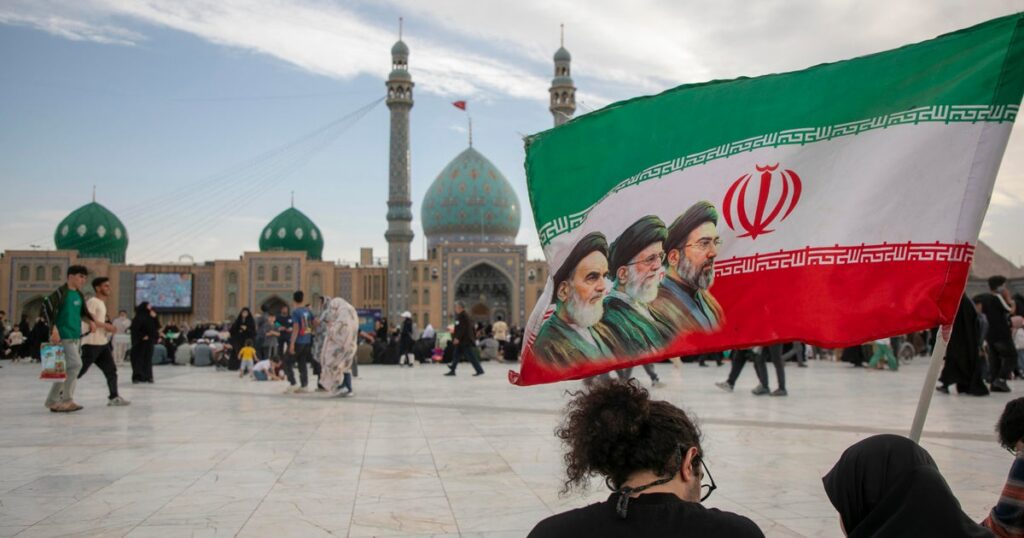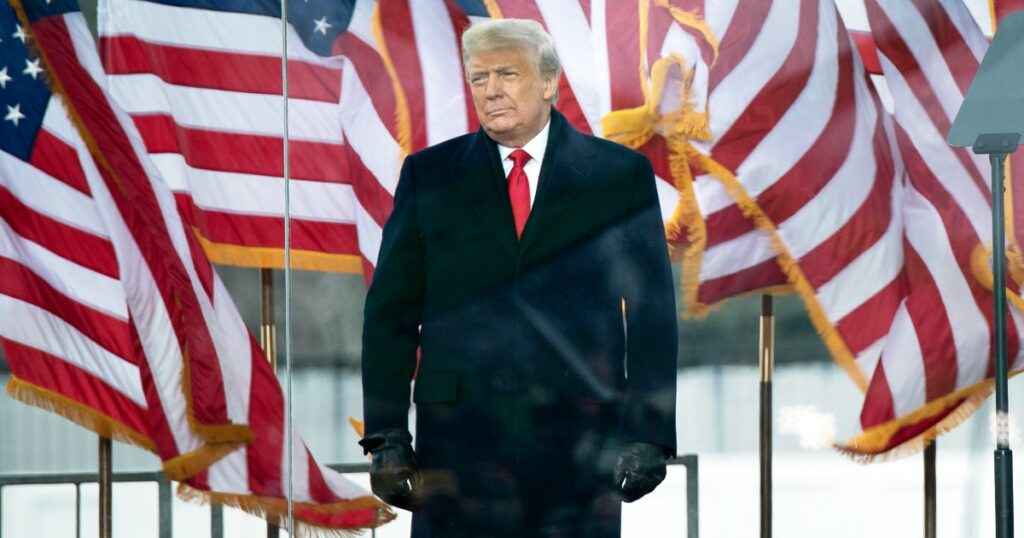
President Donald Trump indicated that U.S. military operations against Iran could end within two to three weeks, leading to a decline in oil prices and gains in global stock markets amid hopes for de-escalation. Trump also threatened to withdraw the U.S. from NATO over European allies’ lack of support for the Iran campaign, raising concerns among members and potentially benefiting Russia. Meanwhile, Pakistan has offered to mediate peace talks between the U.S. and Iran, backed by regional powers, but its efforts are complicated by ongoing conflict with Afghanistan that threatens regional stability.
Posts tagged as “4th U.S. Circuit Court of Appeal”
The Supreme Court will hear arguments on a Trump-era executive order aiming to restrict birthright citizenship by limiting it to children born to U.S. citizens or lawful permanent residents, challenging the traditional interpretation of the 14th Amendment’s Citizenship Clause. The administration argues that the clause’s phrase “subject to the jurisdiction thereof” excludes children of temporary visitors or undocumented immigrants, citing historical cases, while opponents maintain that longstanding legal precedent and the amendment’s language guarantee citizenship to nearly all born on U.S. soil. The Court’s decision could have significant implications for constitutional law and immigration policy, with former President Trump expected to attend the proceedings.
A federal judge has ordered the University of Pennsylvania to comply with an EEOC subpoena seeking information about Jewish employees as part of an investigation into alleged antisemitic discrimination on campus, while exempting certain Jewish-affiliated organizations from disclosure. The EEOC's probe follows multiple antisemitic incidents at the university and examines its response to related protests, with the judge acknowledging the subpoena's flaws but upholding its narrow purpose. The university plans to appeal the decision, citing concerns over employee privacy and constitutional rights amid ongoing efforts to address antisemitism.
NASA is preparing to launch Artemis II, the first crewed lunar mission in over 50 years, sending four astronauts on a nine-day journey orbiting the moon as a critical step toward establishing a sustainable human presence on the lunar surface and future Mars missions. The crew, led by commander Reid Wiseman and including the first Canadian to travel beyond low-Earth orbit, will fly aboard the Space Launch System rocket and Orion spacecraft, both developed over nearly two decades at a combined cost exceeding $44 billion. Despite challenges such as high costs and technical issues, Artemis II aims to advance long-term lunar exploration, maintain U.S. leadership in space, and inspire a new era of human spaceflight.
A federal judge in Massachusetts has ordered the Trump administration to reinstate the temporary parole status of hundreds of thousands of migrants who entered the U.S. lawfully through the Biden-era CBP One app, ruling that the administration’s termination of their status violated federal procedures and exceeded DHS authority. The Trump administration had revoked parole en masse in 2025 without personalized notice, citing border security concerns, but the judge found this action unlawful and sided with immigration advocacy groups representing affected migrants. While the Department of Homeland Security opposes the ruling and plans to appeal, the decision restores legal protections for many migrants, though the full impact remains uncertain.
A federal judge has issued a temporary injunction halting the Trump administration’s $400 million White House ballroom construction, ruling that the project likely exceeded legal authority and lacked proper congressional approval. The National Trust for Historic Preservation challenged the project, citing improper adherence to federal guidelines and questionable funding through private donations funneled via a nonprofit and the National Park Service. Judge Richard Leon criticized the administration’s legal and financial justifications, emphasizing that only Congress can authorize such alterations and funding, and ordered construction to stop unless statutory approval is granted.