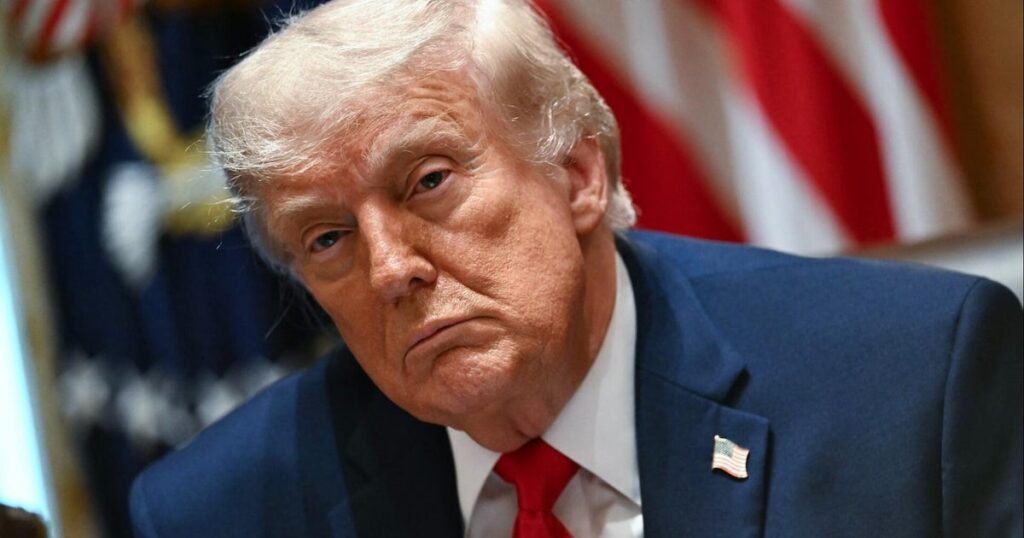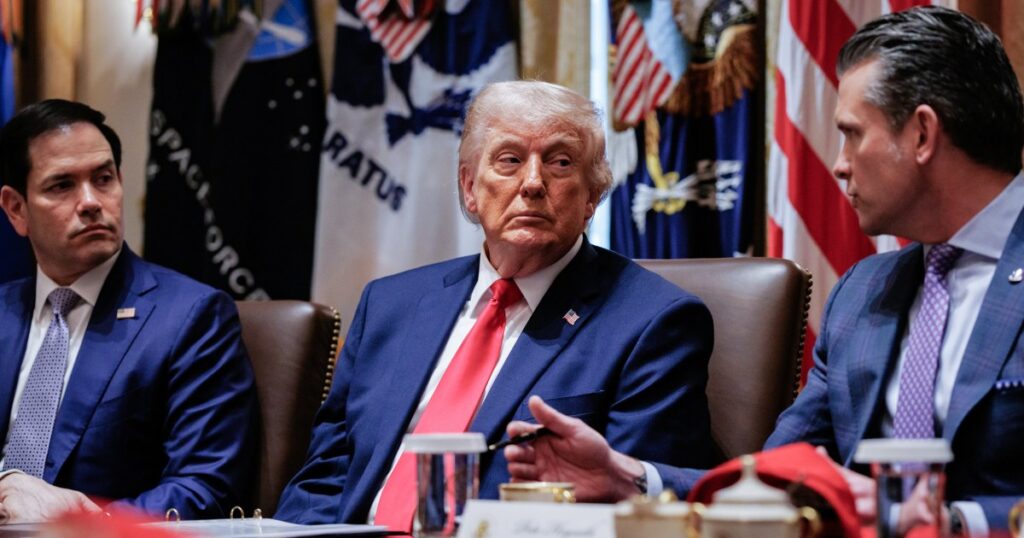
Amid ongoing tensions with Iran, President Trump has continued to play golf, describing it as a way to relax while asserting that the U.S. has significantly weakened Iran’s military and that the conflict is nearing resolution. Meanwhile, the partial shutdown of the Department of Homeland Security has caused operational disruptions and financial strain for TSA workers, with political divisions in Congress preventing a unified funding solution. Concurrently, the Department of Justice is intensifying election-related investigations, sparking debate over election integrity, while multiple legal and political controversies, including immigration enforcement and Supreme Court cases, contribute to a complex national environment.
Posts tagged as “4th U.S. Circuit Court of Appeal”

Gasoline and diesel prices in the U.S. have surged to levels not seen since mid-2022, driven by escalating conflict involving Iran and disruptions to oil supply through the Strait of Hormuz. The war has caused crude oil prices to rise sharply, with diesel reaching $5.45 per gallon and gasoline surpassing $4.00, leading to significant economic impacts such as reduced consumer spending and increased household fuel expenses. Globally, energy-dependent countries face inflation and economic slowdowns as the conflict continues to disrupt oil markets.
Rising tensions between the United States, Israel, and Iran have led to attacks on critical infrastructure, including a water desalination plant on Qeshm Island and an Iranian drone strike on a Kuwaiti oil tanker, causing regional instability and driving up global energy prices. Israeli Prime Minister Netanyahu claimed significant military progress against Iran and proposed alternative energy routes to bypass Iranian-controlled waterways, while the U.S. considers further military options to secure the Strait of Hormuz. Despite ongoing behind-the-scenes diplomatic efforts, direct negotiations remain stalled as both sides maintain firm demands, prolonging the conflict and uncertainty in the region.
Florida Governor Ron DeSantis has signed a bill to rename Palm Beach International Airport as President Donald J. Trump International Airport, effective July 1, with Palm Beach County granted perpetual rights to use the new name at no cost. The FAA confirmed that airport name changes are local decisions and will update administrative materials accordingly, while the Trump Organization filed a trademark for the new name but stated no royalties will be received by Trump or his family. The renaming has faced criticism from Florida Democrats, who argue it will cost taxpayers around $5 million and accuse Republican leaders of prioritizing the change over affordability initiatives.
Federal officials have classified the March 12 attack on Temple Israel in West Bloomfield, Michigan, as a Hezbollah-inspired act of terrorism carried out by Ayman Mohamad Ghazali, who drove a gasoline- and fireworks-laden truck into the synagogue before opening fire and dying by suicide. Ghazali, motivated by recent Israeli drone strikes that killed his family members linked to Hezbollah, had planned the attack for days, purchasing weapons and expressing intentions of revenge and martyrdom in videos sent to his sister. The attack caused significant fire damage and injuries but no fatalities besides Ghazali, prompting increased security at Jewish sites nationwide as investigations continue.
Brent crude oil prices surged to $115 per barrel amid escalating U.S.-Iran tensions and disruptions in the Strait of Hormuz, a key oil transit route, causing significant volatility in global energy markets. The spike in oil prices has led to higher gasoline costs in the U.S., reducing disposable income for consumers and increasing expenses for businesses, potentially slowing economic growth amid fragile demand. Despite strong domestic energy production, the U.S. faces inflationary pressures and market uncertainty as geopolitical risks persist, with analysts warning that prolonged conflict could push oil prices even higher.
The Department of Homeland Security shutdown has become the longest in U.S. history at 45 days, caused by House Republicans rejecting a Senate bipartisan funding package that excluded ICE and parts of CBP. The shutdown has severely impacted TSA operations, leading to staffing shortages and long airport security lines, with ICE agents temporarily assisting TSA amid ongoing disputes between the chambers. Both the House and Senate have recessed until mid-April, while leaders continue negotiations, and President Trump has issued an executive order to pay TSA workers but has yet to compel Congress to return early to resolve the impasse.