Press "Enter" to skip to content

Posts published in “Financial”

U.S. Stock Indices Show Gains in Pre-Market Trading Amid Ongoing U.S.-China Trade Tensions and Global Market Volatility

In pre-market trading on Tuesday, U.S. stock indices showed gains of 1% to 2%, reflecting similar positive movements in European and Asian markets despite ongoing U.S.-China trade tensions. The market's cautious optimism follows a volatile Monday session marked by sharp fluctuations due to uncertainty over potential tariffs and trade policies. Economists warn of the risk of a U.S. recession, advising caution as the trade disputes continue to unsettle global markets.

Global Markets Rebound Amid U.S.-China Trade Tensions, Showing Signs of Stabilization Despite Ongoing Uncertainty

In pre-market trading on Tuesday, major U.S. stock indexes, including the S&P 500, Nasdaq, and Dow Jones Industrial Average, showed gains of between 1% and 2%, reflecting cautious optimism despite recent volatility. The ongoing trade conflict between the U.S. and China, exacerbated by President Trump's announcement of potential additional tariffs, continues to create uncertainty in global markets. Despite these tensions, global stocks, including the Nikkei 225 index in Tokyo, managed to recover some losses, indicating a modest rebound and signs of stabilization in financial markets.

President Trump’s New Tariffs Spark Global Trade War Fears and Domestic Economic Concerns

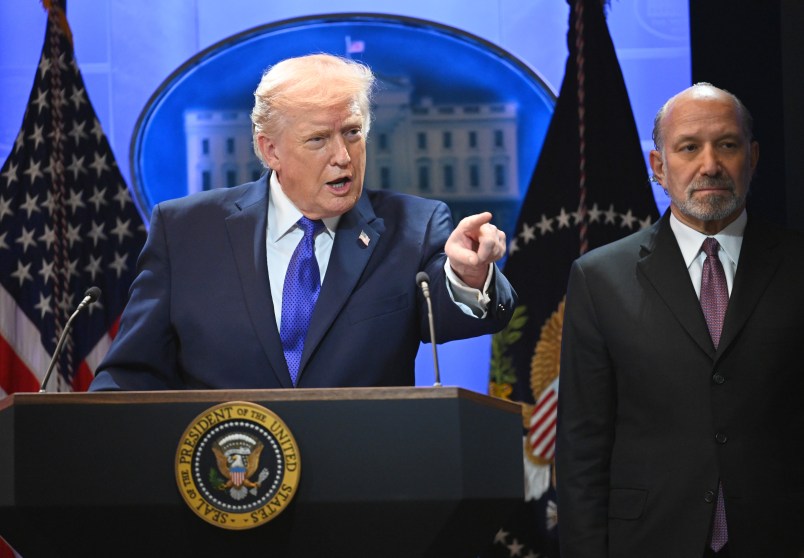
President Trump's announcement of new tariffs, including a 10% tax on all U.S. imports and additional tariffs on imports from 90 countries, has raised concerns about a potential global trade war and caused stock market volatility. The administration is defending the tariffs while seeking to mitigate their economic impact through negotiations with trading partners and engaging with concerned business groups. Despite fears of increased consumer costs and a potential recession, the administration remains committed to the tariff plan and is working to reassure the business community with pro-growth policies.

Trump’s New Tariff Threats Against China and Other Nations Spark Market Turmoil, Sending Apple’s Stock Plummeting Amid Trade Tensions

Former President Donald Trump announced on his Truth Social platform that the U.S. will impose new tariffs on countries retaliating against existing U.S. tariffs, specifically warning China of a 50% tariff on imports if it does not retract its planned tariff increase by April 8, 2025. This announcement has caused concern in financial markets, notably impacting Apple, whose stock dropped significantly due to its reliance on China for production and sales, leading to a substantial loss in market capitalization. The situation highlights the broader implications for multinational companies involved in international trade, as the deadline for China's response approaches and potential repercussions for global trade dynamics loom.

Trump Stands Firm on New Tariffs Amid Global Economic Concerns, Engages in Direct Talks with Iran and Israel

President Donald Trump announced that he will proceed with implementing new tariffs on Wednesday, despite concerns about their impact on the stock market and global economy, emphasizing that countries can adjust trade relations with the U.S. through fair trade deals or by paying tariffs. During a meeting with Israeli Prime Minister Benjamin Netanyahu, Trump also mentioned ongoing talks with Iran, warning of "great danger" if discussions do not go well, and addressed the topic of tariffs on Israel and other countries. Netanyahu indicated that Israel plans to address its trade relationship with the U.S., as part of a broader dialogue involving multiple nations adjusting to the Trump administration's trade policy changes.

Global Markets Plunge Amid Investor Fears Over Trump Administration’s Tariff Impact

Global financial markets are experiencing significant turbulence due to investor concerns over the economic impact of tariffs imposed by the Trump administration, with U.S. stock futures and international markets showing substantial declines. The imposition of tariffs has introduced a new dynamic in international trade relations, affecting both allies and adversaries, and raising concerns about the potential unraveling of globalization. As markets and governments worldwide monitor the situation, the tariffs have the potential to significantly alter the global economy and impact the financial well-being of billions.

Wall Street Executives Criticize Trump Administration’s Tariffs Amid Stock Market Downturn and Recession Fears

Wall Street executives are increasingly expressing concerns about the Trump administration's trade policies, particularly the newly implemented tariffs, following a significant stock market downturn. Jamie Dimon, CEO of JPMorgan Chase, warned that these tariffs could lead to increased inflation and a slowdown in the U.S. economy, reflecting a broader unease among corporate leaders. A CNBC survey revealed that 69% of CEOs anticipate a recession, with many planning workforce reductions, while figures like Bill Ackman criticize the tariffs for undermining confidence in the administration's economic strategy.

Nintendo Unveils Switch 2 with Game-Changing Features, Delays U.S. Preorders Amid Economic Uncertainty

Nintendo has announced the release of its new gaming console, the Switch 2, set for June 5, 2025, featuring enhancements like a more vibrant display, a larger screen, and the innovative "GameChat" feature activated by a new "C" button on the Joy-Con controller. Despite the excitement, Nintendo has delayed preorders in the U.S. due to new tariffs introduced by President Donald Trump and other market conditions, initially planned for April 9, 2025. The company remains committed to the June launch and will update on preorder timing as it assesses the economic landscape to ensure a smooth release.