Key takeaways:
- Netanyahu proposes that Eisenkot serve first as prime minister while he initially takes the alternate prime minister role.
- Likud said Netanyahu would meet Eisenkot early Sunday after Eisenkot invited him to coalition talks.
- Netanyahu’s bloc won 53 seats and Eisenkot’s prospective partners won 48, leaving both short of a majority in the 120-seat Knesset.
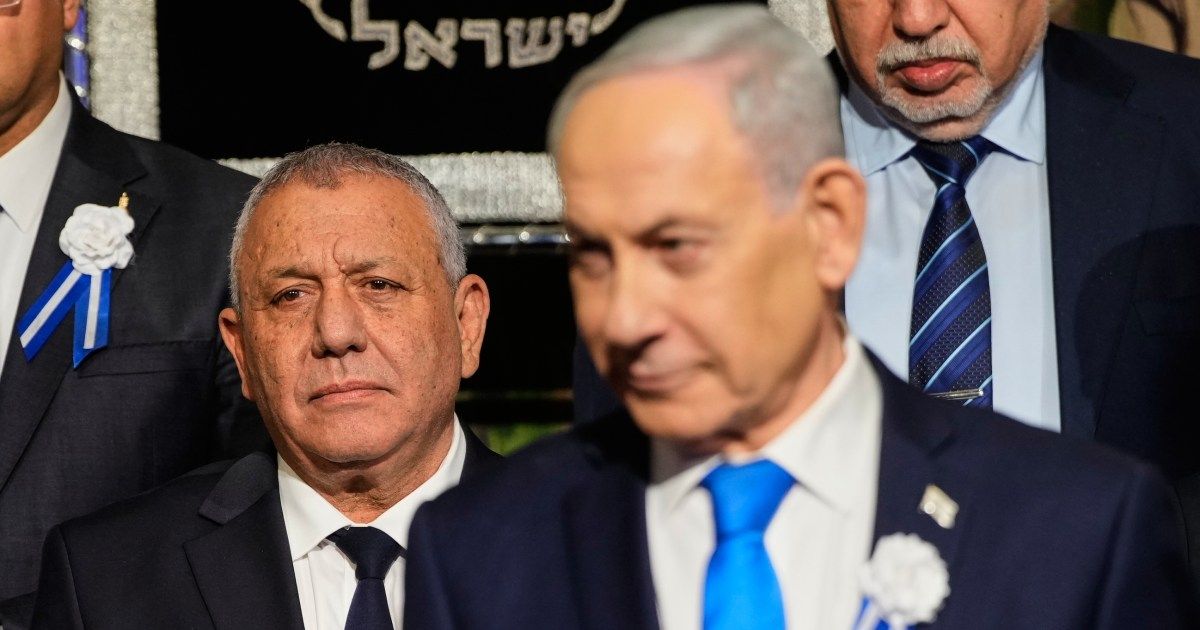
Israel’s caretaker Prime Minister Benjamin Netanyahu says he is willing to let rival Gadi Eisenkot serve first as prime minister in a rotating unity government. The two leaders have agreed to meet for coalition talks as Eisenkot faces a December 6 deadline to form a government.
Eisenkot, the centrist Yashar party leader whom President Isaac Herzog tasked with forming a government, invited Netanyahu to “genuine and accelerated negotiations.” Netanyahu’s Likud party subsequently said the two would meet early Sunday, Al Jazeera reported.
In a social media post Saturday, Netanyahu said Likud’s larger share of parliamentary seats would normally entitle it to lead a unity government. But, he said, “my responsibility as a leader requires me to set everything aside, including the principle of the largest party.” Under his proposal, Eisenkot would serve first as prime minister and Netanyahu would initially be alternate prime minister.
Netanyahu cited “the gravity of the existential danger and the possibility that a government will be formed that lacks the ability to confront it.” He did not specify the danger in the remarks carried by Al Jazeera.
“If Likud is ready for genuine unity, I am prepared to see how serious it is over the next 24 hours,” Eisenkot said. He invited Netanyahu to discuss basic guidelines and policy issues, basing the talks on a proposal he had sent Netanyahu the previous Sunday. Eisenkot said he had received no response to that proposal.
The offer followed a sharp exchange over the pace of negotiations. On Friday, Eisenkot accused Likud of stalling and failing to present concrete proposals. Al Jazeera reported that he also accused Netanyahu of trying to force another election. Eisenkot has pledged to announce a government by December 6 without seeking an available 14-day extension, the outlet reported.
Neither main bloc won a majority in the October 27 election. Netanyahu’s alliance of Likud and far-right and ultra-Orthodox parties secured 53 seats in the 120-seat Knesset; Eisenkot and his prospective partners won 48. A government needs at least 61 seats.
The BBC reported that two Arab-led alliances, the United Arab List and the Joint List, won an unprecedented combined 19 seats after a surge in turnout among Arab voters. Their seats could be decisive, although all but one Jewish party pledged before the election not to work with them to form a government, the BBC reported.
Eisenkot has reached coalition agreements with Yisrael Beiteinu and The Democrats, according to the BBC. Naftali Bennett, a former prime minister who leads another party in Eisenkot’s bloc, Beyachad, backed a unity government with Eisenkot serving first. After Netanyahu’s offer, Bennett said the Likud leader had made the right decision by showing he was willing to join such a government.
Other potential partners objected. Democrats leader Yair Golan, who opposes a unity arrangement with Netanyahu, dismissed the proposal as “tricks and deceitful tactics.” Joint List leader Yousef Jabareen accused Netanyahu of trying to block a change of government and called for his removal this week.








Be First to Comment