
Key takeaways:
- Most polls show neither Netanyahu’s bloc nor its opponents winning a decisive majority of the Knesset’s 120 seats.
- Gadi Eizenkot has pledged a state inquiry into the failure to prevent the Oct. 7, 2023, attack.
- Arab-Israeli turnout and two parties polling near the threshold for Knesset seats could affect the result.
Israelis vote Tuesday in an election that could end Prime Minister Benjamin Netanyahu’s hold on power, but polls suggest neither his coalition nor its opponents are assured enough seats to form a government. The vote comes amid continuing regional wars and a debate over whether Israel should launch another attack on Iran.
It is Israel’s first election since the Oct. 7, 2023, Hamas-led attacks, which Israeli authorities have acknowledged as the country’s most catastrophic security failure since its founding in 1948. Israel remains at war in Gaza, Lebanon and Syria and has fought two direct rounds of conflict with Iran, according to CBS News.
Pollsters disagree on which side leads. CBS News reported that right-leaning pollsters favor Netanyahu’s bloc of right-wing and religious parties, while left-leaning pollsters favor the opposing “change bloc.” Most polls show neither side winning a decisive majority of the Knesset’s 120 seats.
“It looks like an indecisive outcome is the most likely outcome,” said Yohanan Plesner, president of the Israel Democracy Institute.
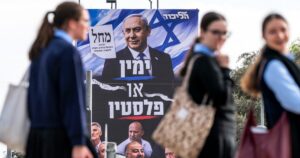
Netanyahu, leader of the Likud party and Israel’s longest-serving prime minister, argues that he can form a government without relying on Arab parties. He also says he needs more time to complete Israel’s military campaigns, particularly against Iran. His campaign slogan translates as: “Either right wing or Palestine, either right wing or a nuclear bomb.” Over the weekend, he posted an AI-generated image of a mushroom cloud over Tel Aviv to underscore his warning about Iran, CBS News reported.
Former military chief Gadi Eizenkot, leader of the centrist Yashar party, is the front-runner to lead a government drawn from Netanyahu’s opponents. He served alongside Netanyahu in the war cabinet during much of the first year of the Gaza war; his son and two nephews died while serving in the military there. Eizenkot has pledged a state inquiry into the failure to prevent the Oct. 7 attack. Responding Monday to Netanyahu’s Iran warnings, he accused the prime minister of “relying on a campaign of fear-mongering, lies, and threats.”
The BBC reported that Eizenkot supports military action against Iran but has warned against escalating the war for political purposes. Netanyahu has raised the possibility of another attack. The BBC also reported contradictory accounts that U.S. President Donald Trump had sought to restrain him from striking before the election, out of concern about energy prices.
Trump endorsed Netanyahu last week and said the two men should “soon finish the job” in Iran, according to the BBC. He also warned that if Netanyahu lost, the United States might have to act alone. “I am not inclined to do so,” Trump wrote.
Turnout could prove decisive, particularly among Likud supporters and Arab Israelis, who account for about 20% of Israel’s population. “The higher the Arab turnout, the less likely that Mr. Netanyahu, within the current coalition, can form another government,” Plesner said. CBS News reported that two new parties campaigning to require ultra-Orthodox Jews to perform mandatory military service are polling near the threshold for Knesset seats.
If neither bloc secures a majority, parties could negotiate across ideological lines, opponents could try to form a minority government, or Israel could face another election. The result may take weeks to settle.






Be First to Comment