Key takeaways:
- Archaeologists date the Kekova Island wreck to between 4,400 and 4,700 years old, making it the oldest known shipwreck.
- Divers found three stone anchors and more than 30 ceramic jars; some jars retain visible residue.
- Researchers have not identified the cargo, though possibilities include olive oil, wine and tree resins.
Archaeologists say they have identified the world’s oldest known shipwreck off Turkey’s Mediterranean coast, dating it to between 4,400 and 4,700 years ago. The wooden vessel is gone, but its cargo of ceramic jars remains on the seabed — and some jars still hold traces of their contents.
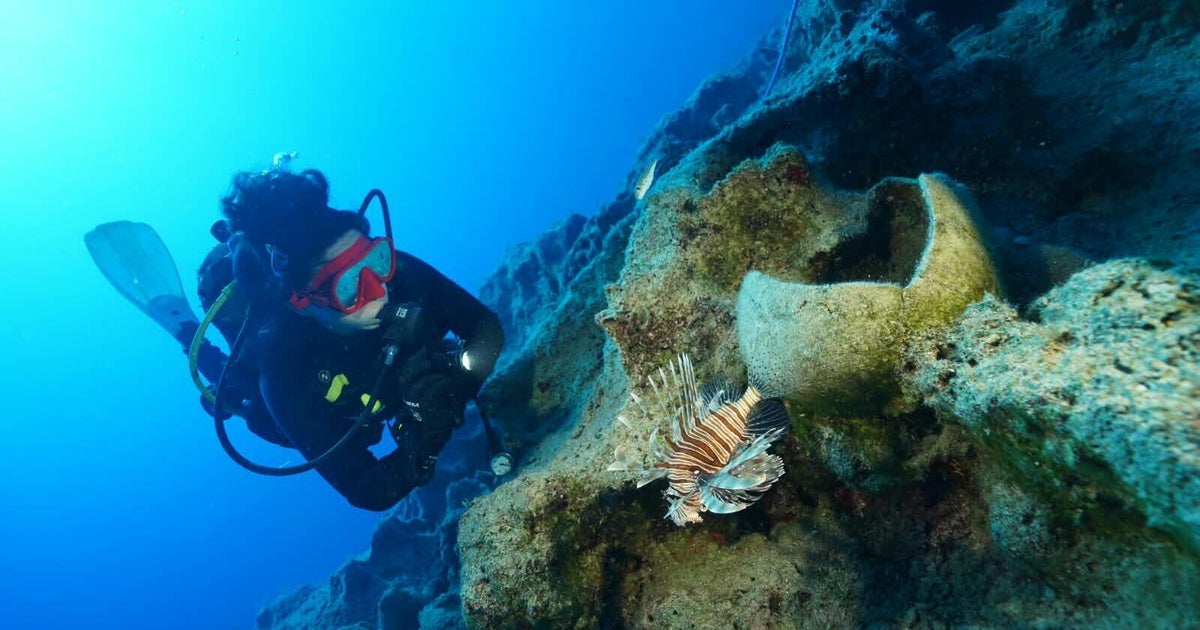
The wreck lies about 30 meters (98 feet) below the surface near Kekova Island in Antalya, where its artifacts are scattered across an underwater slope. Researchers say the ship was a trade vessel about 10 meters (33 feet) long that had traveled from somewhere along the eastern Mediterranean coast. Divers found three large stone anchors and more than 30 storage jars, known as amphorae.
“The shipwreck is a time capsule at the bottom of the sea,” Hakan Öniz of Turkey’s Akdeniz University, who led the Mediterranean Archaeology Association expedition, told the BBC.
With none of the ship’s wood surviving, researchers could not use radiocarbon dating to establish its age. Instead, they compared the jars’ design with pottery from known periods. The amphorae have two handles, a ridge around the middle and a flat base, features that Öniz said match examples found in Egypt and the Middle East dating to the Early Bronze Age. The wreck is roughly contemporary with the building of the Great Pyramid.
Öniz told CBS News that when his team first found the wreck four years ago, the jars appeared to be only a century or two old. A publication on Egyptian archaeology prompted the researchers to return to the site and compare them with pottery found at the Giza pyramids.
Analysis of the clay suggests the jars were made in workshops in the Jordan Valley, along Jordan’s border with Israel and the West Bank, CBS News reported. Öniz told the outlet the vessel may have been carrying olive oil or wine westward, perhaps to Troy or to the Minoan civilization on Crete.
What the jars actually held remains under investigation. Karin Sowada, an archaeologist at Australia’s Macquarie University, examined them after divers brought them to the surface. Some were intact, with a glossy, viscous residue still visible inside.
“I looked inside and nearly fainted. I could not believe how much [residue] was visible,” she told the BBC. “It wasn’t just like spots … a lot of this material was still remaining.”
The residue could come from olive oil, wine or tree resins, Sowada said. She cautioned that the large jars may have been reused for years, so material found inside them might not reflect what the ship was transporting on its final voyage.
Turkey’s Culture and Tourism Minister Mehmet Nuri Ersoy said the discovery would offer insights into ancient trading connections and seafarers’ daily lives. According to the BBC, recovered artifacts will be displayed at the new Mediterranean Underwater Archaeology Museum in Antalya when it opens.
The find displaces a roughly 4,200-year-old wreck off the Greek island of Dokos as the oldest known shipwreck. The oldest known wreck with its wooden hull intact, found in the Black Sea off Bulgaria, dates to about 2,400 years ago.











Be First to Comment