Key takeaways:
- Musk, Brin, Huang and Su received the National Medal of Science; Nadella and Dell received the National Medal of Technology and Innovation.
- Companies pledged about $2.4 billion in AI computing credits and scientific tools for federal agencies.
- NASA and the Energy Department announced a partnership to use nuclear technology in space exploration.
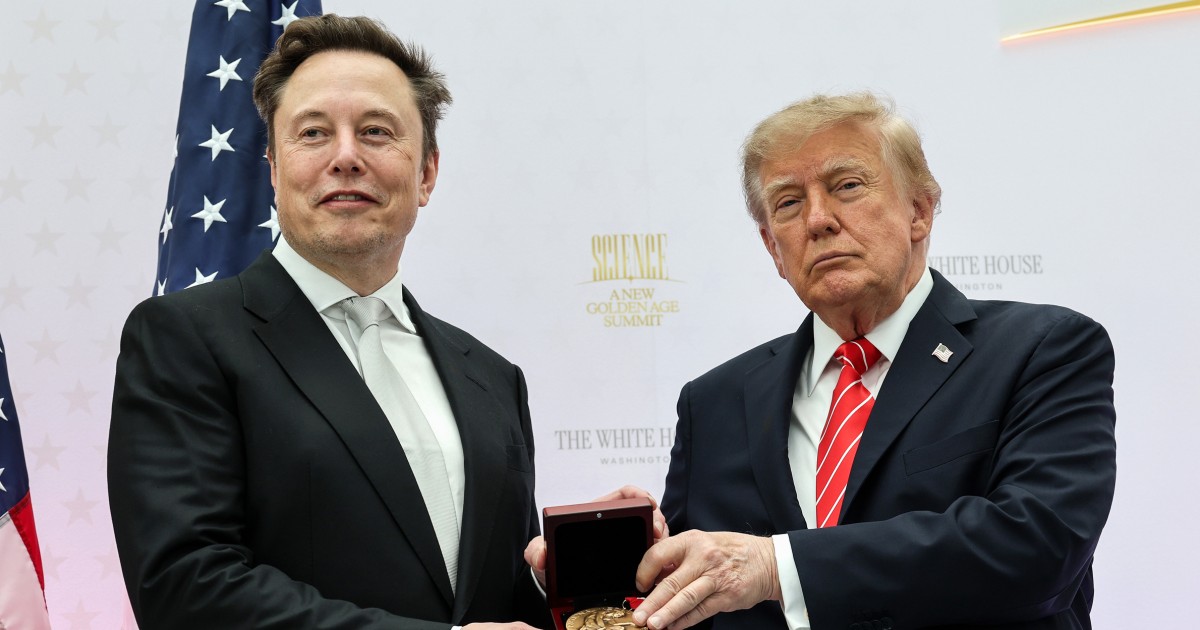
President Donald Trump awarded top U.S. science and technology honors to six technology leaders Thursday at a summit where his administration announced new artificial intelligence resources for federal researchers and a nuclear partnership for space exploration.
At the Science: A New Golden Age Summit, Trump presented the National Medal of Science to Elon Musk, Google co-founder Sergey Brin, Nvidia CEO Jensen Huang and AMD CEO Lisa Su. Microsoft CEO Satya Nadella and Dell founder Michael Dell received the National Medal of Technology and Innovation.
“We live in an age of American wonders and technological marvels, and with the help of the brilliant men and women here today, we will always be on top,” Trump said. He handed each recipient a medal and certificate, then invited some of their families onstage for photographs.
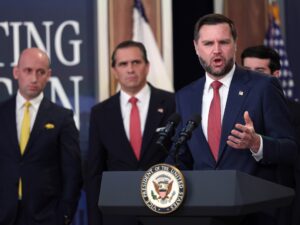
The ceremony came hours after Vice President JD Vance announced the suspension of Microsoft and several other companies from a program that allows foreign workers to apply for green cards, NBC News reported. Al Jazeera described the action as a suspension from the H-1B visa system, which allows companies to hire skilled foreign workers and put them on a path to permanent residency. Officials alleged the companies had used the system fraudulently, according to Al Jazeera.
Immigration was also a topic at the summit. “I was an immigrant, and my parents brought us here to pursue the American dream,” Huang told NBC News while walking through the venue with his parents. “It’s an incredible honor and something that could only happen here in America.”
Carnegie Mellon University President Farnam Jahanian said the United States needed an immigration policy that could recruit talented researchers and encourage them to stay. He pointed to China’s production of more engineers and scientists than the United States, Europe and Japan combined.
The all-day gathering advanced priorities laid out in a July report by Michael Kratsios, head of the White House Office of Science and Technology Policy. NBC News reported that the administration wants to reduce what it sees as scientific bureaucracy and sluggish innovation, including by directing funding to promising scientists rather than routing it through established institutions.
Companies pledged about $2.4 billion in AI computing credits and scientific tools for federal agencies working on White House priorities, including quantum algorithms, AI-driven laboratories and more efficient nuclear engineering. Representatives of OpenAI, Anthropic, Google, Amazon Web Services and Micron Technology announced partnerships with the federal government.
NASA Administrator Jared Isaacman and Energy Secretary Chris Wright announced a partnership to use nuclear technology in space exploration. Isaacman said nuclear power would let spacecraft travel farther and operate longer.
Speakers discussed AI, nuclear power, quantum computing and metascience, the study of science itself. Some used “SI,” short for “super intelligence,” a term favored by administration officials, NBC News reported. Physicist and Nobel laureate John Martinis said the technology was already speeding his group’s research. Asked what a golden age of science would look like, he replied: “I feel like we’re in it right now.”








Be First to Comment