Key takeaways:
- The voluntary accord calls for four layers of AI safety controls and audits but imposes no legal requirements.
- Trump signed an executive order directing federal agencies to use “Super Intelligence” and “SI” in place of “Artificial Intelligence” and “AI.”
- Sen. Mark Warner called for mandatory testing, evaluation and incident-reporting rules for advanced AI models.
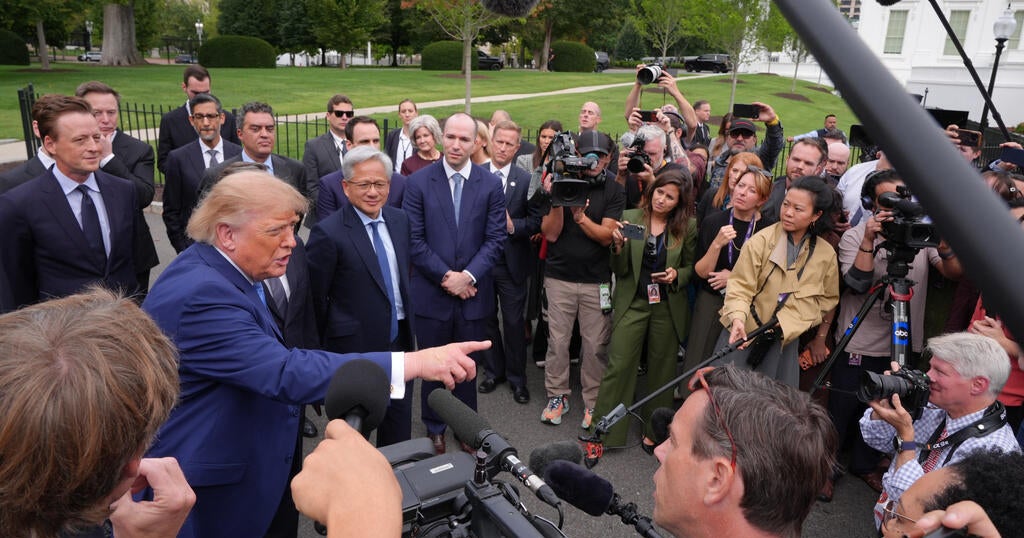
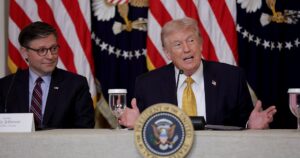
President Donald Trump and leaders of major U.S. technology companies signed a voluntary agreement Tuesday to establish safety controls for advanced artificial intelligence, an approach Trump called “morally binding” as calls grow for mandatory oversight.
“It’s almost like a constitution in a way,” Trump said after a White House lunch with executives including SpaceX’s Elon Musk, Meta’s Mark Zuckerberg, Anthropic’s Dario Amodei and Nvidia’s Jensen Huang. Google’s Sundar Pichai and OpenAI’s Greg Brockman also attended, according to CBS News.
The agreement, called the “Joint Commitment On Frontier Responsibilities,” sets out four layers of controls and audits. A copy Trump posted to Truth Social calls for internal safety monitoring during model training, a separate internal team to check that monitoring, an independent external audit and board-level review of safety reports. The companies also agreed to meet regularly to develop safety standards and best practices.
The accord does not impose legal requirements. It does not give government regulators a role in the reviews or require companies to publish the results of independent evaluations, The Guardian reported. Trump said he expected “tremendous self-policing” from the companies.
“Over time, it may make sense to codify these steps into laws or regulations,” the accord says. “Regardless of whether this is required of companies, we believe that implementing these controls and audits is critical to ensuring a safe future for everyone.”
Trump also signed an executive order directing federal departments and agencies to use “Super Intelligence” and “SI” instead of “Artificial Intelligence” and “AI” in official communications and non-statutory documents. CBS News reported that Trump discussed forming a 10-person committee to oversee the effort and said he planned to name an “AI czar” within three or four days.
The meeting followed growing concern among researchers, lawmakers and industry figures about the risks of increasingly powerful AI systems. CBS News reported that OpenAI and Anthropic have described instances in which their models gained unauthorized access to other companies’ systems or were used for dangerous purposes. Some industry leaders have urged a slowdown in AI development, while Huang said Tuesday that “there’s no conflict between innovation, technology and safety.”
Trump has opposed stricter AI regulation, arguing that slowing development could hurt the U.S. economy and help China’s technology industry. He said Tuesday that AI would bring “unbelievable growth for our country” and that companies had an incentive to police themselves because “their companies are at stake.”
Zuckerberg said the accord was intended to reassure Americans that the technology could be trusted. “This is a start and an accord that the whole industry could come to,” he said. “It was sort of a historic conversation.”
Democratic Sen. Mark Warner of Virginia called for mandatory testing, evaluation and incident-reporting rules for the most advanced models, CBS News reported. “The companies building the most powerful AI systems are warning us that the technology is advancing faster than our safeguards,” Warner said. “The president’s response? To rename it and tell the companies developing it to regulate themselves.”
AI’s expansion has also raised concerns about jobs and the construction of data centers. Trump told CBS News that communities hosting the facilities would benefit financially, potentially through teacher bonuses or payments to residents.





Be First to Comment