Key takeaways:
- Prime Minister Andy Burnham said the UK agreed to Saudi Arabia’s request for “defensive air-to-air refuelling” support after advice from senior ministers.
- British officials said the mission is expected to begin in the coming days, involve one RAF Voyager aircraft based at RAF Akrotiri in Cyprus, and last initially for weeks.
- The Houthis have claimed drone and ballistic missile attacks on Riyadh and Saudi Red Sea energy sites, while also advancing around key Red Sea shipping routes.
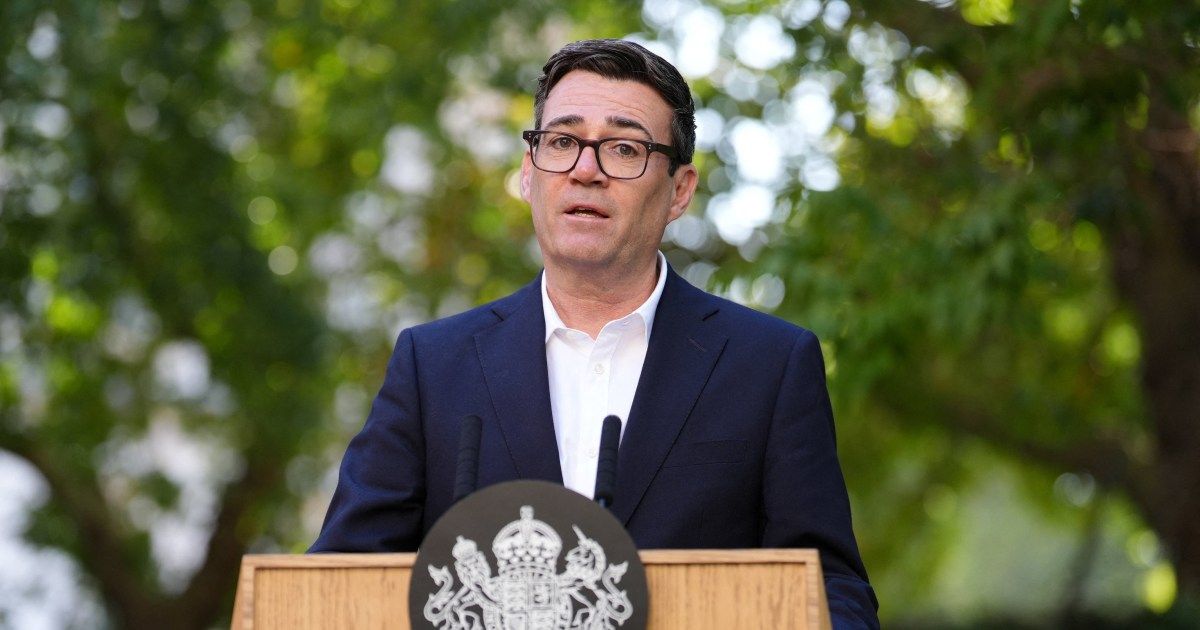
Britain will provide Saudi Arabia with “defensive” air-to-air refuelling support as the kingdom faces missile and drone attacks from Yemen’s Houthis, Prime Minister Andy Burnham said while travelling to the United Nations General Assembly in New York.
Burnham said he approved the Saudi request for military support on the advice of Defence Secretary Wes Streeting and Foreign Secretary Ed Miliband. The operation is expected to begin in the coming days and involve a single Royal Air Force Voyager aircraft based at RAF Akrotiri in Cyprus, according to British officials cited by the BBC.
“We have received a request from the Kingdom of Saudi Arabia for military support, and on the advice of the defence secretary and the foreign secretary, last night I agreed to that request for defensive air-to-air refuelling,” Burnham said, according to Al Jazeera.
The agreement is “time-limited” and will be kept under review, Burnham said. Government officials told the BBC the offer is likely, in the first instance, to last “for weeks.”
British officials described the support as assistance for Saudi air force jets seeking to shoot down incoming Houthi missiles and drones. The PA news agency, cited by Al Jazeera, reported that the UK mission will be limited to supporting Saudi aircraft defending the country from attack, rather than helping carry out strikes against the Houthis.
The Houthis, an Iran-backed movement, are fighting Yemen’s internationally recognised government, which is supported by Saudi Arabia. The conflict has intensified in recent weeks. The Houthis say they have carried out drone and ballistic missile attacks on Riyadh and on energy sites along Saudi Arabia’s Red Sea coast. Al Jazeera reported that one missile attack targeting Riyadh on Saturday was intercepted.
Burnham linked the decision to wider economic and regional concerns, including the security of trade and energy routes. “I go back to the point I made about cost-of-living pressures and acting to secure the interests of Britain and the wider region,” he said. “Because of course Saudi Arabia has been experiencing attacks, is looking at potential further disruption, and we need to keep those pathways open, and hence our agreement to the request.”
The Red Sea is a major global shipping corridor. The BBC reported that the Houthis recently seized Mokha, a strategic port city, and Perim Island, a gateway to the Red Sea. Al Jazeera said the Houthis have also seized key Red Sea islands, strengthening their ability to monitor shipping through the Bab al-Mandeb, through which about 12 percent of world trade normally passes.
The Voyager aircraft expected to be used is part of the RAF’s core fleet of nine, including eight military-registered aircraft and one civilian-registered aircraft, the BBC reported. The RAF also has five others available for military recall if needed.
NATO Secretary-General Mark Rutte suggested last week that European support for Saudi Arabia could be under discussion. “I would not be surprised if some phone calls were taking place between European allies, ‘hey, how are we going to deal with this?’” he told the BBC. “Let’s see what happens, and if Nato can help, we will always be helpful.”
Energy Minister Martin McCluskey also told MPs last week that the UK was “providing air defence support” to Saudi Arabia through the countries’ defence partnership, though he did not address operational details.
Britain has taken military action against the Houthis before. In January 2024, the UK joined the United States in launching air strikes on Houthi targets in Yemen after attacks on shipping, including a Royal Navy warship. Then-Prime Minister Rishi Sunak said the UK had “acted in self-defence” and called the strikes “necessary, proportionate, and targeted.” Further joint UK-US strikes followed in 2024, the BBC reported.
Al Jazeera reported that Britain and Saudi Arabia have been close military allies for decades, with London among the kingdom’s largest arms suppliers. It also reported that earlier this year the UK deployed its Sky Sabre air defence system to Saudi Arabia to help protect it from Iranian missile attacks during the United States and Israel’s war on Iran.







Be First to Comment