Key takeaways:
- Leopardus tilcayo, or the tilcayo tiger cat, was described Thursday in Current Biology as a new wild cat species from Bolivia’s Yungas region.
- DNA analysis found the cat diverged from other tiger cat lineages about 1.4 million years ago, and the study concluded South America has five tiger cat species.
- Researchers say the new species’ population is unknown and that tiger cats face threats including deforestation, habitat loss, illegal hunting, development and agriculture.
A small spotted wild cat from Bolivia’s cloud forests has been identified as a new species, a finding researchers say marks the first time in about a century that a previously unknown wild cat has been described by science.
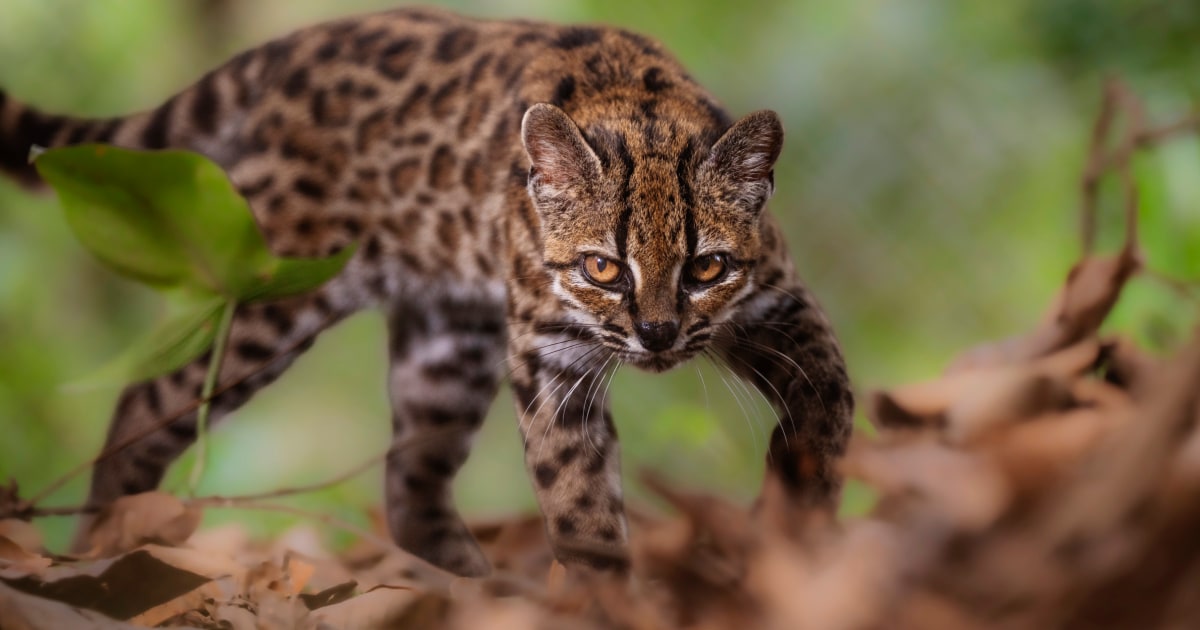
The cat, named Leopardus tilcayo, or the tilcayo tiger cat, was described Thursday in the journal Current Biology. Slender and spotted, with rounded ears, it lives in the Bolivian Yungas, where the Andes meet the Amazon basin. Researchers say it is about the size of, or smaller than, a domestic cat.
“This time, it’s a cat. That’s really novel. And it hasn’t happened in 100 years,” said Paola Nogales-Ascarrunz, a study co-author who leads Programa de Investigación de Félidos Bolivia, the Bolivian Felid Research and Conservation Program. “No one else had named it. No one else had described it.”
The discovery began with a cat now living at the Senda Verde Wildlife Sanctuary near La Paz. The BBC reported that the 10-year-old animal, nicknamed Tigrino, is the only confirmed living member of the species known to scientists, though researchers believe others exist. According to NBC News, genetic testing also used tissue from a second animal that had turned up at Senda Verde.
Nogales-Ascarrunz was volunteering at the sanctuary when she noticed the animal looked unusually small. It had been brought in by a man from a forest community near La Paz who thought it was a domestic kitten and fed it noodles, rice and eggs before realizing it was wild and he could not care for it.
“I saw this cat. It was really, really small, and I couldn’t believe how small it was,” Nogales-Ascarrunz said. “I thought it was a kitten.”
Other sanctuary staff initially thought the animal might be a known tiger cat species from Brazil. Nogales-Ascarrunz disagreed. “If you look at the spots or the tail, they really don’t match,” she said.
DNA analysis showed the Bolivian cat was genetically distinct and had diverged from other tiger cat lineages about 1.4 million years ago. The study also concluded there are five tiger cat species in South America, rather than three, including Leopardus tilcayo.
Tiger cats are small, spotted wild cats found in Central and South America, from Costa Rica to Bolivia and Argentina. They can be difficult even for experts to distinguish because of their similar markings.
“There’s so few records or pictures, no individual in a museum, so it was hiding because nobody was looking,” said Eduardo Eizirik, a conservation geneticist at the Pontifical Catholic University of Rio Grande do Sul in Brazil.
Researchers said the finding underscores how little is known about some small wild cats and could affect the recognized number of living cat species. The BBC reported that Felidae, the cat family that includes domestic cats and all wild cats, has 41 officially recognized species, but the new discovery and the study’s tiger cat findings could bring that number to 44 or more.
The population of Leopardus tilcayo is unknown. “We really don’t know how many cats are still in the wild,” Nogales-Ascarrunz said. “We need science, we need more studies to answer this question, which is actually critical for its conservation.”
Researchers said tiger cats face threats from deforestation, habitat loss, illegal hunting, development and agriculture. “All of them are in habitats that are vanishing fast,” said Tadeu de Oliveira, a study co-author and ecologist at the State University of Maranhão in Brazil.
Nogales-Ascarrunz said local communities have known the animal for generations as tilcayo, and researchers kept that name to preserve traditional knowledge. “This is a traditional knowledge that they have in the community. We want to preserve that knowledge and we didn’t want to give it another name,” she said.
She said the species is likely in danger and that its identification adds urgency to conservation. “It’s a new reason to protect the world,” she said.










Be First to Comment