Key takeaways:
- The Fed unanimously raised its benchmark interest rate by a quarter percentage point to a range of 3.75% to 4%.
- Fed Chair Kevin Warsh said inflation remains too high and has been above the central bank’s 2% target for more than five years.
- Major U.S. banks JPMorgan, KeyCorp and BNY raised their prime lending rate to 7% after the Fed decision.
The Federal Reserve raised U.S. interest rates Wednesday for the first time in more than three years, moving to restrain inflation even as President Donald Trump demanded sharply lower borrowing costs.
The Fed’s open market committee voted unanimously to lift its benchmark rate by a quarter percentage point, to a range of 3.75% to 4% from 3.5% to 3.75%. The decision was the central bank’s first rate increase since July 2023 and its first move in any direction since a rate cut in December 2025, according to the BBC.
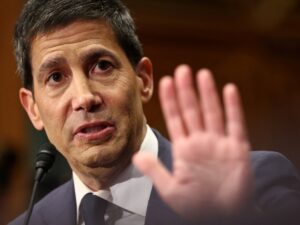
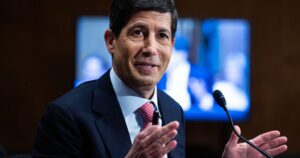
“The plain fact is that inflation is too high and has been for too long,” Fed Chair Kevin Warsh said after the announcement. He called the increase a “sober” and “responsible decision” and said recent inflation readings had not shown that underlying trends had “meaningfully improved.”
Trump responded by urging the Fed to reverse course. “LOWER THE INTEREST RATES FOR THE UNITED STATES OF AMERICA, AND FAST!” he wrote on Truth Social. He also said rates “should be 1%, or less, because we are the Best Credit in the World – BY FAR,” and criticized the U.S. trade deficit, saying the country would make “at least 1.5 Trillion Dollars a year” if it stopped trading with countries with which it runs deficits.
The rate increase comes as rising fuel costs and broader price pressures weigh on households ahead of November’s midterm elections. Global oil prices have climbed since the start of the U.S.-Israel war with Iran, driving up gasoline, diesel and the cost of goods and services. The Guardian reported that gas prices have remained, on average, $1 a gallon higher than a year ago, while diesel recently reached an all-time high of $6.31.
Warsh said the Fed cannot control the price of a specific item, “whether it be oil prices, whether it be food stuffs at the grocery store,” but can act to keep price increases from spreading through the economy. The Fed targets inflation at 2%, and Warsh said inflation has been above that target “for more than five years.” Fed projections indicated inflation may not return to the 2% goal until 2029.
Higher interest rates make borrowing more expensive for mortgages, credit cards, car loans, student debt and business lending, while potentially improving returns for savers. After the Fed’s announcement, major U.S. banks JPMorgan, KeyCorp and BNY raised their prime lending rate to 7% from 6.75%, a change likely to affect rates on credit cards and personal loans.
Mortgage costs have risen over the past year but remain below peaks reached in 2023. The average 30-year fixed mortgage rate is 6.76%, while a 15-year fixed loan averages 6.09%, according to Freddie Mac figures cited by the BBC. Many current homeowners with fixed-rate mortgages will not see monthly payments change, though buyers and people seeking to refinance may face higher costs.
The decision also sharpened tensions between the White House and the independent central bank. Asked what message the move sent to Trump, Warsh said, “I have got nothing for you on a discussion with the president.” He added that “part of the independence of the Federal Reserve is we stay in our lane.” The Guardian reported that Warsh described Fed independence as “a two-way street,” saying, “We will let people that do trade policy and fiscal policy stay in their lane.”
White House press secretary Kush Desai told Fox News that the president and White House had repeatedly affirmed their “commitment to the independence of the Federal Reserve,” while saying Trump could still express his views.
Fed officials signaled that more tightening may follow. A majority projected another rate increase before the end of the year, while some saw the benchmark rate reaching 4.25% to 4.5%. The BBC reported that a small majority expected rates could rise further next year before cuts begin in 2028 and 2029.





Be First to Comment