Key takeaways:
- BRICS adopted the New Delhi Declaration on the first day of its New Delhi summit after earlier ministerial meetings failed to produce joint statements.
- The declaration urged restraint in the Middle East, criticised unilateral tariffs and sanctions, and avoided naming the United States, Israel, Iran, Gulf states or Ukraine.
- Iran’s president and Abu Dhabi’s crown prince held the highest-level known face-to-face meeting between their countries since the Middle East war began, according to the BBC.
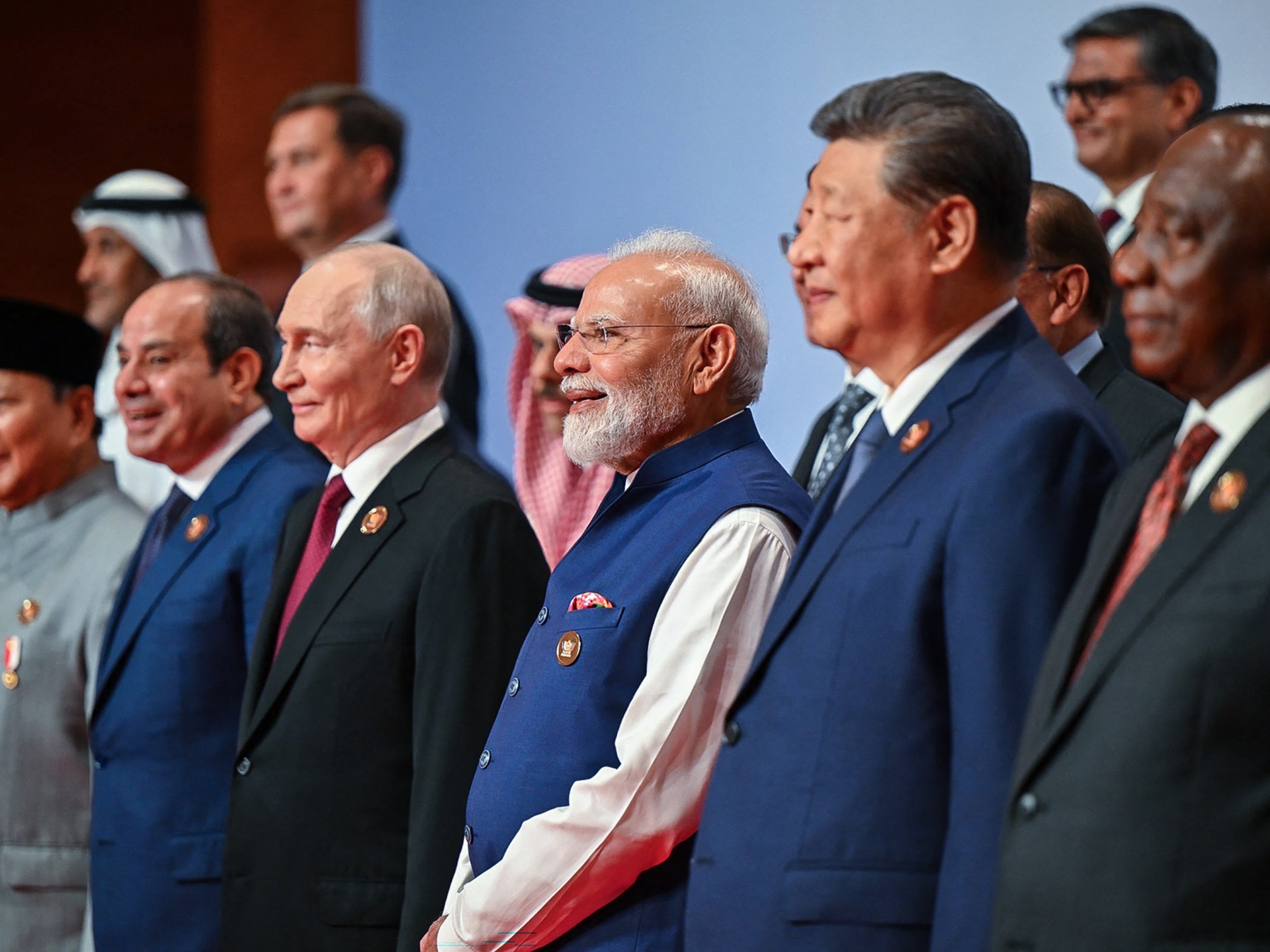
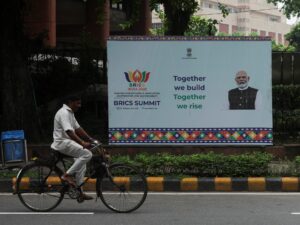
BRICS leaders adopted a joint declaration in New Delhi despite sharp divisions over the wars in Iran and Ukraine, giving Indian Prime Minister Narendra Modi a diplomatic win while underscoring the limits of consensus inside the expanded bloc.
The two-day summit brought together leaders from the 11-member group, including Chinese President Xi Jinping, Russian President Vladimir Putin, Iranian President Masoud Pezeshkian, Abu Dhabi’s Crown Prince Sheikh Khaled bin Mohamed bin Zayed Al Nahyan and South African President Cyril Ramaphosa. Modi told the gathering that the Global South should become a “rule-shaper” rather than a “rule-taker,” while insisting that “BRICS is not against anyone.”
The group, founded in 2006 by Brazil, Russia, India and China and later joined by South Africa, has expanded to include Egypt, Ethiopia, Iran, the United Arab Emirates, Saudi Arabia and Indonesia. Al Jazeera reported that BRICS countries account for nearly half the world’s population and about 40% of global GDP.
The New Delhi Declaration was adopted on the summit’s first day after earlier BRICS ministerial meetings this year failed to produce joint statements. Its language reflected the bloc’s attempt to preserve unity without assigning blame.
On the Middle East, the declaration expressed “deep concern” over escalating tensions and urged “maximum restraint,” but did not name the United States, Israel, Iran or Gulf states. It condemned attacks on civilian infrastructure and peaceful nuclear facilities, language Al Jazeera said could be seen as an indirect criticism of US and Israeli strikes on Iranian nuclear sites. The BBC reported that the declaration also assigned no blame for the conflict.
China’s Xi said the war “does not serve the common interests of the international community” and called for a political settlement and a permanent, comprehensive ceasefire.
Iran and the UAE, both BRICS members, have been on opposing sides of the Middle East conflict. The BBC reported that Tehran had launched missiles and drones at its fellow BRICS member. Former Indian Foreign Secretary Nirupama Menon Rao said New Delhi achieved a “significant diplomatic success” by securing a declaration despite “sharp differences between Iran and the UAE.” She wrote that BRICS “can keep difficult conversations alive and affirm broad principles, but it struggles to assign responsibility or organise collective action when there is the occasional collision of the interests of its members.”
The declaration made no mention of Russia’s war in Ukraine, unlike previous BRICS statements. It instead called broadly for disputes to be resolved through “dialogue, consultation, and diplomacy” and criticised sanctions not authorised by the UN Security Council. Kremlin spokesman Dmitry Peskov said Xi and Modi offered their services for peace talks on Ukraine and that Putin welcomed their readiness, according to the Russian state news agency TASS, as reported by Al Jazeera.
On trade, the declaration raised concern over “unilateral tariff and non-tariff measures” and condemned unilateral sanctions, but avoided naming the United States. President Donald Trump has described BRICS proposals as “anti-American” and threatened tariffs against countries aligning with the grouping. Putin accused countries “accustomed to thinking in colonial categories” of using tariffs, sanctions and “brute force” to contain emerging competitors.
The summit also created space for bilateral diplomacy. Pezeshkian and Abu Dhabi’s crown prince held what the BBC described as the highest-level known face-to-face meeting between Iran and the UAE since the war began. Xi made his first visit to Delhi in seven years and met Modi, with official readouts saying they agreed to strengthen business ties and transport links and address trade barriers.
Anil Trigunayat, a former Indian ambassador, said India had pushed for “strategic autonomy in an era of war.” But he cautioned on China-India ties: “I always say we have to trust, but verify first.”




Be First to Comment