Key takeaways:
- Motorists in Iran who use more than 110 liters of gasoline a month must now pay 100,000 rials per liter, about 7 cents, double the previous rate.
- Iran’s state oil distribution chief said the new rate affects 15% of consumers, as daily gasoline consumption hit 145 million liters in August against domestic capacity of 122 million liters.
- Iran’s inflation rate is about 67%, and residents in Tehran said they fear higher fuel prices will raise the cost of food and other basic goods.
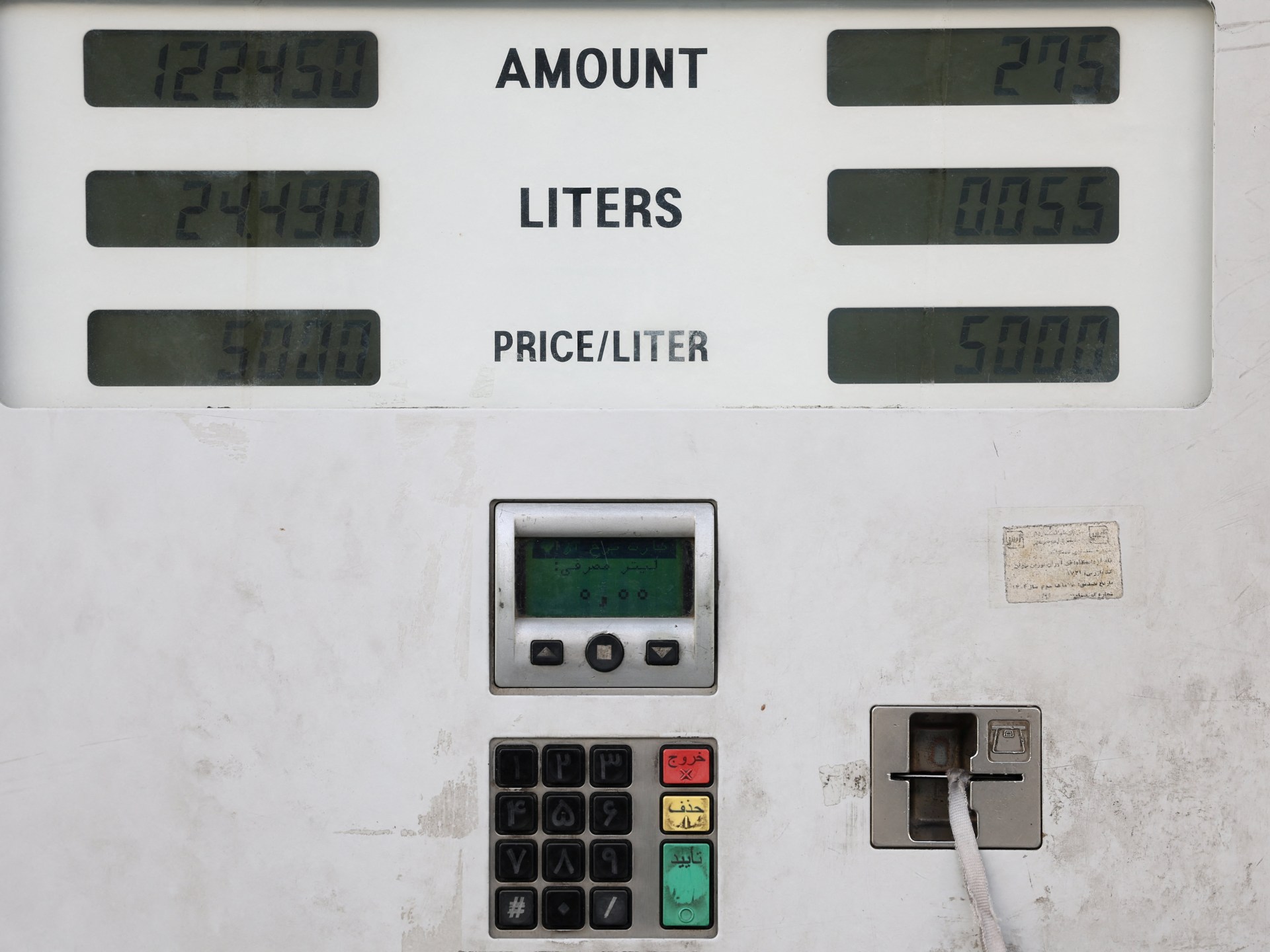
Iran raised gasoline prices early Tuesday for its heaviest consumers, doubling the cost for motorists who exceed monthly quotas as the government tries to curb record fuel use and maintain a costly subsidy system during a deepening economic squeeze.
State media reported that the price will remain unchanged for the first 60 liters, or 16 gallons, of gasoline a month. A higher bracket applies to the next 50 liters, or 13 gallons. Motorists who use more than 110 liters, or 29 gallons, a month must now pay 100,000 rials per liter, about 7 cents, twice the rate they have paid since December.
It is the second gasoline price increase since December. Iran still has some of the lowest gasoline prices in the world, but even small increases are politically sensitive and can feed inflation in a country where household purchasing power has already weakened sharply.
The government announcement cited the “current situation” and said additional revenue from the price increase would be given to households. Al Jazeera reported that Iranian officials have for months considered changing fuel subsidies as they deal with declining revenues amid war with the United States, punishing sanctions and a siege on Iranian ports by U.S. forces.
Keramat Veis Karami, chief executive of Iran’s state oil distribution company, said Monday that the new gasoline rate would affect 15% of consumers, the official IRNA news agency reported. He said gasoline consumption reached a record 145 million liters, or 38 million gallons, per day in August, while domestic production capacity stood at 122 million liters per day. The remainder is imported.
“If we consume it properly, we can manage with the amount of gasoline we produce in the country,” Mohammad Bagher Ghalibaf, speaker of Iran’s parliament, said in a televised address earlier this month, according to Al Jazeera. “What is clear is that we need to save gasoline in our consumption. Of course, part of the responsibility for this high consumption does not lie with our people; it lies with our industry.”
Experts have blamed high consumption in part on aging cars and spare parts, as well as insufficient public transportation. They also warn that higher gasoline prices can push broader prices higher. Iran’s annual inflation rate is about 67%, according to the country’s statistics center, a government agency. On Monday, the U.S. dollar was trading at 2.22 million rials.
Fuel price increases have a volatile history in Iran. A 2019 increase sparked nationwide protests and a crackdown that reportedly killed more than 300 people. Cheap gasoline has long been viewed by many Iranians as a birthright; price increases triggered mass demonstrations as far back as 1964, when the shah deployed military vehicles to replace striking taxi drivers.
Shortly after the new pricing took effect, two of eight gas stations visited by The Associated Press were closed to regulate pump prices. The six others were operating, with about a dozen cars lined up at each. Security was tight, with uniformed and plainclothes police visible near filling stations.
Some Tehran residents said they expect the increase to ripple through the economy. “The tiny amount cannot help government to manage problems like poverty and unemployment,” said Asghar Rahimi, 34. “This was the first step. In coming months, they need to raise it again.”
Ali Salari, 55, said he feared higher gasoline prices would affect the cost of other goods, including bread and meat. “It has been that way ever since government manipulated gas prices,” he said.
Hamid Mirzei, 43, said food costs have already climbed sharply, with basic staples such as beans and lentils costing up to 100 million rials, or $73, for a grocery trip. “Life has become difficult for all of us. Even basic groceries are becoming unaffordable,” he said. “If gasoline prices go up as well, things will only get much worse.”









Be First to Comment