Key takeaways:
- Saudi officials said Houthi attacks struck Abha, Jazan, Najran and Khamis Mushait, wounding 73 people, including women and children.
- Saudi Arabia’s Energy Ministry said fires broke out at several energy facilities and some operations were temporarily halted after attacks early Tuesday.
- The Houthis claimed responsibility, saying they used dozens of ballistic missiles and drones in response to recent Saudi strikes in Yemen.
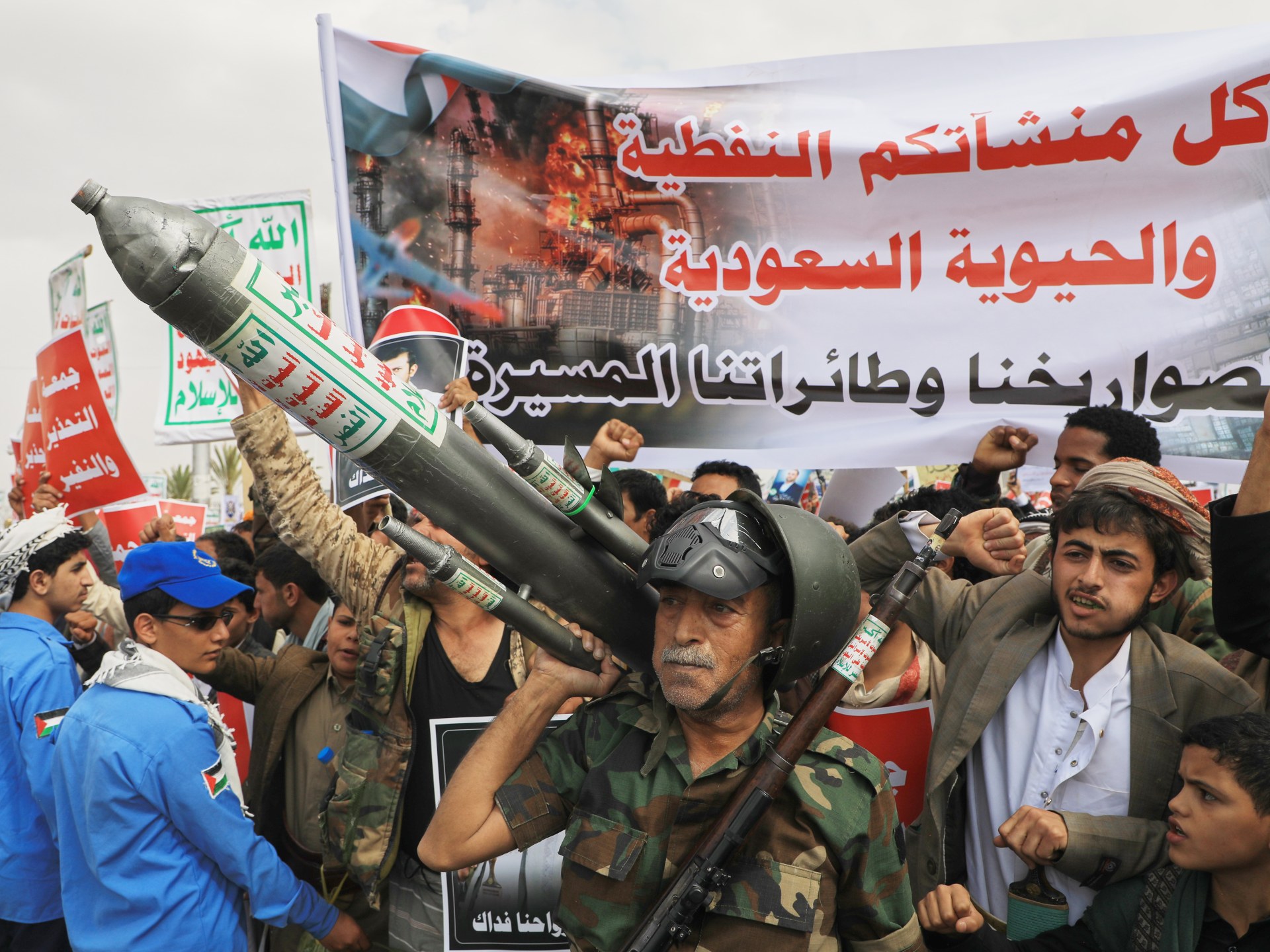
Houthi missile and drone attacks struck civilian, economic and energy sites across southern Saudi Arabia on Tuesday, wounding 73 people and setting fires at oil facilities and utilities, Saudi authorities said, in a sharp escalation of renewed fighting linked to Yemen’s civil war.
Maj. Gen. Turki al-Malki, spokesman for the Saudi-led coalition fighting in Yemen, said the attacks hit sites in Abha, Jazan, Najran and Khamis Mushait. Those wounded included women and children, he said, without giving further details or specifying when all the attacks took place.
Al-Malki called the strikes a “serious escalation” and a “flagrant violation of the kingdom’s sovereignty, and a direct threat to the security and safety of its citizens and residents.” He said the coalition would take “all necessary operational measures” to confront the attacks and deter the Houthis.
Saudi Arabia’s Energy Ministry said separately that “energy sector facilities and installations” in the kingdom’s southern region were hit early Tuesday. The strikes wounded a number of citizens and residents, sparked fires at several locations and forced a temporary halt in some operations, the ministry said. NPR reported that the region includes major oil facilities, including a 400,000-barrel-per-day refinery in Jazan, one of Saudi Arabia’s largest.
The Houthis claimed responsibility. In a prerecorded statement, military spokesman Yahya Saree said the group carried out a “large-scale, long-range military operation” using dozens of ballistic missiles and drones. He said the targets included oil and economic facilities, King Khalid Air Base in Khamis Mushait, Aramco facilities in Najran and Abha, and Jazan City for Primary and Downstream Industries.
Saree said the attacks were a response to recent Saudi strikes across Yemen, including more than 120 strikes in the past three days. “Every aggression against our country and people will be met with a firm response,” he said. Nasruddin Amer, deputy head of the Houthi media office, wrote on social media that “the Saudi enemy has to understand that the time for committing crimes and massacres against the Yemeni people without response, deterrence or paying a price has ended.”
Hours before the attacks, the Houthis accused Saudi Arabia of carrying out an airstrike on a prison in al-Hazm, in Yemen’s northern al-Jawf governorate. They said at least seven people, including a child, were killed and seven others wounded. Saudi Arabia has not commented on the allegation.
The escalation follows weeks of renewed clashes between the Houthis and Saudi-backed government forces, ending a period of relative calm that followed a United Nations-brokered truce in 2022. Yemen’s war began in 2014, when the Houthis seized Sanaa and much of northern Yemen, forcing the internationally recognized government into exile. A Saudi-led coalition intervened the following year to try to restore the government.
Recent fighting has spread across several fronts. Government forces say they have made gains in Hodeidah, Taiz and Baydah, while also attacking Houthi positions in al-Jawf and Marib. The Houthis have attacked Saudi oil facilities and Saudi-linked shipping in the Red Sea and have announced a blockade of Saudi shipping there.
The renewed conflict is adding pressure near the Bab al-Mandeb Strait, a key route for oil and global trade. NPR reported that the fighting comes as the war involving Iran has nearly halted shipments through the Strait of Hormuz, which previously carried about one-fifth of the world’s oil.
The humanitarian toll is also rising. The World Health Organization said about 1,078 people have been killed or wounded since Aug. 24, while more than 21,000 people have been displaced since Thursday. The International Organization for Migration reported that about 18,500 people have fled in Taiz and Hodeidah. “Families are arriving with nothing: no shelter, no food, no way to know if it’s safe to go back,” said Abdusattor Esoev, the IOM’s chief of mission in Yemen.






Be First to Comment