Key takeaways:
- Iran’s Basij commander and central military command said the Strait of Hormuz is under Iranian control and rejected Trump’s claim of U.S. control as false.
- Al Jazeera reported that before the war, one-fifth of the world’s oil and liquefied natural gas transited the Strait of Hormuz.
- CBS News reported that oil prices fell more than 2% Thursday as uncertainty continued over Gulf shipments through the strait.
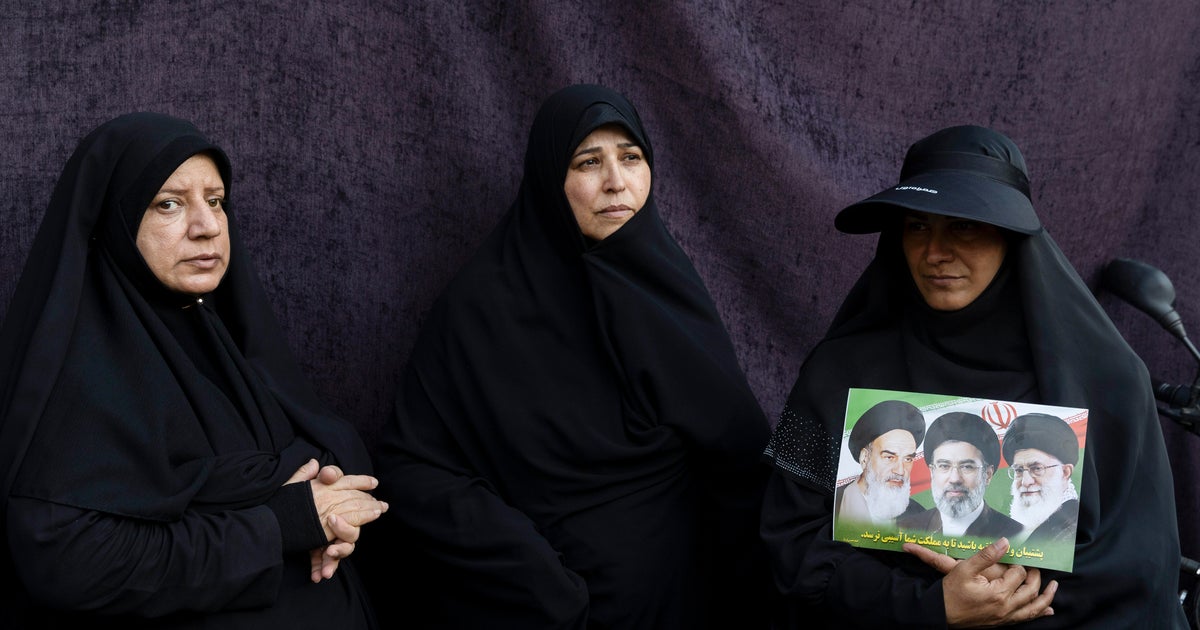
Iran’s military and political leaders said Thursday that the Strait of Hormuz remains under Tehran’s control, rejecting President Donald Trump’s claim that the United States has “total control” over one of the world’s most important energy shipping routes.
Hojjatoleslam Hossein Taeb, commander of the paramilitary Basij Organisation, said the waterway is “under the management and control of the Islamic Republic,” according to remarks quoted by Iran’s semi-official Fars news agency. “The Americans saw the power of the Islamic revolution,” he added.
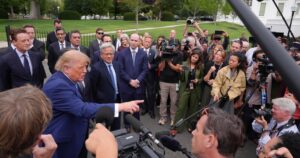
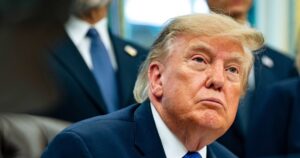
Trump wrote Wednesday on Truth Social that the U.S. has “total control” over the strait, adding, “I THINK WE WILL KEEP IT!”
Iran’s central military command, Khatam al-Anbiya, rejected that assertion. “The false claims of the United States that ships are passing through the Strait of Hormuz normally… are nothing more than lies and fabrications,” spokesperson Ebrahim Zolfaghari said in a video carried by Iranian state television, according to CBS News.
Zolfaghari said the strait remains under “complete management and control” of Iran and that no commercial ship or tanker can safely pass without the permission and supervision of Iranian armed forces.
The dispute follows months of conflict involving Iran, the United States and Israel. Al Jazeera reported that since the start of the U.S.-Israeli war on Iran on Feb. 28, Tehran has effectively blocked the strait, through which one-fifth of the world’s oil and liquefied natural gas transited before the war. The U.S. later imposed a naval blockade on Iranian shipping and ports while saying it would protect freedom of navigation for vessels traveling to and from non-Iranian ports.
In June, the U.S. and Iran reached an interim agreement extending a ceasefire that had taken effect in April and calling for a swift return to freedom of navigation in the Gulf, Al Jazeera reported. The deal later unraveled after Iran resumed limited attacks on vessels it said were operating contrary to the agreement. The U.S. then restarted strikes on Iran’s southern provinces, saying the strikes were aimed at reducing Tehran’s ability to target vessels in the Gulf.
Rasoul Sanaei-Rad, a senior Iranian military political official, said Iran would not reopen the strait unless the U.S. fulfilled its commitments under the interim deal, according to Fars. “In a possible future war, we will stand more firmly and more offensively,” he said.
Iranian Foreign Minister Abbas Araghchi also accused Washington of misjudging the situation. “The U.S. has long miscalculated due to intelligence failures. Case in point: The war on Iran,” he wrote on X. “Now, an even bigger miscalculation on the Strait of Hormuz.” In another post cited by Al Jazeera, he said, “Worse than fake news is fake intelligence.”
Iran and Oman have been discussing a new route through the strait, CBS News reported, but the talks have not been finalized. Tehran has said that even if a new route is agreed, it would not by itself reopen the waterway unless Washington meets Iran’s demands.
The tensions have affected markets. CBS News reported that oil prices fell more than 2% Thursday despite no signs of a deal to end the war, while stock markets mostly advanced as investors welcomed signs of easing U.S. inflation.
Iran also appeared to seek compensation after an oil spill in the Strait of Hormuz washed up on Qeshm Island. Shina Ansari, head of Iran’s Department of Environment, wrote on X that the slick was “just one example of the widespread pollution that has destroyed the region’s marine ecosystem over the past few decades,” asking who should compensate for the damage: “the energy-consuming countries that import from our region, or the aggressor parties that have turned this area into a playground for military operations?”





Be First to Comment