Key takeaways:
- Sen. Lindsey Graham’s death leaves Senate Republicans with a smaller margin as they pursue a new budget reconciliation bill and confirmations.
- House Republican hardliners are blocking unrelated legislation to demand Senate action on the SAVE America Act, which lacks enough Senate support.
- Lawmakers are also facing fights over Section 702 surveillance authority, the defense policy bill and confirmation hearings for Todd Blanche and Jay Clayton.
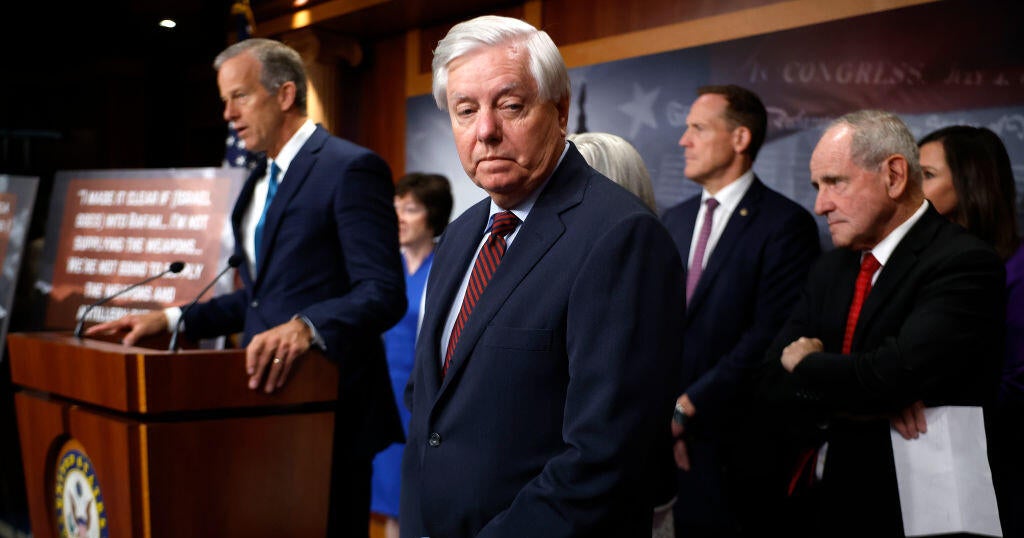
Congress returns to Washington with a crowded agenda, a shrinking window before the August recess and a new complication for Senate Republicans: the sudden death of Sen. Lindsey Graham, a central figure in the party’s budget strategy and a longtime White House liaison.
Graham, 71, died Saturday evening, CBS News reported, sending shockwaves through Washington as Republican leaders were already trying to restart stalled legislative business. The House has eight scheduled session days before a five-week recess, while the Senate is expected to remain in Washington through the first week of August.
The most immediate obstacle is President Trump’s demand for action on the SAVE America Act, a voting regulations bill that would ban mail-in ballots and impose new nationwide voting rules. The House has passed versions of the measure, but it lacks the votes to pass the Senate, where Democrats and some Republicans oppose it.
That has not stopped a group of House Republican hardliners, led by Rep. Anna Paulina Luna of Florida, from blocking unrelated legislation in an effort to pressure Senate leaders. Their blockade forced House Speaker Mike Johnson to send lawmakers home early for the Fourth of July recess.
“The House has now passed it THREE TIMES and each time we pass it to the Senate they FAIL. The people want it. The House wants it. The president wants it,” Luna wrote on social media, according to The Guardian. She criticized Senate Majority Leader John Thune for not backing changes to Senate rules, writing that he was “claiming it’s a numbers problem. I think it’s evident it’s a leadership problem.”
When Senate Republicans put a version of the bill up for a vote last month, it failed, with all Democrats and four Republicans opposing it, The Guardian reported.
Johnson has proposed attaching the voting measure to the annual defense policy bill, the National Defense Authorization Act, but hardliners rejected a procedural move to advance that plan before the recess. Vice President JD Vance is expected to attend Tuesday’s House GOP conference meeting as Republicans look for a way forward.
Trump has also called for a new party-line spending package through the budget reconciliation process, including $350 billion in defense funding and the SAVE America Act. Graham’s death complicates that effort. As chairman of the Senate Budget Committee, he helped start the process for the first two reconciliation bills this Congress and was expected to lead the next one in the Senate. Republicans are also operating without Sen. Mitch McConnell of Kentucky, who remains absent because of health issues, according to CBS News; The Guardian reported he remains hospitalized after a fall.
The Senate also faces confirmation hearings this week. Acting Attorney General Todd Blanche is scheduled to appear before the Senate Judiciary Committee, where some Republicans have raised concerns about a proposed $1.8 billion Justice Department “anti-weaponization” fund. Graham’s death leaves Republicans with a narrower margin on the panel.
The Senate Intelligence Committee is also set to hold a confirmation hearing for Jay Clayton, Trump’s nominee for director of national intelligence. Lawmakers hope Clayton’s confirmation could help resolve a dispute over Section 702 of the Foreign Intelligence Surveillance Act, a warrantless surveillance authority that expired June 12. The program had been recertified by the Foreign Intelligence Surveillance Court through March, but lawmakers have raised concerns about national security risks and civil liberties reforms.
Trump has tied renewal of the surveillance authority to the SAVE America Act, threatening not to sign an extension unless the voting bill is attached.
The defense policy bill faces its own uncertainty. Senate Minority Leader Chuck Schumer said Republicans were “pushing to advance the annual NDAA while refusing to negotiate on the president’s bloated, partisan topline budget request.” Democratic Sen. Brian Schatz said he would vote against advancing it, citing authorization for the Iran war and defense spending. “I usually vote yes on NDAA but this is an easy call for me,” he said.
Democrats are seeking to use Republican divisions ahead of the November midterm elections. After Trump refused to sign a bipartisan housing bill in protest over the lack of progress on the voting measure, House Minority Leader Hakeem Jeffries said, “Republicans would rather make it harder to vote than easier to afford a home. When people show you who they are, believe them.”








Be First to Comment