Key takeaways:
- The 70-metre Bayeux Tapestry arrived at the British Museum at 02:50 BST after a secret police-escorted journey through the Channel Tunnel.
- The embroidery depicts 58 scenes leading to the Battle of Hastings and the Norman Conquest of England in 1066.
- The British Museum sold 100,000 tickets on the first day of sales and will lend France items including Sutton Hoo artefacts and the Lewis chess pieces in return.
The Bayeux Tapestry has arrived at the British Museum under police guard, returning to Britain for the first time since it is believed to have been made nearly 1,000 years ago.
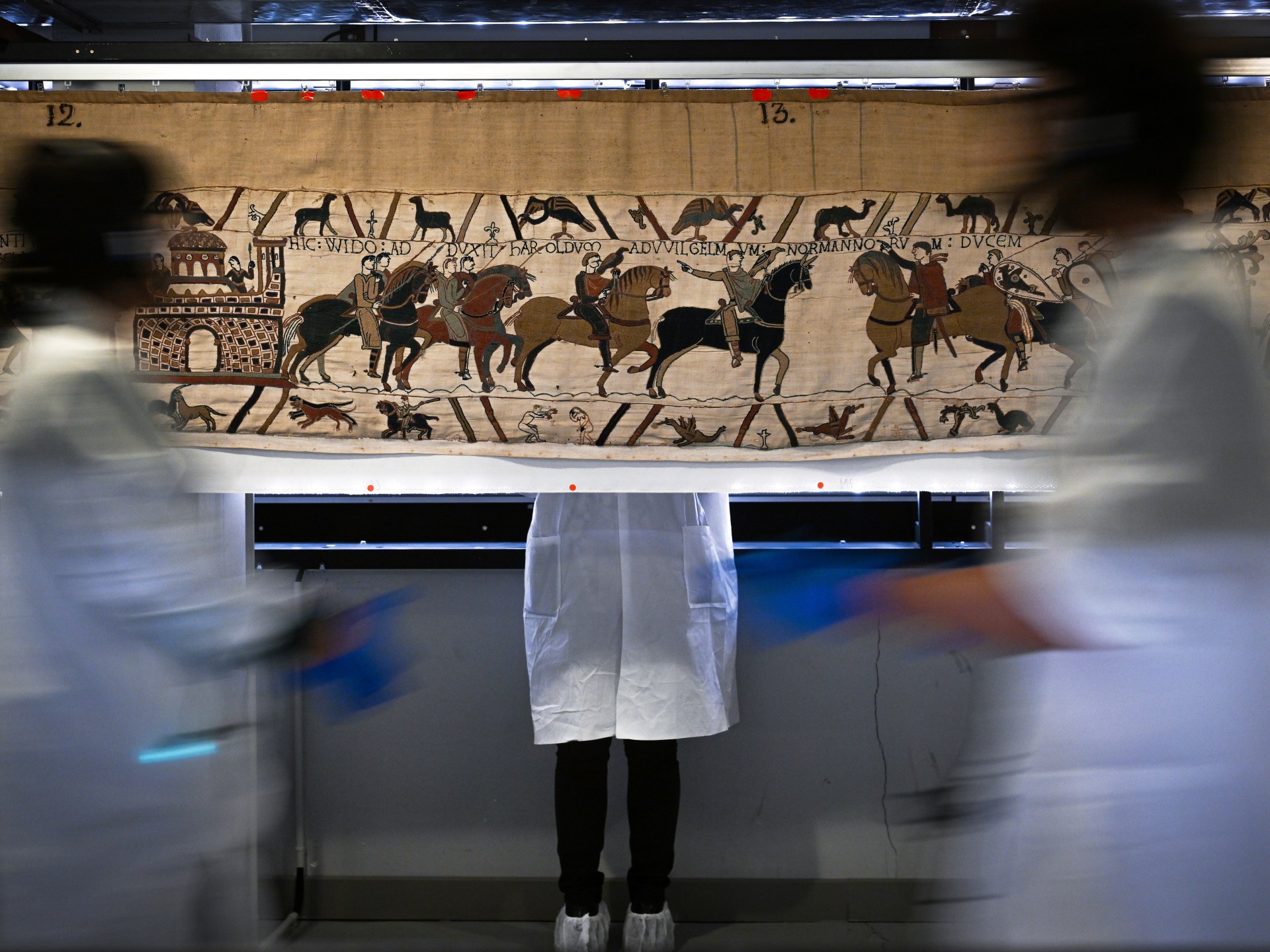
The 70-metre 11th-century embroidery, one of the most famous surviving works of medieval art, was delivered to the London museum at 02:50 BST after a secret journey from northern France. A police-escorted truck carried it through the Channel Tunnel overnight, ending in a loading bay where a heavy crate encased in an aluminium frame was lowered in front of a small group that included the French ambassador to the UK and British Museum officials.
“We’ve just witnessed something rather extraordinary, which is the arrival of the Bayeux Tapestry at the British Museum but specifically it is returning to England for the first time in almost 1,000 years,” museum director Nick Cullinan told the BBC. “It feels like a really remarkable thing not just to witness but to be part of, and we’re so excited to share it with as many people as possible.”
The tapestry, made of coloured woollen yarn stitched onto linen, depicts in 58 scenes the events leading to the Battle of Hastings and the Norman Conquest of England in 1066. It includes 626 characters, 202 horses, ships, swords and arrows, including one striking the soldier believed to be Harold II, though questions remain over whether that detail was added later.
The British Museum says it will display the work in September. The BBC reported the loan will last nine months, while Al Jazeera reported the tapestry will be on display at the museum until July 2027. The loan was backed by the French government and finalised between French President Emmanuel Macron and British Prime Minister Keir Starmer last year. It coincides with renovations at the Bayeux museum in Normandy, where the tapestry has been exhibited since 1983.
Macron described the loan in The Times as “a gesture of trust, a tangible expression of a long-standing friendship and a sign of our shared desire to see France and the United Kingdom build their future together”. He also posted an image of the tapestry projected onto the white cliffs of Dover with the word “merci”.
The move has drawn concern in France because of the work’s age and fragility. A petition opposing the loan called it a “heritage crime”. Artist David Hockney, before his death, also objected, writing: “Some things are too precious to take a risk with.”
Museum officials said extensive precautions were taken. The tapestry was kept on a folding stand, placed inside a temperature- and humidity-controlled crate, and then set within an outer cage fitted with metal springs to absorb road vibrations. Two practice journeys using a textile copy tested the route and the equipment.
“If anybody had said on the other side, especially on the French side as the lenders, ‘I think this is too risky to do’, it wouldn’t be arriving now,” Cullinan said. “A museum would never do something that imperilled the objects in its care.”
Peter Ricketts, the UK special envoy for the loan, said “everything possible” had been done to prevent damage. “No-one would want to bring the tapestry to the UK if they thought there was any damage or danger to this extraordinary object,” he said.
In return, the British Museum will loan France treasures including items from the Sutton Hoo hoard and the Lewis chess pieces, made from walrus ivory in the 12th century. The British Museum sold a record 100,000 tickets on the first day of sales for the exhibition, where the tapestry will be displayed flat with a mezzanine allowing visitors to view it in full.









Be First to Comment