Key takeaways:
- The National Capital Planning Commission voted 8-1, with three members present, to approve preliminary site and building plans for Trump’s proposed 250-foot arch.
- The commission postponed a decision on whether the 1910 Height of Buildings Act applies to the federal project, despite staff saying the law has historically been applied to federal buildings.
- Opponents raised concerns about the arch’s location, scale, impact on the Lincoln Memorial-Arlington Cemetery vista, traffic, pedestrian safety, lighting and airport flight paths.
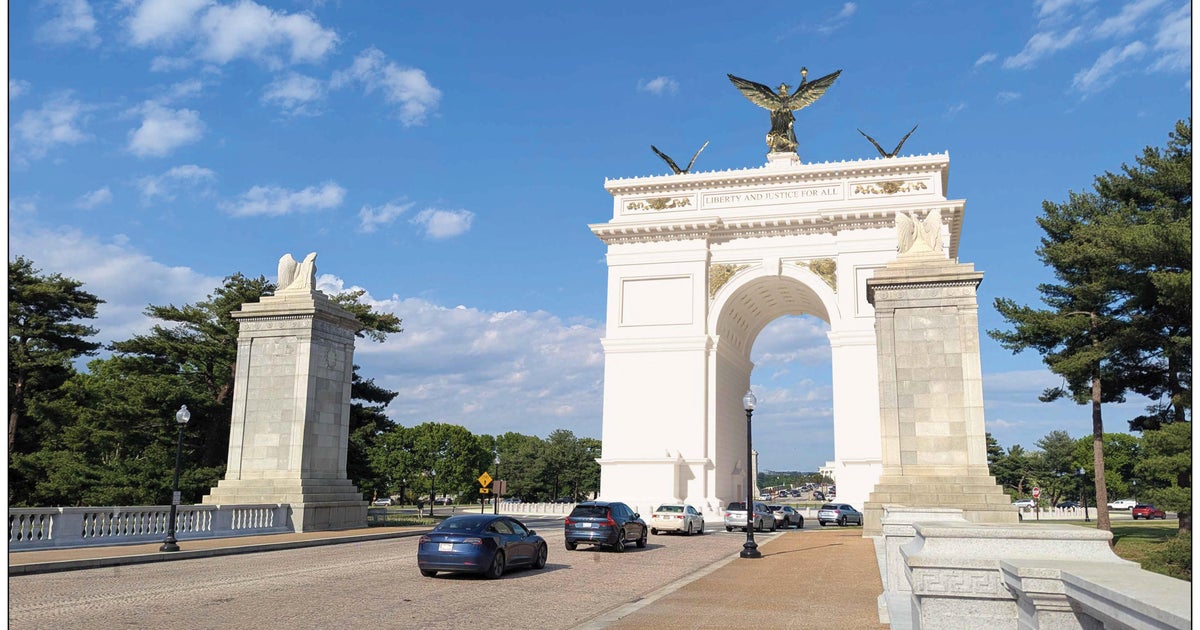
President Donald Trump’s proposed 250-foot triumphal arch near Arlington National Cemetery won preliminary approval Thursday from a key federal planning panel, advancing a project that has drawn intense public opposition and raised a major legal fight over Washington’s height limits.
The National Capital Planning Commission voted 8-1 to approve preliminary site and building plans for the monument at Memorial Circle, at the Virginia end of Arlington Memorial Bridge from Washington. Three commissioners voted present. The panel did not resolve whether the 1910 Height of Buildings Act, which limits many buildings in the capital to 130 feet, applies to the project.
Commission Chair Will Scharf, a Trump appointee who also serves as White House staff secretary, said the Interior Department had submitted a legal analysis making a “compelling argument” that the law “is not binding on the federal government.” The Interior Department oversees the federal land where the arch would be built and argued in a June memo that the act “does not apply to federal buildings.”
The commission’s staff has taken the opposite position, saying the agency has historically treated the height law as binding on federal projects. NPR reported that the commission’s general counsel, Meghan Hottel-Cox, wrote that since 1938 the panel has operated under the understanding that the law applies to federal construction. If that changed, she wrote, it “could fundamentally reshape the city’s architectural fabric, the balance of local vs. federal authority, and the visual character of the nation’s capital.”
Scharf said the commission could have a “vigorous debate” on the issue when the project next returns, possibly in September.
The proposed arch includes a 166-foot mezzanine, a 24-foot observation level and a 60-foot statue of Lady Liberty on top, CBS News reported. Commission staff suggested a redesign that would keep the monument’s total height at 250 feet while lowering the arch structure to 130 feet and the observation level to 20 feet, with the remaining height added to the statue. Under that proposal, Lady Liberty would rise 100 feet.
If built as proposed, the arch would stand more than twice as tall as the 99-foot Lincoln Memorial across the bridge and reach close to half the height of the 555-foot Washington Monument. CBS News reported it would also be roughly 30 feet taller than the Plaza de la República in Mexico City, currently the world’s largest arch.
Public criticism dominated Thursday’s meeting. More than 40 people spoke against the plan, NPR reported, reflecting concerns also raised in nearly 2,000 written comments. Opponents said the arch’s scale and placement would disrupt the carefully designed vista between the Lincoln Memorial and Arlington National Cemetery, a view meant to symbolize reunification after the Civil War. Others raised concerns about traffic, pedestrian safety, lighting, the flight path to Ronald Reagan National Airport and whether Congress must approve the project.
“My concern is not with commemoration itself, but with this specific proposal, its location, its scale, and its impact on a historic memorial landscape,” said Cynthia Morrison, a Gold Star mother. “The open space between the Lincoln Memorial and Arlington National Cemetery is not just empty land. It is deliberately designed and historically significant memorial vista.”
Michael Lemmon, a Vietnam veteran and plaintiff in a lawsuit against the arch, called for “a careful review by concerned stakeholders” including residents, veterans, historians and legislators. “As a combat veteran, I feel a duty to protect the memory and honor the sacrifice of my comrades and all those buried there,” Lemmon said. “This vainglorious monumental arch does neither.”
The U.S. Commission of Fine Arts, a separate federal agency, approved the arch design in May. The planning commission began reviewing it in June and said the project still needs revisions related to pedestrian access and lighting. Any Federal Aviation Administration recommendations must be incorporated, and the FAA still has to conduct a full aeronautical study before construction.
The White House has not released a cost estimate for the arch. The Guardian reported that Trump said last year the project could be paid for with unused funds from money raised from corporations, donors and wealthy individuals for a new $400 million White House ballroom, though some public money will be used for both projects. National Park Service documents filed last month seek an aggressive construction schedule of 20 hours a day over two years, CBS News reported.






Be First to Comment