Key takeaways:
- Trump said the ceasefire deal with Iran was “over” and called further dealings with Tehran a “waste of time.”
- Brent crude rose to nearly $79 a barrel and U.S. crude climbed to about $75 after attacks on three tankers near the Strait of Hormuz and U.S. retaliatory strikes.
- U.S. stock futures fell sharply, while airline and travel stocks dropped as heating oil prices, a proxy for jet fuel, climbed 2%.
Oil prices jumped more than 6% and U.S. stock futures fell sharply Wednesday after President Donald Trump said the ceasefire deal with Iran was “over,” rattling markets already on edge after attacks on three oil tankers near the Strait of Hormuz and U.S. retaliatory strikes.
“To me, I think it’s over,” Trump said on the sidelines of the NATO summit in Ankara, Turkey, according to NBC News. “I don’t want to deal with them anymore.” He added: “As far as I’m concerned, it’s over,” while saying negotiations could continue but that he considered them a “waste of time.”
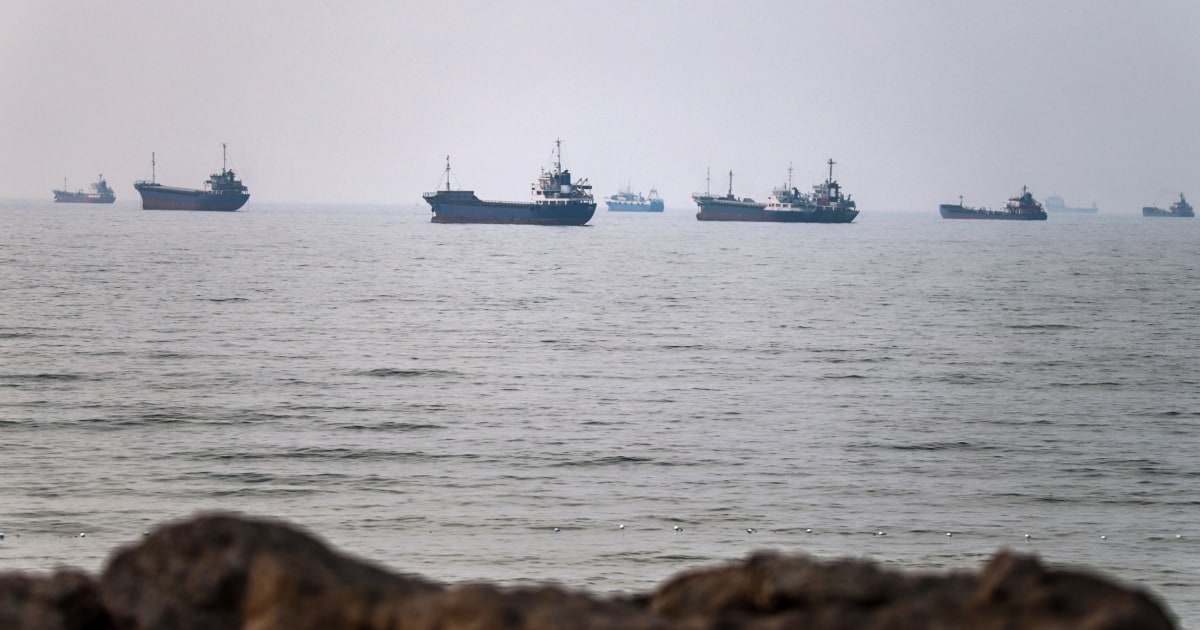
The comments followed what U.S. officials said were Iranian attacks on three commercial vessels near the Strait of Hormuz, a critical route for global oil shipments. NBC News reported that Tehran has not claimed responsibility for the attacks. Later Tuesday, U.S. Central Command launched “a series of powerful strikes against Iran” in retaliation, NBC reported.
Crude markets moved quickly. Brent crude, the international benchmark, rose about 6.2% to nearly $79 a barrel, while West Texas Intermediate, the U.S. benchmark, climbed more than 6.5% to about $75 a barrel, its biggest one-day move higher since the beginning of June, according to NBC News. CBS News reported Brent at $78.80, up 6.3%, and WTI at $75, up 6.4%.
The surge came after U.S. crude had fallen below $70 a barrel, roughly back to levels seen before the start of the Iran war in late February, CBS reported. NBC reported that after the U.S. and Iran signed a memorandum of understanding in mid-June, U.S. oil prices stabilized around $69 to $70 a barrel for much of the following three weeks.
Stocks also came under pressure before the opening bell. CBS reported Dow Jones Industrial Average futures down 527 points, or 1%, with S&P 500 futures off 0.8% and Nasdaq futures down 1.3%. NBC reported a steeper move, with Dow futures sliding more than 710 points, S&P 500 futures pointing to a drop of more than 1%, Nasdaq 100 futures down 1.5% and Russell 2000 futures tumbling 1.6%.
The sell-off spread beyond U.S. indexes. NBC reported that benchmark stock indexes in Spain, Germany and France fell 2%, while indexes in Italy and the United Kingdom dropped about 1.5%. Airline and travel shares were also hit as heating oil prices, a proxy for jet fuel, climbed 2%. Delta Air Lines and Southwest Airlines fell 3% in premarket trading, United Airlines dropped 3.5%, and Carnival and Royal Caribbean Cruises declined nearly 4%, NBC reported.
The renewed volatility threatens to halt a recent drop in gasoline prices. NBC reported that the national average gas price had fallen from as high as $4.56 per gallon in May to $3.79 as of Wednesday morning, but had remained flat for two days, according to AAA data tracked by the network.
“The ceasefire between the U.S. and Iran was always fragile, and some flare-ups were inevitable, unfortunately,” Ryan Sweet, chief global economist at Oxford Economics, said in a report cited by CBS. “The question is whether this represents a bump in the road or whether we’re emerging from the eye of the storm.”
Sweet said a breakdown in the peace deal could do more than lift oil prices, warning it could pressure AI supply chains in Asia, push central banks toward tighter policy, tighten financial conditions and affect the U.S. midterm elections.
The Trump administration also revoked a sanctions waiver Tuesday that had allowed Iranian oil sales. CBS reported that the Treasury Department said “General License X,” issued two weeks earlier as part of an interim peace deal and exempting Iranian oil sales from U.S. sanctions, would be replaced by a narrower waiver.
Some analysts said a return to full-scale hostilities was not certain. Vital Knowledge analyst Adam Crisafulli said in a research note cited by CBS that the White House appeared “extremely reluctant to escalate militarily and fully return to hostilities,” adding that “a deal remains much more likely than not.”
Alex Kuptsikevich, chief market analyst at FxPro, told CBS that energy markets had adjusted to reduced traffic through the Strait of Hormuz. “The market has adapted to the reduction in traffic through the Strait of Hormuz, found alternative routes, and global demand has fallen,” he said.










Be First to Comment