Key takeaways:
- Hernán Gil was pulled alive from rubble in Catia La Mar eight days after Venezuela’s June 24 twin earthquakes.
- Teams from seven countries helped free Gil from beneath 140 tonnes of rubble in a rescue complicated by aftershocks and unstable buildings.
- Venezuelan officials said 2,295 people have died, more than 11,000 were injured and almost 13,000 were left homeless.
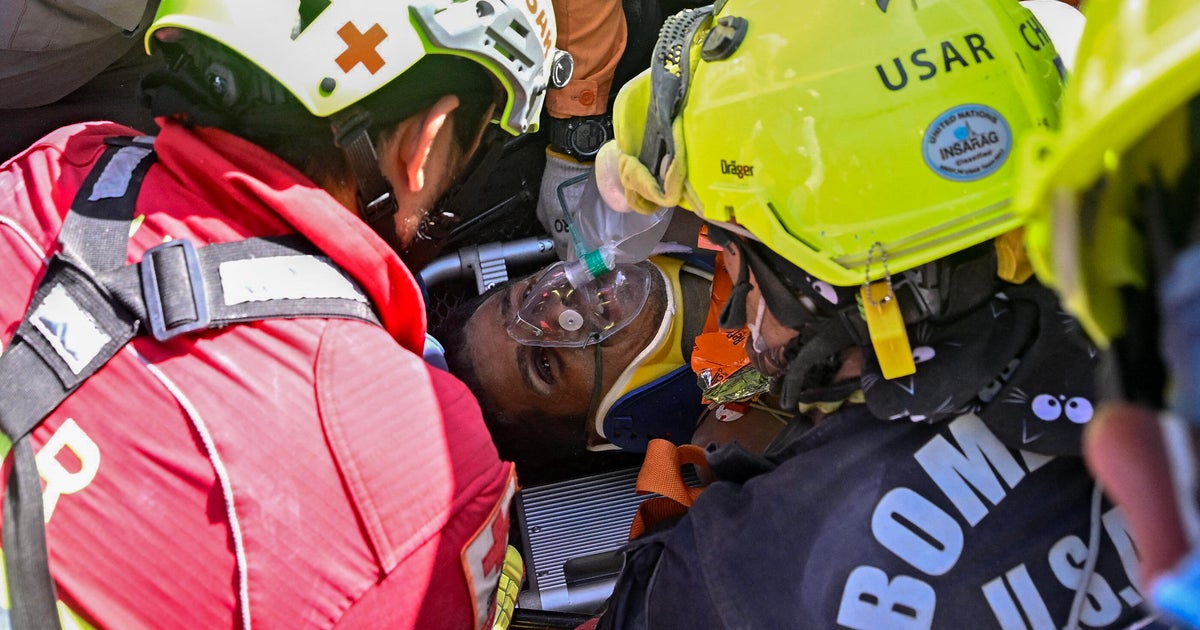
Rescuers in Venezuela pulled security guard Hernán Gil alive from the ruins of a collapsed building Thursday, eight days after twin earthquakes devastated coastal communities and killed nearly 2,300 people.
Hundreds of emergency workers cheered and embraced after Gil was brought out on a stretcher from the wreckage of a seven-story building in Catia La Mar, a coastal area heavily damaged in the June 24 disaster. His rescue came after teams from Venezuela, Chile, Costa Rica, El Salvador, Mexico, Portugal and the United States worked around the clock to reach him.
“This is truly a miracle,” Gil’s wife, Gusbimar Gonzalez, told AFP before he was freed. “I’m completely amazed because it’s the first time I’ve seen so many countries come together like this to save a single person.”
The BBC reported that emergency workers freed Gil more than 100 hours after first locating him beneath 140 tonnes of rubble. He had been on duty in a small concrete booth in the basement of a parking lot next to the Galerias Playa Grande mall when the quakes struck. The booth appeared to form a protective shell around him.
The rescue was slow and dangerous. Access ducts built by crews collapsed several times, and aftershocks threatened already unstable structures. “It is a very complex rescue,” Manny Sampang, a task force leader from the Los Angeles County Fire Department, told CBS News before Gil was pulled out. “I have multiple buildings leaning into that building that we are trying to rescue him from.”
A Chilean firefighter described the effort to the BBC as “without doubt the most complex and technically difficult which I’ve had to tackle.” El Salvador’s president wrote on social media that “the aftershocks have made this one of the most difficult rescues we have ever faced.”
Before the final extraction, rescuers used a small camera to make visual contact with Gil. A Chilean firefighter could be heard asking him to turn his head toward the camera. Gil was wearing a face mask passed to him through a small opening to protect him from dust and debris, and rescuers also asked him to put on goggles.
Ricardo Arias of the Costa Rican Red Cross told local journalist Joan Camargo that Gil was in stable condition, had been given water and was connected to an intravenous drip. “He has told us that he does not even have a crushed nail,” Arias said. “He is fine.” Marco Antonio Franco of the Mexican Red Cross described Gil as “a cheerful man” who asked for hydration drinks in specific flavors and encouraged rescuers to keep going.
The official toll has continued to rise. National Assembly President Jorge Rodriguez said Wednesday that 2,295 people had died, more than 11,000 were injured and nearly 13,000 were homeless. Tens of thousands remain unaccounted for. Interim President Delcy Rodriguez declared seven days of mourning, saying the country’s “soul is torn apart by the human losses.”
Other rescues have included an 18-day-old baby and his mother, who were trapped for 32 hours, a mother and her 9-month-old baby who suffered only minor injuries, and a small dog pulled from rubble after five days. But hopes of finding many more survivors have dimmed. In La Guaira, many collapsed buildings have been marked with a “D” for “deceased” after searches found no signs of life.
The crisis is shifting toward survival for those displaced by the magnitude 7.2 and 7.5 quakes. Food and water are scarce, aid lines are growing, and there have been reports of theft, including the arrest of four police officers accused of stealing valuables from rubble. The World Food Programme has appealed for $50 million to feed about 500,000 people for three months, while the World Health Organization warned that Venezuela’s health services are under “extreme pressure” and that disease outbreak risks are rising. NASA satellite data preliminarily estimated that 58,870 buildings were damaged or destroyed.


Be First to Comment