Key takeaways:
- U.S. Central Command said it struck Iranian missile and drone storage facilities and coastal radar positions after the Ever Lovely was hit in the Strait of Hormuz.
- Iran’s Revolutionary Guard said it retaliated against U.S. military positions in the region and warned of a broader response if attacks continue.
- The International Maritime Organization paused evacuation efforts for more than 11,000 sailors stranded in the key shipping lane after the cargo ship attack.
The United States struck Iranian missile, drone and radar sites Friday after accusing Tehran of violating a fragile ceasefire with a drone attack on a cargo ship in the Strait of Hormuz, escalating tensions around one of the world’s most important shipping lanes.
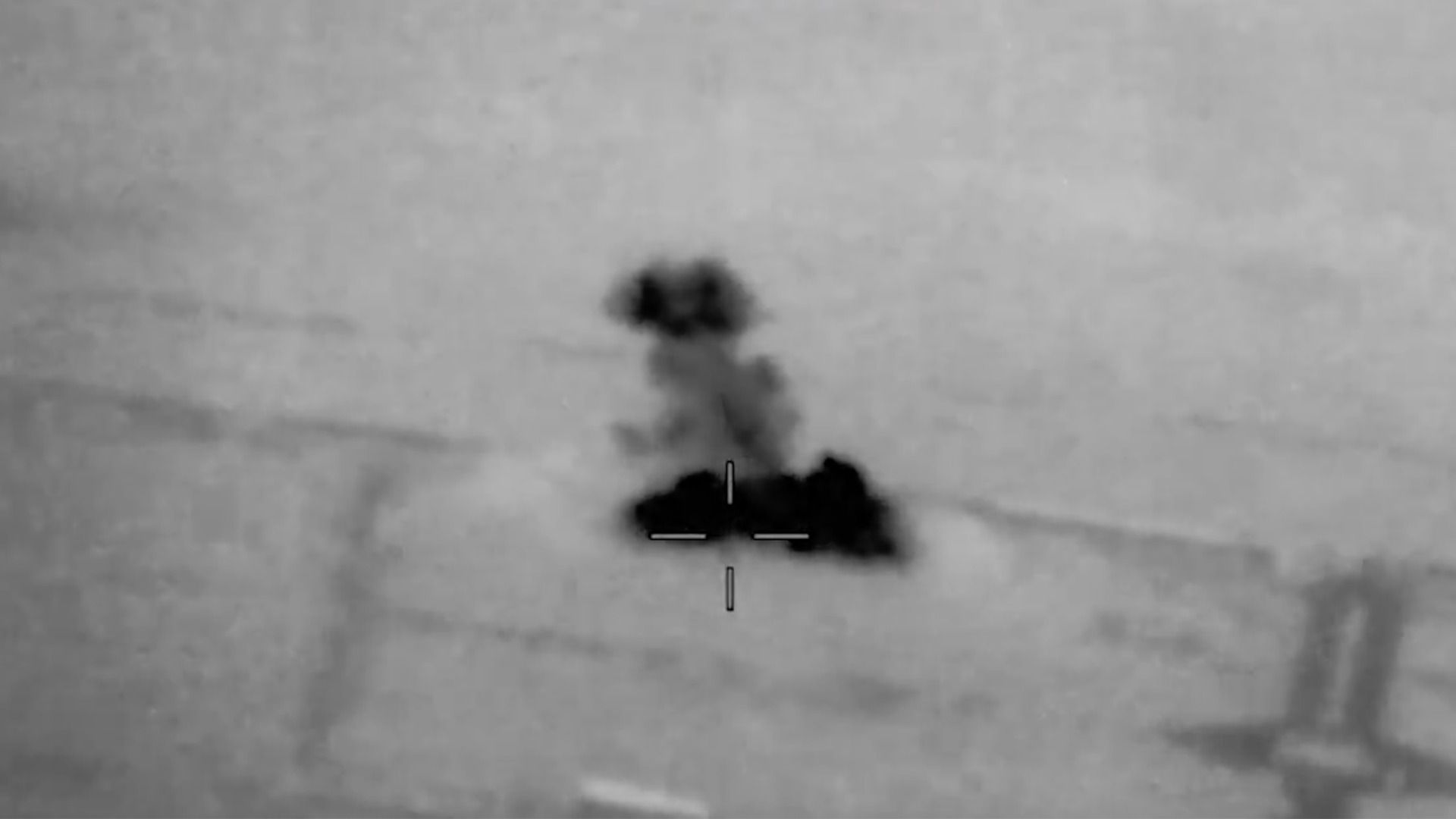
U.S. Central Command said it hit missile and drone storage facilities and coastal radar positions in Iran in what it called “a powerful response” to the attack a day earlier on the Ever Lovely, a Singapore-flagged commercial vessel. CENTCOM said the ship attack was “unwarranted aggression against commercial shipping by Iranian forces” and “clearly violated the ceasefire.”
“The dangerous behavior undermined freedom of navigation as commerce increasingly flows through the vital international trade corridor,” CENTCOM said, adding that the U.S. military would continue to support safe passage for commercial vessels in the strait.
President Donald Trump had accused Iran of a “foolish violation” of the truce. Asked at the White House how the United States might respond, he told reporters, “You’ll find out.” He added: “I don’t like the fact that they took a shot yesterday. They shouldn’t be doing that.” NPR reported that Trump said Iran had taken “actually four” shots.
Vice President JD Vance warned on X that if Iran “has disagreements about how the MOU is being applied, they can pick up the phone.” He added: “But violence will be met with violence.”
Iran rejected the U.S. account and blamed what the Islamic Revolutionary Guard Corps called the “treaty-breaking US regime.” The IRGC said the United States had attacked Iran’s coast “under various pretexts of a ship violating an unauthorised route in the Strait of Hormuz.” It said its navy had retaliated by striking U.S. military positions in the region, but did not provide details. “If the aggression is repeated our response will be more extensive than this,” the IRGC said, according to the BBC. Al Jazeera reported the IRGC warning as saying future responses would be “broader.”
Iranian state television, cited by Al Jazeera, reported an explosion late Friday near Taheroui pier in the southern port city of Sirik. Mehr news agency said Sirik Port was operating normally and no damage had been reported to equipment or facilities.
The Ever Lovely was struck Thursday 7.5 nautical miles southeast of Oman’s port of Dahit, according to the United Kingdom Maritime Trade Operations center. The ship’s owner, Evergreen, said the vessel had been following UKMTO’s recommended route. “All crew members remain safe as does the vessel itself and all cargo,” the company said. Tehran said the ship was attacked because it was using an unauthorised route through the waterway.
The incident disrupted efforts to clear ships stranded in the Gulf after the strait was effectively closed during the war that followed U.S. and Israeli attacks on Iran at the end of February. The closure had pushed up global oil prices and slowed shipments of commodities including fertiliser.
The United States and Iran agreed on June 17 to end hostilities under a 14-point memorandum of understanding that called for Iran to use its “best efforts for the safe passage of commercial vessels with no charge for 60 days.” The sides are still negotiating the details, including passage through the strait and the future of Iran’s stockpile of highly enriched uranium, NPR reported.
The International Maritime Organization paused a planned evacuation of more than 11,000 sailors stranded in the shipping lane after the Ever Lovely was hit. NPR reported that about 115 ships had moved out of the strait in recent days, with about 500 still in the area, citing IMO Secretary-General Arsenio Dominguez.
Shipping data firms said traffic continued but confidence weakened. Windward said 43 transits were recorded after the incident, while Lloyd’s List Intelligence said at least two tankers reversed course after Iran insisted vessels use only Tehran-approved routes.





Be First to Comment