Key takeaways:
- The Supreme Court ruled 6-3 that RLUIPA does not allow Damon Landor to sue individual Louisiana prison officials for money damages.
- Landor said guards at Raymond Laborde Correctional Center threw away a court ruling he provided, handcuffed him to a chair and shaved dreadlocks he had grown for nearly 20 years.
- Justice Ketanji Brown Jackson dissented, saying prisoners whose religious rights are violated in state prisons will often be left “remediless.”
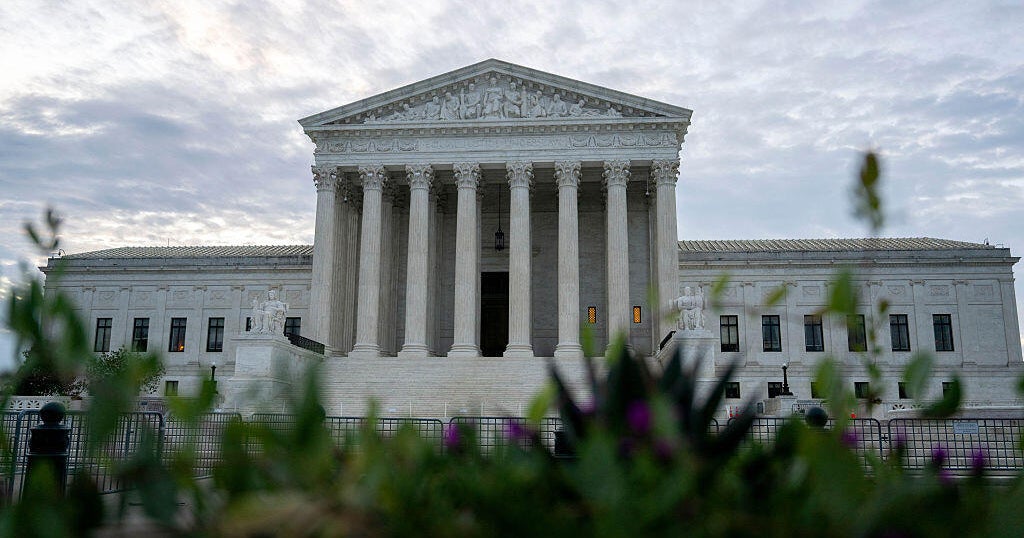
The Supreme Court on Tuesday barred a former Louisiana inmate from suing state prison officials for money damages after guards handcuffed him to a chair and shaved off dreadlocks he had grown for nearly 20 years as part of his Rastafarian faith.
The justices ruled 6-3 along ideological lines against Damon Landor, upholding a lower court decision that dismissed his lawsuit under the Religious Land Use and Institutionalized Persons Act, a 2000 federal law that protects the religious rights of people in prisons, jails and other institutions. Justice Neil Gorsuch wrote the majority opinion, joined by Chief Justice John Roberts and Justices Clarence Thomas, Samuel Alito, Brett Kavanaugh and Amy Coney Barrett. Justices Sonia Sotomayor, Elena Kagan and Ketanji Brown Jackson dissented.
Landor, a devout Rastafarian, had argued that Louisiana prison officials violated federal law when they shaved his head in 2020 near the end of a five-month prison sentence for drug possession. His religion requires him to let his hair grow, and he had taken what court papers described as the Nazarite Vow to “let the locks of the hair of his head grow.” The Guardian reported that his locks reached his knees.
For the first four months of his incarceration, two prisons allowed Landor to keep his hair long or covered by a “rastacap.” The dispute arose after he was transferred to the Raymond Laborde Correctional Center in Cottonport, Louisiana, with about three weeks left in his sentence.
At intake, Landor told a guard he was a practicing Rastafarian and presented proof of his religious accommodations, according to court filings. He also handed over a copy of a 2017 decision by the U.S. Court of Appeals for the 5th Circuit that found Louisiana’s policy of cutting incarcerated Rastafarians’ hair violated RLUIPA. His lawyers said guards threw the ruling in the trash, handcuffed him to a chair and shaved his head.
“When I was strapped down and shaved, it felt like I was raped,” Landor said in a statement during the case, as reported by ABC and cited by The Guardian.
Landor sued the Louisiana Department of Corrections and Public Safety, along with the prison warden and guards. A federal judge dismissed the case, finding that RLUIPA does not allow damages claims against individual state officials. A three-judge 5th Circuit panel upheld that decision in 2023, citing earlier circuit precedent, though the appeals court “emphatically” condemned Landor’s treatment. The full 5th Circuit declined to rehear the case.
Gorsuch wrote that Landor “does not have a federal RLUIPA cause of action against the officers.” He said that under the Spending Clause, Congress could not impose liability directly on the officers and instead had to rely on consent. “And because they never agreed to answer suits like this one, Mr. Landor’s case cannot proceed against them any more than a breach of contract action might proceed against a defendant who never formed a contract,” Gorsuch wrote.
Jackson, writing for the dissenters, rejected the majority’s reliance on what she called a “full-throated endorsement of a contract analogy.” She warned that prisoners “like Landor who suffer violations of their religious freedom in state prisons — no matter how blatant — will often be left remediless.”
“Encroachments on prisoners’ statutory rights are likely to happen with fair frequency, as state-empowered prison officials will have little incentive to abide by federal law, even if it is handed to them on a piece of paper,” Jackson wrote.
The Trump administration had backed Landor, urging the Supreme Court to revive his case and warning that barring money damages against individual officials would undermine enforcement of RLUIPA. Landor’s lawyers made a similar argument, saying the statute would provide no deterrent against abuse without a damages remedy.









Be First to Comment