Key takeaways:
- French officials said 40 people, mainly young people, have drowned since Thursday during the heat wave.
- Météo-France recorded France’s hottest June day on Monday and its hottest night ever from Monday to Tuesday.
- Spain, Italy, Germany, Britain, the Netherlands and Belgium also issued heat alerts or reported disruptions as temperatures climbed across Europe.
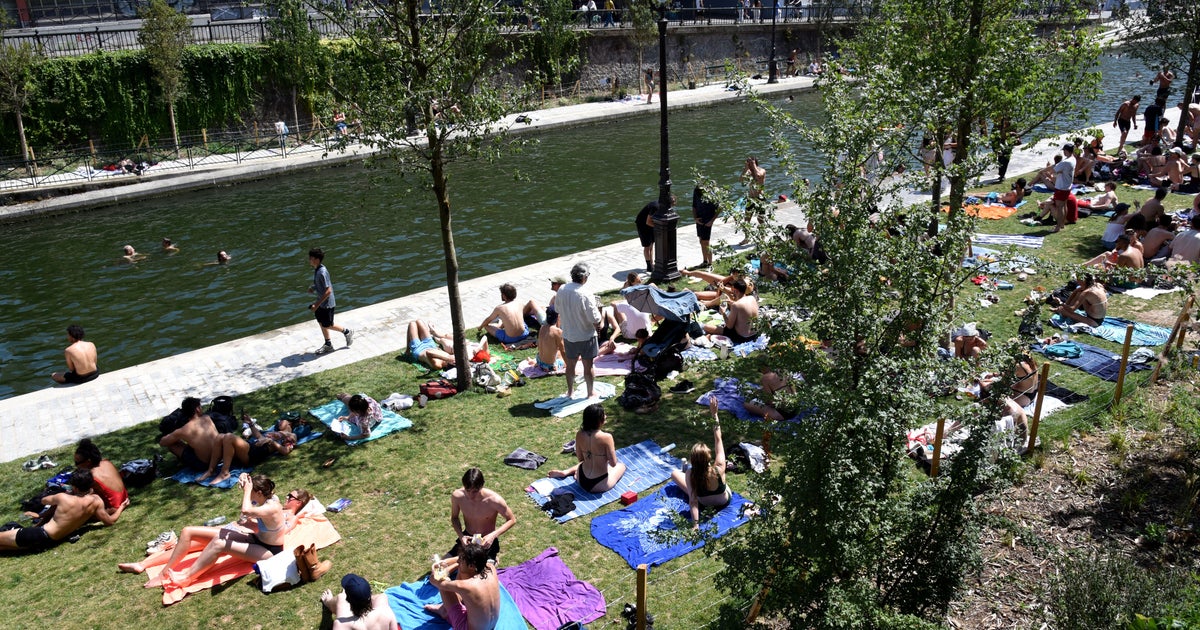
Forty people have drowned in France since Thursday as residents sought relief from a severe heat wave that has pushed temperatures to record levels and disrupted schools, trains, landmarks and power operations across parts of Europe.
French Prime Minister Sébastien Lecornu said the drowning victims were mainly young people. “They are the first victims of the crisis we are facing,” he said, calling the deaths a “tragic scourge,” according to Al Jazeera. Sports and Youth Minister Marina Ferrari warned against swimming in unauthorized or unsupervised places. “It’s not something to be taken lightly, going swimming in unsupervised areas during a heat wave,” she told French radio, the BBC reported.
France has been among the countries hardest hit, along with Spain and Italy. Météo-France said the country recorded its hottest June day on Monday and its hottest night ever from Monday to Tuesday, with a national average minimum of 21.6 degrees Celsius, or 70.9 degrees Fahrenheit. The weather service put 54 departments — about half the country — under red heat wave alert Tuesday, and the BBC reported that the alert would be extended Wednesday afternoon to 58 of France’s 96 metropolitan departments.
“Further record-breaking temperatures are expected, including some that could surpass all previous records, regardless of the time of year,” Météo-France said. Daytime highs above 104 degrees Fahrenheit were forecast in many French towns.
The heat has strained public services in a country without widespread air conditioning. Schools closed early or changed timetables. In Paris, the Eiffel Tower closed at 4 p.m. Tuesday instead of remaining open late, and the Louvre said it would close early from Wednesday through Saturday because its historic building is “not sufficiently adapted to climate change.” Valérie Pécresse, president of the Île-de-France region, urged people not to travel and to work from home, saying: “The rail tracks cannot withstand temperatures above 50C. So we’ll have a lot of disruption to public transport.”
The BBC reported that a 13-year-old girl drowned after entering the River Seine at Fontaine-le-Port with her family, though she did not know how to swim. A young professional footballer was in critical condition after being pulled from the River Rhône near Lyon, where swimming is banned. Two children, ages 2 and 4, died after being found in a family car in Carpentras, deaths authorities linked to the heat, while Al Jazeera reported that three people ages 80 to 95 died in the Bordeaux region from heat-related health issues.
The heat wave has spread across Europe. Spain’s weather service Aemet issued red alerts for parts of Andalusia, Cantabria and the Basque Country, with temperatures forecast to exceed 44C near Córdoba and 42C in the Ebro valley. Aemet said 101 of its 828 stations reached or exceeded 40C on Monday, with 45C recorded in Andújar. Meteorologist Rubén del Campo said June heat waves in Spain have become more common; the BBC reported that Aemet has recorded 10 in mainland Spain from 2000 to 2025, compared with two in the previous 25 years.
In Italy, red heat alerts were declared in 15 cities, including Rome, Milan, Florence, Turin and Venice. The government revived emergency labor protections allowing companies to halt or reduce operations during dangerous heat and access state-backed furlough support.
Germany also reported several drowning deaths, according to the BBC, as temperatures were expected to rise to 40C in the west and southwest. The Netherlands issued a Code Orange alert for southern and central areas, and Belgium activated the alert phase of its national ozone and heat plan for only the second time.
In Britain, schools closed and train services were canceled as the Met Office issued a red extreme heat warning for Wednesday and Thursday. National Rail urged people to travel only if absolutely necessary.
Climate agencies and scientists cited in the reports linked the intensifying heat to climate change. Copernicus has said Europe is the world’s fastest-warming continent, warming twice as fast as the global average since the 1980s, while the World Health Organization’s Europe office said this month that more than 200,000 people across Europe died from heat-related causes over the past four years, most of them preventable.









Be First to Comment