Key takeaways:
- Ohio Gov. Mike DeWine said Tuesday that Ohio should abolish the death penalty, which he helped reinstate through a 1981 statute.
- Ohio has not carried out an execution since 2018, and DeWine has repeatedly postponed scheduled executions while in office.
- Gallup found U.S. support for capital punishment fell from 80% in 1994 to 52% in 2025.
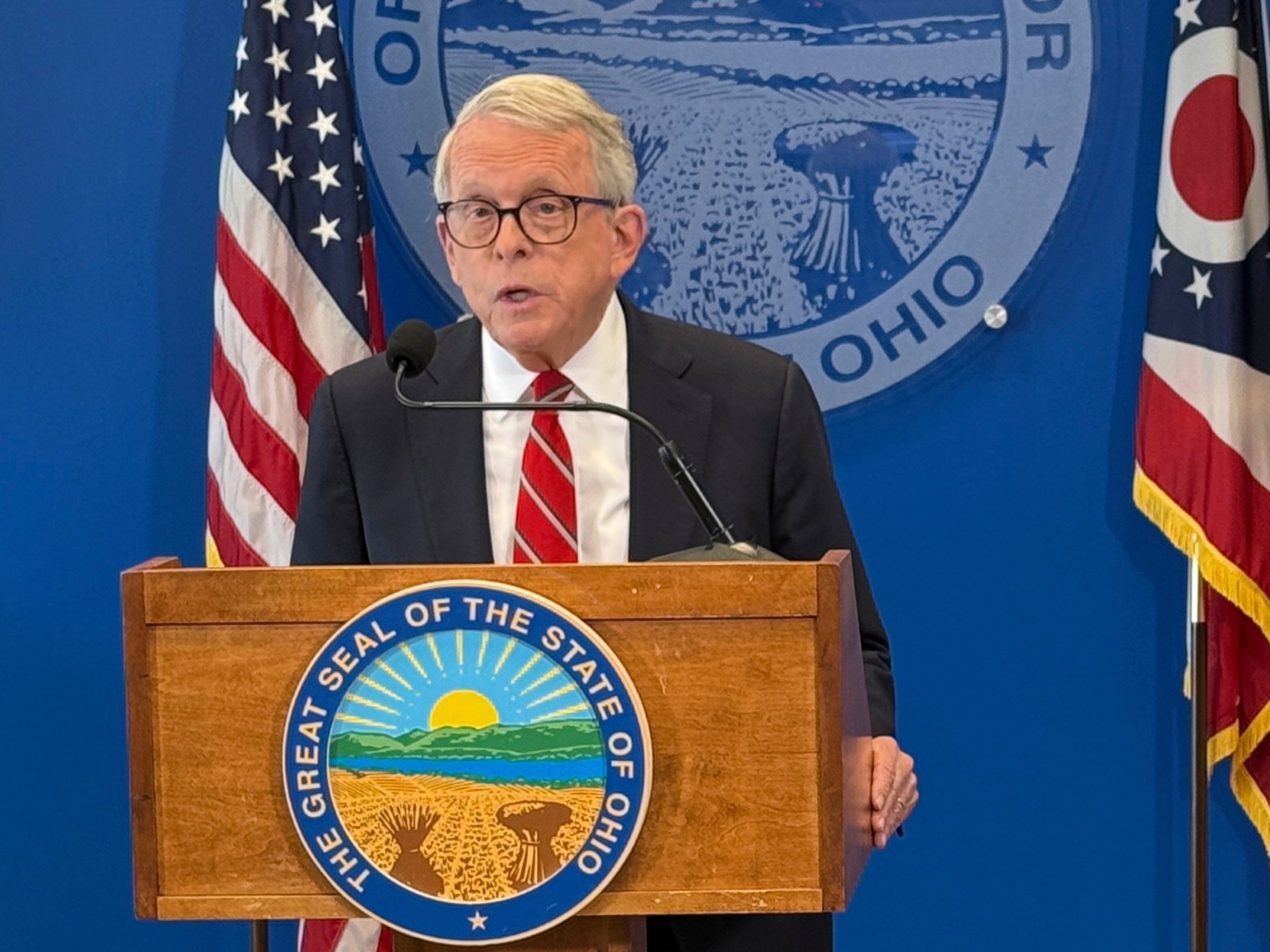
Ohio Gov. Mike DeWine, a Republican who helped write the law that restored capital punishment in the state more than four decades ago, called Tuesday for Ohio to abolish the death penalty, saying it no longer deters murder and cannot be morally justified.
“I no longer believe the death penalty is a deterrent to murder,” DeWine said. “The moral justification I had for voting for the death penalty simply no longer exists.”
The reversal marks a significant shift for the 79-year-old governor, whose political career has included service as a prosecutor in southwest Ohio, a state senator, a member of Congress, a U.S. senator, lieutenant governor, attorney general and governor. After Ohio’s reinstated death penalty law was struck down in 1978, DeWine, then a newly elected state senator, helped craft the 1981 statute that survived court challenges and remains in effect.
DeWine said Tuesday that the arguments he once accepted as a young prosecutor and lawmaker no longer withstand scrutiny. “I do not believe that argument today can be successfully made, nor do I believe that there’s any chance in the future the facts that I’ve cited to support that belief will change,” he said. “Therefore, I believe Ohio should abolish the death penalty.”
Ohio’s last execution took place in 2018, the year DeWine was elected governor. Since taking office, he has repeatedly postponed scheduled executions, creating a de facto moratorium. In 2021, he signed a law barring capital punishment for defendants with serious mental illness.
DeWine pointed to the long delays that often separate death sentences from executions. In Ohio’s last 10 executions, the average time between sentencing and execution was 21 years. “In summary, each decade that the death penalty has been in effect, the chances of a murderer getting executed get more and more and more remote,” he said.
Robin Maher, executive director of the Death Penalty Information Center, a nonpartisan research organization, said efforts to speed up executions risk overlooking mistakes. “A lot of people think the response is to shorten the time between sentence and execution, but then we see how many times we get it wrong,” Maher said. “When we take the time to thoughtfully review these cases, as we should, we find errors. And that takes time, and a lot of money.”
DeWine also cited the toll on murder victims’ families, who he said can feel re-victimized by years of litigation, and on corrections staff responsible for carrying out executions. The Guardian reported that he referred to high-profile botched executions, including the 2014 lethal injection of Dennis McGuire using an untested drug combination.
The governor urged the Republican-controlled Ohio legislature to repeal the 1981 statute. Bipartisan repeal bills have been introduced in both chambers, but legislative leaders have not called them for votes. DeWine said lawmakers should act, but if they do not, the question could go to voters. Ohio allows citizen-initiated constitutional amendments.
“The legislature can take this action, and I believe they should take this action,” DeWine said. “But if the legislature does not want to make that decision, they can leave it up to a vote of the people of the state of Ohio.”
Ohio House Speaker Matt Huffman, a Republican, said in February that he would “vigorously oppose” efforts to abolish the death penalty. DeWine said he has spoken with Huffman and that they remain at odds. “Reasonable people, for centuries, have come down on both sides of this issue,” DeWine said. “There are good people on both sides of this issue.”
The governor’s stance also differs from President Donald Trump’s push to expand federal use of capital punishment. Al Jazeera reported that Trump announced plans in April to expand the death penalty, including through proposed use of firing squads, after reversing a moratorium imposed under former President Joe Biden.
Support for capital punishment in the United States has declined, though a majority still supports it. Gallup found support peaked at 80% in 1994 and fell to 52% in 2025. Gallup also found that belief in the death penalty as a deterrent dropped from 62% in 1985 to 32% in 2011. Al Jazeera reported that 23 states have barred the death penalty, while several others, including California and Oregon, have effectively paused executions.
DeWine is term-limited and will leave office in January. His office declined Tuesday to comment to The Guardian on whether he would commute the death sentences of the 114 prisoners on Ohio’s death row.









Be First to Comment