Key takeaways:
- North Korea unveiled a new nuclear bomb fuel production facility but did not disclose its location or when it began operating.
- Kim Jong Un said North Korea’s weapons-grade nuclear material production capacity has more than doubled compared with five years ago, according to KCNA.
- South Korea’s Joint Chiefs of Staff identified the newly disclosed site as a uranium enrichment facility.
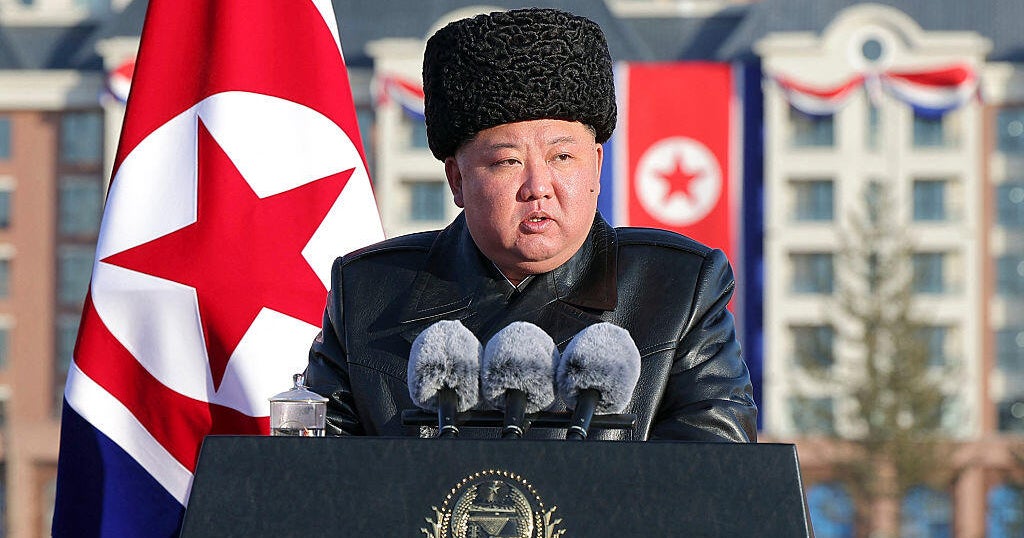
North Korea unveiled a new facility to produce fuel for nuclear bombs, with leader Kim Jong Un calling for the country to expand its nuclear forces “at an exponential rate” as tensions persist with the United States and South Korea.
The official Korean Central News Agency said Thursday that the facility uses “more sophisticated technology,” but it did not say where it is located or when it began operating. State media photographs showed Kim walking through narrow aisles lined with dense rows of silver tubes and pipes, images that appeared to show a large centrifuge hall used to enrich uranium for weapons.
KCNA said Kim visited the facility on Wednesday to review operating data, current production targets and long-term plans. Al Jazeera reported that Kim made the remarks during a visit on Thursday. According to South Korea’s Joint Chiefs of Staff, the site disclosed this week is a uranium enrichment facility.
Kim said North Korea’s capacity to produce weapons-grade nuclear material has more than doubled compared with five years ago, KCNA reported. That claim cannot be independently verified. He said the need to strengthen the country’s nuclear war deterrent “both in quality and quantity” had grown because of confrontation with “the most ferocious enemies,” an apparent reference to the United States and South Korea, and cited other unspecified threats and crises.
After a meeting at the facility, Kim said top officials had “confirmed the order of priority for implementing the ambitious future plan designed to beef up our state’s nuclear forces at an exponential rate,” according to KCNA. He also called the effort a “historic event that has set up an epochal milestone in rapidly upgrading our nuclear capabilities,” Al Jazeera reported.
The disclosure came less than two years after North Korea publicly revealed another covert uranium enrichment plant in September 2024. That was its first public disclosure of such a facility since it showed one at the Yongbyon nuclear complex to visiting American scholars in 2010. Nuclear weapons can be built using either highly enriched uranium or plutonium, and North Korea has facilities to produce both at Yongbyon.
Last September, South Korean Unification Minister Chung Dong-young said North Korea was operating four uranium enrichment facilities, including Yongbyon, and that they were running every day. In April, International Atomic Energy Agency Director General Rafael Grossi said the agency had confirmed “a rapid increase” in activity at nuclear facilities in North Korea.
Kim has focused on enlarging and modernizing North Korea’s nuclear arsenal since his high-stakes diplomacy with President Donald Trump collapsed in 2019. He has since rebuffed offers from Washington and Seoul to restart talks.
Some analysts said the facility visit appeared intended to reinforce Pyongyang’s position that denuclearization is not an option before any diplomatic engagement. Chad O’Carroll, founder of the North Korea-focused website NK News, told Reuters that the timing could be linked to a possible visit by Chinese President Xi Jinping to Pyongyang. O’Carroll noted that before Kim traveled to Beijing in September, he reviewed plans for a new intercontinental ballistic missile, the Hwasong-20.
“The logic would be to demonstrate absolutely that denuclearisation is not possible, right on the eve of contact with the PRC,” O’Carroll said, using the abbreviation for the People’s Republic of China.
The U.S. Treasury Department in March imposed sanctions on six people and two companies it accused of helping North Korea use remote IT workers to defraud businesses and funnel hundreds of millions of dollars into its nuclear weapons programs. U.S. officials estimated the scheme brought in nearly $800 million in 2024 alone.







Be First to Comment