Key takeaways:
- The Trump administration is seeking about $67 billion tied to the Iran war as part of a broader supplemental request reported at roughly $88 billion.
- At least 17 U.S. service members have been killed since the war began in February, including three in recent days.
- Senators from both parties questioned aspects of the war, though committee chair Susan Collins said urgent military readiness needs still must be funded.
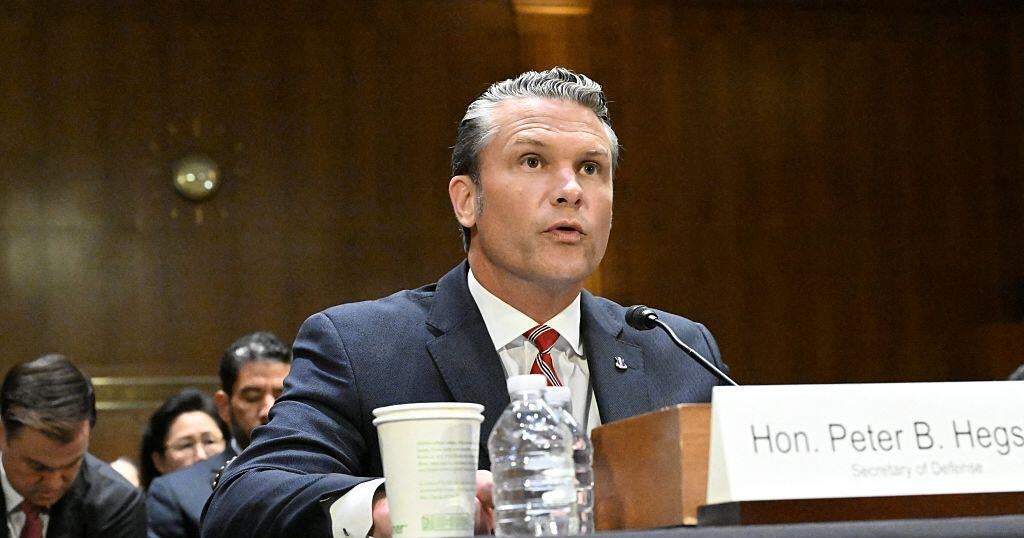
Defense Secretary Pete Hegseth and Gen. Dan Caine faced senators Tuesday as the Trump administration sought tens of billions of dollars to sustain the expanding war with Iran and replenish U.S. military supplies after a deadly stretch for American troops.
Hegseth and Caine, the chairman of the Joint Chiefs of Staff, testified before the Senate Appropriations Committee as lawmakers weighed a supplemental funding request that includes about $67 billion for the Iran conflict, part of a broader request reported by CBS News as $88 billion and by The Guardian as $87.6 billion. The administration is also seeking $1.5 trillion to fund the Defense Department in the next fiscal year.
“Rest assured that every dollar appropriated to the Department of War will be focused on building the lethality of our joint force, and reinforcing peace through strength,” Hegseth said in his opening statement.
Hegseth did not mention Iran directly in his opening remarks, but said the supplemental request includes $21 billion for readiness, including money to replace “much of the equipment utilized during recent operations.” CBS News reported that last month’s request included $21 billion for munitions, $17.3 billion for operational costs and $12.1 billion for classified programs. The package also includes funding for efforts to combat an Ebola outbreak in African countries and $11.1 billion in farm aid. Agriculture Secretary Brooke Rollins was also scheduled to testify Tuesday.
The hearing followed a sharp escalation in the conflict. At least two U.S. soldiers were killed in an Iranian attack Friday, and another service member died in Iraq during a controlled explosion to destroy an Iranian drone. The deaths brought the number of U.S. service members killed since the war began in February to 17. Nearly 100 American troops have been injured in Iranian strikes on bases across the Middle East this month, officials told CBS News. The Guardian reported most of the injuries were minor.
The U.S. carried out a 10th consecutive night of strikes on Iranian military infrastructure Monday after a ceasefire between the U.S. and Iran collapsed, CBS News reported.
Sen. Susan Collins of Maine, the Republican chair of the committee, opened the hearing by recognizing the service members who “made the ultimate sacrifice while serving our nation.” Caine also honored the three service members killed over the weekend and said the money was needed to confront threats around the world.
“I’ve come to you today to request the necessary funds while in the window of opportunity, while time is still on our side,” Caine said. “The United States of America faces a global list of military challenges — in the Middle East, in Europe, in the Pacific. Both nuclear and nonnuclear challenges, and the continued threat of terrorism.”
Democrats questioned the cost and direction of the war. Sen. Patty Murray of Washington, the committee’s top Democrat, said the conflict is “spiraling out of control again” and criticized the request.
“My colleagues and I cannot and will not support rubber-stamping a request to bankroll this war and whatever other misadventures Trump wants to get us into next,” Murray said. “The American people want to see a quick and strategic end to this war, not $70 billion of their tax dollars sent to keep it going.”
CBS News reported that a defense official testified in late April that the war had cost about $25 billion. The Guardian reported that Russell Vought, director of the Office of Management and Budget, previously told Congress the running cost was about $30 billion, a figure experts largely believe is a severe undercount.
Some Republicans have also raised concerns. Collins and Sen. Lisa Murkowski of Alaska have supported war powers resolutions aimed at limiting President Trump’s authority over the conflict. Collins acknowledged “divergent views on this committee about the decision to use military force against Iran,” but said there are “must-pay bills and urgent requirements” facing the department.
“We should not undermine the readiness of our service members for any engagement, or refuse to rebuild critical capabilities,” Collins said.
House Republicans have considered pursuing Pentagon funds through budget reconciliation, which can allow the majority party to advance budget measures without Democratic support. But Collins, Murkowski and other Senate Republicans have questioned that path. Senate Majority Leader John Thune said last week reconciliation is “very different in the House than it is in the Senate” and called it “an option,” but “not, certainly, the only option.”






Be First to Comment