Key takeaways:
- The Andes hantavirus detected on the MV Hondius matches known South American strains with no new dangerous characteristics.
- The outbreak on the cruise ship has resulted in 10 cases and three deaths, including a Dutch couple exposed in South America.
- Canadian and U.S. health authorities are monitoring multiple potential cases linked to the cruise ship, but the public risk remains low.
French health authorities have confirmed that the Andes hantavirus detected in a passenger from the MV Hondius cruise ship matches known strains circulating in South America, with no evidence of increased transmissibility or severity. The Pasteur Institute in France fully sequenced the virus found in the French patient, who was hospitalized in serious condition in Paris. Health Minister Stéphanie Rist stated on social media, “The analyzed virus corresponds to the viruses already known and monitored in South America. At this stage, no element suggests the emergence of a form of the virus that could be more transmissible or more dangerous.”
The Andes virus is notable as the only hantavirus capable of person-to-person transmission. Genomic analysis confirmed that the virus in the French passenger matched those detected in other cases aboard the ship and closely resembled samples circulating in South America, including those found in rodents. Jean-Claude Manuguerra, head of Pasteur’s Environment and Infectious Risk unit, said the minor genetic variations observed reflected natural viral variation without affecting the virus’s characteristics.
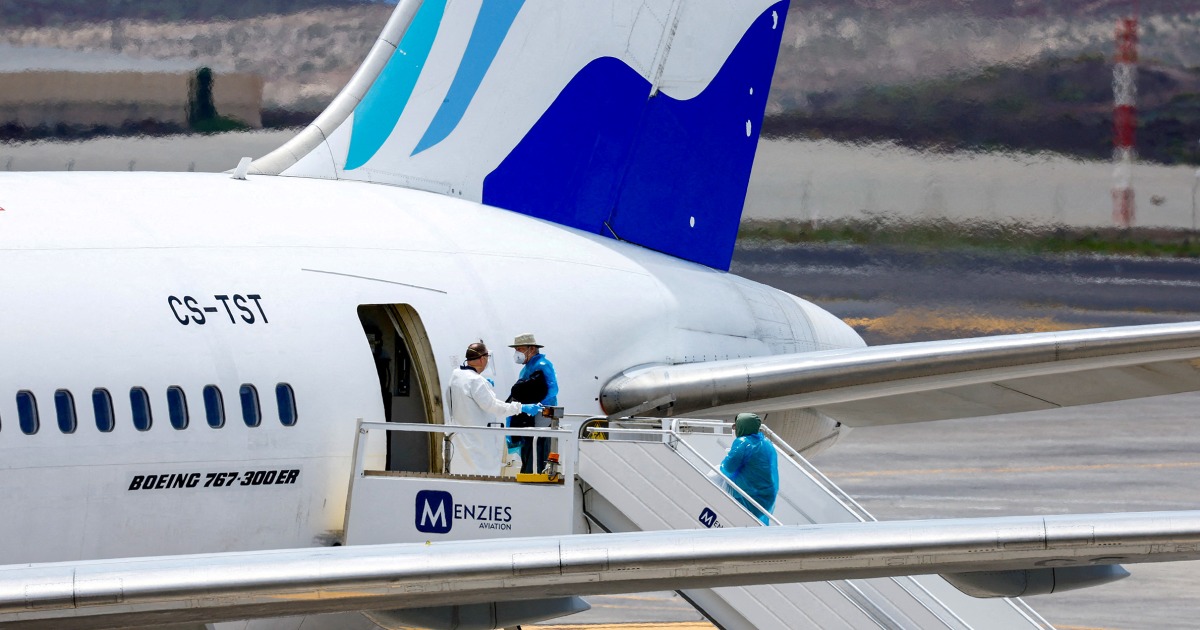
The outbreak on the MV Hondius has reached 10 cases, with eight confirmed, according to the World Health Organization. Three people have died, including a Dutch couple believed to have been first exposed to the virus during visits to South American sites inhabited by the rodent species carrying the Andes virus. After the ship docked in Spain’s Canary Islands, passengers were evacuated and repatriated to their home countries. Among them were 17 Americans and one British dual citizen, who arrived in the United States on May 11 and were monitored at the National Quarantine Unit in Nebraska.
In Canada, the Public Health Agency announced that a passenger from the MV Hondius tested positive for the Andes hantavirus and was hospitalized along with their spouse, who has mild symptoms. Both remain in isolation, and a third person in secure lodging was hospitalized for assessment and testing as a precaution. Samples have been sent to the National Microbiology Laboratory in Winnipeg for confirmatory testing, with results expected within two days. The agency emphasized that the overall risk to the Canadian public remains low but is taking precautionary measures due to the virus’s severity.
Canadian officials are monitoring 36 individuals, including four cruise ship passengers, who are currently in isolation. Meanwhile, no confirmed cases have been reported in the United States as of Friday. However, Washington state health officials are investigating six potential cases linked to the MV Hondius. Five involve individuals on an international flight with a Hondius passenger later diagnosed with the virus, and one person was exposed directly on the ship. These individuals reside in King County and eastern Washington and are under symptom monitoring.
Separately, a Washington resident tested positive for the Sin Nombre hantavirus, unrelated to the Hondius outbreak. The Sin Nombre virus is the most common cause of hantavirus cardiopulmonary syndrome in North America and is transmitted through contact with deer mice saliva, urine, or droppings. The Washington State Department of Health maintains that the public risk from any hantavirus remains very low.








Be First to Comment