Key takeaways:
- Virginia Supreme Court rules 4-3 that the Democratic redistricting proposal violated the state constitution's intervening-election requirement.
- The invalidated map would have given Democrats up to four additional U.S. House seats, leaving only one safe Republican district.
- The ruling maintains the current congressional maps for the 2026 elections, benefiting Republicans defending their narrow House majority.
The Virginia Supreme Court dealt a significant setback to Democrats on Friday by invalidating a recently approved congressional redistricting proposal that would have increased their representation in the U.S. House. In a narrow 4-3 decision, the court ruled that the process used to advance the amendment violated the state constitution, nullifying the referendum vote and maintaining the current congressional maps for the 2026 elections.
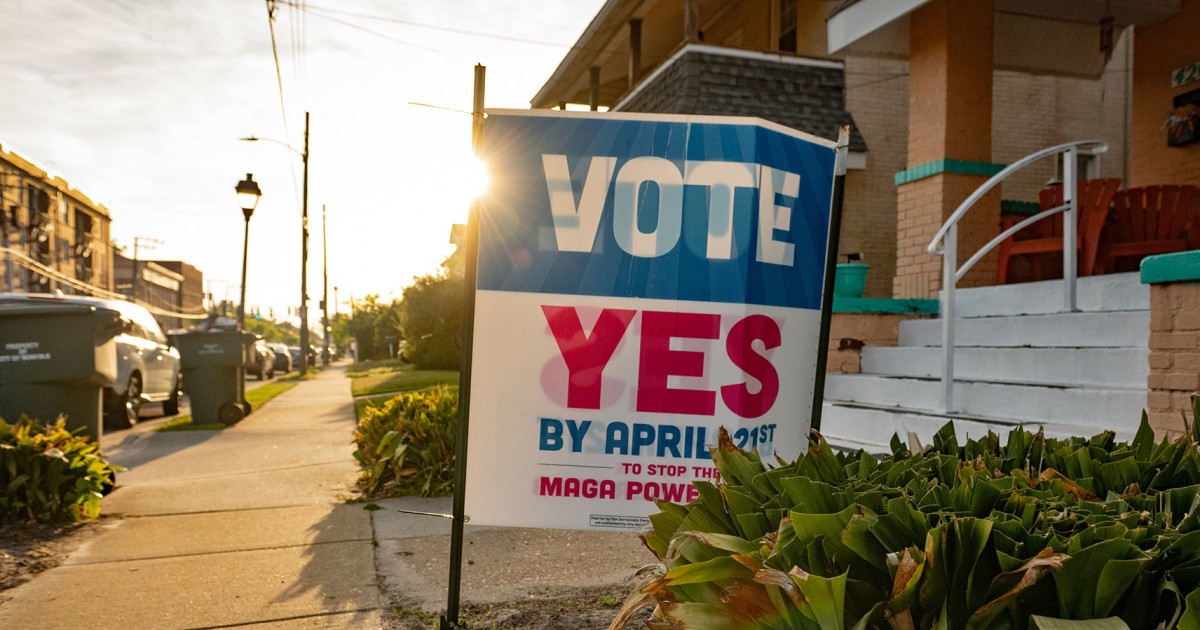
The redistricting plan, approved by Virginia voters in a special election earlier this month, was designed to give Democrats up to four additional congressional seats, potentially leaving only one safe Republican district in the state. Democrats sought to bypass the bipartisan redistricting commission established in 2020 by amending the state constitution to allow the Democratic-controlled General Assembly to redraw the maps temporarily.
However, the court found that the legislature failed to meet procedural requirements, specifically the intervening-election mandate in Article XII, Section 1 of the Virginia Constitution. This rule requires a constitutional amendment to pass through two consecutive legislative sessions with an election held in between before it can be placed on the ballot. Republicans argued that the amendment was passed too late, during early voting for the 2025 statewide elections, violating this provision.
The majority opinion stated, “This violation irreparably undermines the integrity of the resulting referendum vote and renders it null and void.” Justice Arthur Kelsey criticized the Democratic argument that early voting did not count as part of the intervening election, noting that early voters were deprived of their constitutional opportunity to influence the legislative process.
Democratic Attorney General Jay Jones said his office was reviewing the ruling and exploring legal options to defend the will of the voters. Virginia House Speaker Don Scott, a leading advocate for the redistricting effort, expressed respect for the court’s decision but emphasized that the referendum reflected the voice of the people.
Republican leaders praised the ruling. Virginia Senate Republican Leader Ryan McDougle said, “The Supreme Court ruling today affirms what we all know: you cannot violate the Constitution to change the Constitution.” The group Virginians for Fair Maps, which opposed the referendum, hailed the decision as a victory for voters against partisan gerrymandering.
The ruling is a major boost for Republicans defending their narrow House majority in the upcoming midterm elections. Alongside GOP-led redistricting efforts in other states and the U.S. Supreme Court’s recent decision limiting racial gerrymandering regulations, the decision strengthens Republican prospects nationally. Election analysts note that Republicans could gain up to 14 seats from new maps in six states, while Democrats stand to gain six.
President Donald Trump praised the Virginia Supreme Court’s decision as a “huge win for the Republican Party, and America.” Democratic Senator Tim Kaine highlighted the broader national context, contrasting Virginia’s voter-approved process with GOP-led backroom map redraws in other states.
Virginia’s current congressional delegation consists of six Democrats and five Republicans. With the new map blocked, the 2024 midterm elections will proceed under the existing district boundaries. The court’s ruling underscores the complex legal and political battles surrounding redistricting ahead of a critical election cycle.









Be First to Comment