Key takeaways:
- An internal U.S. military investigation preliminarily found that outdated intelligence led to a missile strike on an elementary school in Iran on February 28, killing over 170 civilians, mostly children, as the site was mistakenly identified as a military target.
- Six U.S. Army Reserve soldiers were killed in an Iranian unmanned aircraft system attack in Kuwait; the Pentagon is investigating, and military leaders have honored the fallen while President Trump warned of ongoing combat operations.
- The U.S. and Israel launched a large-scale operation against Iran targeting top officials, including Supreme Leader Ayatollah Ali Khamenei, prompting Iranian retaliation and international concern over violations of international law due to attacks on civilian sites.
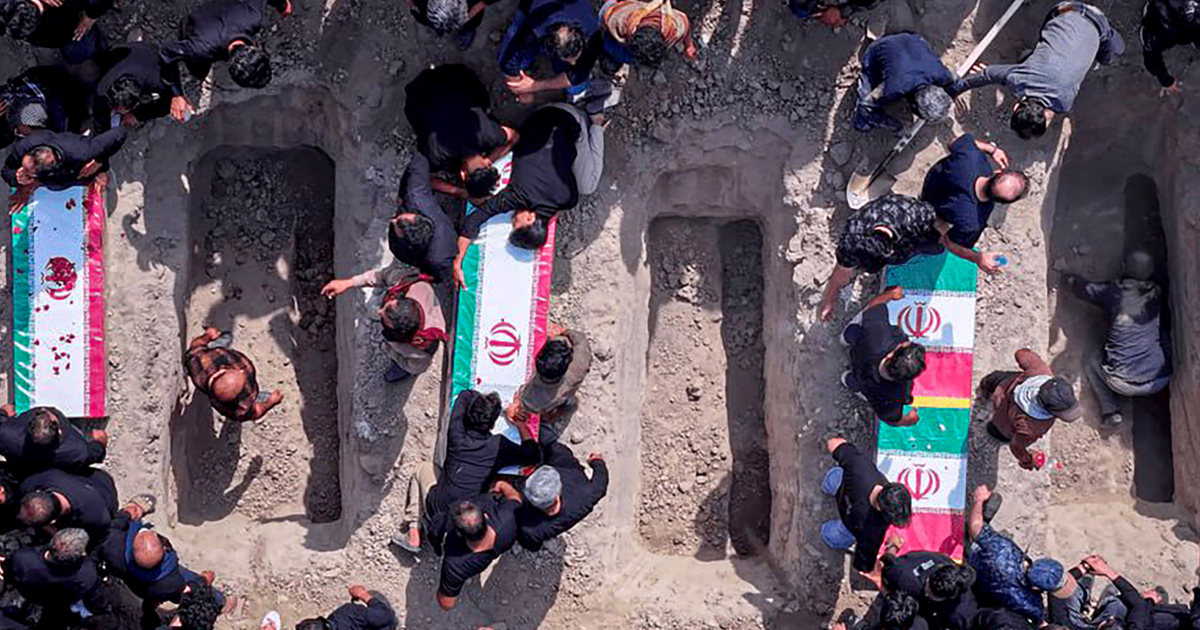
An internal U.S. military investigation has preliminarily found that outdated intelligence likely contributed to a missile strike on an elementary school in Iran, resulting in significant civilian casualties. According to four sources familiar with the investigation, an American munition was probably responsible for the attack on the Shajareh Tayyebeh elementary school in Minab on February 28. The strike occurred on the first day of a coordinated U.S. and Israeli military operation against Iran. More than 170 people, mostly children, were killed in the attack.
The investigation revealed that the munition did not miss its target but instead hit the school because old intelligence inaccurately identified the site as a military target. Witnesses and an Iranian Education Ministry official noted that the school was located on a compound that had served as a base for the Islamic Revolutionary Guard Corps until approximately 15 years ago. The Defense Intelligence Agency was among the agencies that provided targeting information, with additional intelligence likely coming from U.S. allies. Missile fragments recovered from the site bore markings consistent with an American Tomahawk missile, which is exclusively used by the U.S. in the conflict, according to experts who reviewed imagery obtained by NBC News.
Meanwhile, the Pentagon has released the names of six U.S. Army Reserve soldiers killed in an Iranian strike on a tactical operations center in Kuwait. The service members died in an unmanned aircraft system attack in Port Shuaiba, Kuwait, and were all assigned to the 103rd Sustainment Command based in Des Moines, Iowa. The fallen soldiers are Capt. Cody A. Khork, Sgt. 1st Class Noah L. Tietjens, Sgt. 1st Class Nicole M. Amor, Sgt. Declan J. Coady, Maj. Jeffrey O’Brien, and Chief Warrant Officer 3 Robert M. Marzan. The Defense Department is investigating the incident.
Military leaders and officials have paid tribute to the fallen soldiers. Lt. Gen. Robert Harter, chief of the U.S. Army Reserve, honored their service and sacrifice, while Maj. Gen. Todd Erskine emphasized their role in keeping the nation safe. Families of the deceased have shared personal reflections, highlighting their patriotism and dedication. President Donald Trump expressed condolences and warned of potential further casualties, stating that combat operations would continue until all objectives are achieved.
The U.S. and Israel launched a large-scale military operation against Iran on February 28, targeting the compound of Supreme Leader Ayatollah Ali Khamenei in Tehran and reportedly killing him along with other Iranian officials and commanders. Iran has since retaliated with strikes against Israel and U.S.-allied nations in the Middle East. The U.S. administration anticipates the campaign will last four to five weeks, describing it as the “last best chance” to address threats posed by Iran’s ballistic missile and nuclear programs. The United Nations has expressed grave concern over the attack on the functioning school, noting that intentional attacks on educational buildings during class hours constitute serious violations of international law.






Be First to Comment