Key takeaways:
- Puente resigned Tuesday and withdrew from the November 29 election after the October 28 collision killed at least 69 people.
- A Renfe train struck a stationary Iryo train after a signalling failure on the Madrid-Seville line.
- Spain has reduced service on the line during a safety review and announced a 30-million-euro aid package.
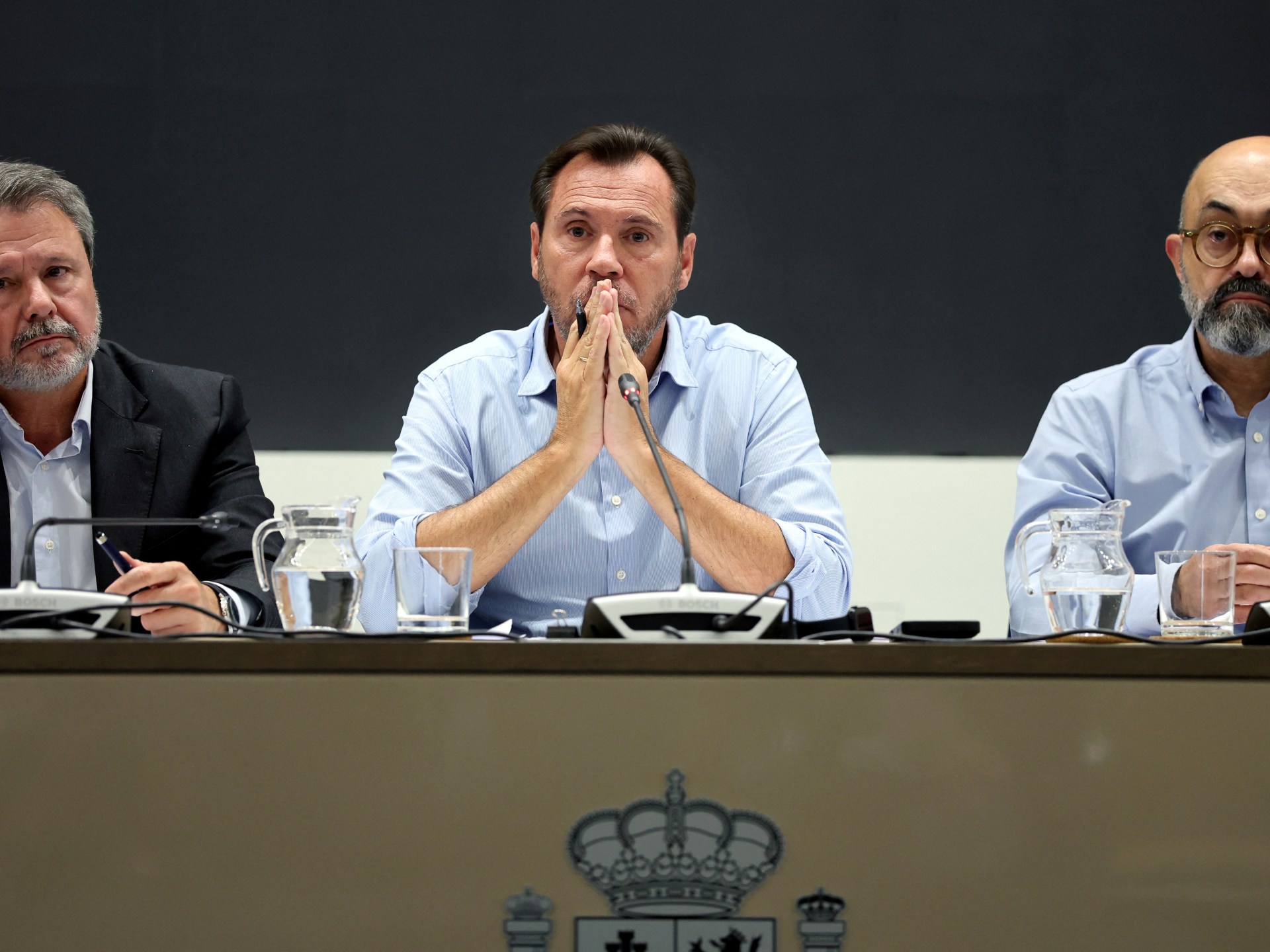
Spain’s transport minister resigned Tuesday, six days after a high-speed train struck a stationary train near the town of Urda, killing at least 69 people and injuring dozens. Oscar Puente said he could not remain in office after two deadly rail accidents in less than a year.
“A transport minister in a country like Spain cannot remain in office after two accidents of this seriousness in less than a year,” Puente told Congress. He was referring to a crash in January that killed 46 people. He also withdrew his name from the lists for the early general election scheduled for November 29.
Puente announced his departure at the end of a lengthy congressional session in which he outlined rail safety measures and faced questions from opposition lawmakers. He said he had decided to resign immediately after the latest collision but stayed while the government coordinated its initial response, according to Al Jazeera. He described his decision as one of “political dignity.”
The October 28 crash occurred on the Madrid-Seville line in central Spain. A high-speed train operated by state-owned Renfe hit the back of a stationary train run by private operator Iryo. The Renfe train carried 397 passengers, while 147 were aboard the Iryo train, the BBC reported. Iryo said its carriages were “struck from behind.”
A signalling failure had brought trains on that stretch of track to a halt. Controllers in Madrid then authorised the Renfe train to proceed, according to Al Jazeera. Recordings of exchanges between drivers and the control centre, published by Spanish media and described by the BBC, appear to show that the Renfe driver was cleared to continue at normal speed while the Iryo train remained stopped about 25 kilometres (15 miles) ahead.
In one recording, the Renfe driver asked, “At normal speed?” after receiving clearance. The controller answered, “Yes.” In another exchange, the Iryo driver told the control centre the train was still stopped because its security system would not allow the driver to move it. The recordings suggest controllers had been told the Iryo train remained stationary as the Renfe train approached, the BBC reported.
The conservative People’s Party, the far-right Vox party and some government allies had called for Puente to step down. Opposition politicians also criticised him for appearing to blame human error, saying he was deflecting responsibility from his own failings, according to the BBC. Prime Minister Pedro Sánchez has said the rail system’s credibility was “broken,” the BBC reported.
Sánchez praised Puente for having “faced up to the situation, provided answers and solutions, and then stepped aside.” He added: “Out of dignity. Of his own accord. Out of respect for the victims.”
Services on the Madrid-Seville line have been reduced while the Railway Safety Agency reviews its safety system and the government completes a delayed rollout of a European rail traffic management system, Al Jazeera reported. Planned measures also include an artificial intelligence tool to detect anomalies and monitor conversations between drivers and controllers.
The government has announced a 30-million-euro ($33.5 million) aid package for victims and their families, Al Jazeera reported. Bereaved families are to receive 72,121 euros ($80,776) in direct aid and the same amount in advance compensation.




Be First to Comment