Key takeaways:
- Initial projections give the opposition bloc 52 to 53 seats, Netanyahu’s bloc 50 and Arab parties 17 to 18 in the 120-seat Knesset.
- Netanyahu’s Likud is projected to be the largest individual party, but neither bloc has a clear majority.
- The parties may negotiate a coalition or minority government; failure to form one would trigger another election.
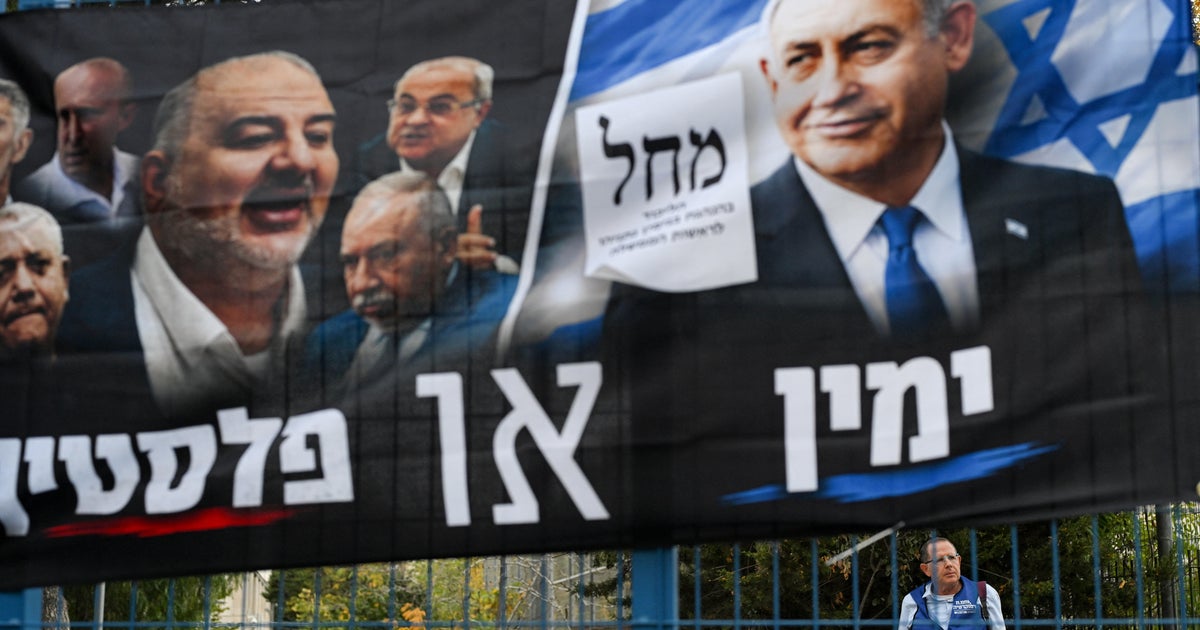
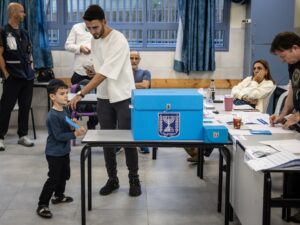
Israel’s election has produced no clear winner, according to television exit polls, setting up a contest over who can assemble a government after voters went to the polls with the country still at war.
Initial projections put the main opposition bloc at 52 to 53 seats in the 120-seat Knesset, Prime Minister Benjamin Netanyahu’s bloc at 50 and Arab parties at a combined 17 to 18, Al Jazeera reported. Neither the parties backing Netanyahu nor the main Jewish-led opposition alliance has a majority.
Netanyahu’s Likud emerged as the largest individual party, CBS News reported, even as the early polls suggested that more voters backed parties outside his coalition. Both sides now face a difficult round of negotiations. A governing coalition needs majority support in parliament.
The vote was Israel’s first since the Oct. 7, 2023, Hamas attacks, which authorities have acknowledged as the country’s most catastrophic security failure since its founding in 1948, according to CBS News. Israel is still fighting in Gaza, Lebanon and Syria after three years of war on multiple fronts and two direct rounds of conflict with Iran. Netanyahu has advocated renewed strikes on Iran.
Netanyahu, Israel’s longest-serving prime minister, is seeking another coalition with ultranationalist and Jewish religious parties. He has told voters that Israel’s military campaigns are unfinished and that he needs more time to complete them. His leading challenger is Gadi Eisenkot, a former military chief who heads the centrist Yashar party and is the front-runner to lead the opposition’s “change bloc.” Its parties differ on policy but share a desire to remove Netanyahu.
Eisenkot served alongside Netanyahu in the war cabinet for much of the first year of the Gaza war. He lost a son and two nephews while they were serving in the military in Gaza. He has presented himself as a veteran seeking to reunite a country he says Netanyahu has divided. About half of Yashar’s candidates are women, CBS News reported.
The projected strength of the Arab parties could prove pivotal. They won more seats than in any previous election, CBS News reported, citing what some Arab voters described as a difficult period under Netanyahu’s hard-right government and historic turnout among the minority community. Arab citizens make up about 20% of Israel’s population. Netanyahu and his opponents have both pledged not to form a government reliant on Arab parties, arguing that such reliance could give them influence over the country’s conflicts.
President Donald Trump endorsed Netanyahu last week and reiterated support for the war the two leaders launched jointly against Iran almost eight months ago, CBS News reported. “If Israel has the wrong Leader, which would be anyone other than Bibi, America will have to do this work ourselves, and I am not inclined to do so,” Trump wrote on Truth Social.
Negotiations could take weeks. Parties or lawmakers could change sides, or the opposition could seek a minority government with Arab parties voting for it or abstaining, CBS News reported. If neither side can form a government, Israel would face another election. It held five between 2019 and 2022 amid electoral deadlock.






Be First to Comment