Key takeaways:
- The Hōlei Sea Arch collapsed sometime between Sept. 23 and Sept. 27, according to CBS News; the National Park Service said the exact time is unknown.
- The roughly 550-year-old formation had shown damage and cracks before its collapse, prompting officials to move its viewing area in 2020.
- Park officials warned visitors to stay out of the closed area near the former arch because the coastal cliffs pose a serious falling hazard.
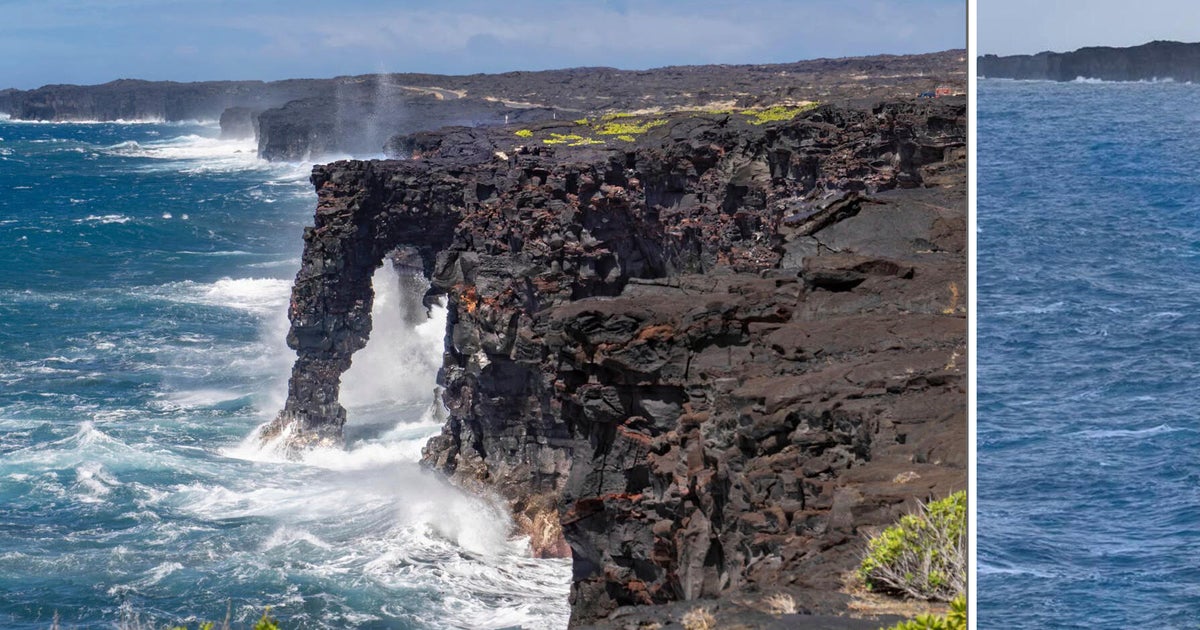
The Hōlei Sea Arch, a 90-foot landmark on the coast of Hawaiʻi’s Big Island, has collapsed into the Pacific Ocean after centuries of exposure to pounding waves, the National Park Service said. The agency does not know exactly when the arch fell or whether a tropical storm played a role.
The formation in Hawaiʻi Volcanoes National Park collapsed sometime between Sept. 23 and Sept. 27, according to CBS News. The park was temporarily closed during Tropical Storm Nolo, which brought heavy rain, wind and sizable swells to the area.
“The exact time of the collapse is unknown and could have occurred when the park was temporarily closed during Tropical Storm Nolo,” the park service said.
The arch was formed from lava flows about 550 years ago and gradually shaped by the sea. Its name, Hōlei, comes from a small endemic plant in the milkweed family, CBS News reported. The park service described its loss as “the latest transformation of the park’s remote and rugged coastline.”
Signs of the arch’s vulnerability had appeared years earlier. The 2018 Kīlauea eruption shook the ground and damaged nearby cliffs, according to the park service. After new cracks appeared in the arch and its surroundings in early 2020, park officials moved the viewing area farther from the coastal edge. Later that year, massive surf from Tropical Storm Darby broke a chunk of rock from the arch’s lower section.
The U.S. Geological Survey described the arch as a product of “differential erosion by ocean waves.” Waves removed material along cracks and weaker sections of basalt rock, slowly carving the formation. “Every day the ocean crashes against the pillar of the arch, eroding it a little more,” the agency said in its description of the landmark. “One day, it will be gone.”
“This formation is beautiful, but temporary, and has a limited life span,” the park service said.
Officials are now warning visitors not to approach the site. The surrounding cliffs are unstable and drop vertically into rough water. The park service said social media photos show people entering a closed area near where the arch stood, risking both their lives and the safety of anyone called to rescue them.
“Visitors are urged to stay back from the unstable coastal cliff edges which drop off vertically into the ocean and present a serious falling hazard,” the agency said.
CBS News reported that Nolo reached winds of 155 mph as it moved past the Big Island. Hawaii Gov. Josh Green said the Trump administration approved an emergency declaration to provide federal resources and assistance for the state’s recovery from the storm. The park service has not established that Nolo caused the arch to fall.








Be First to Comment