Key takeaways:
- Burnham says Labour will keep the state pension triple lock through the current Parliament, then change how annual increases are calculated from April 2030.
- He pledges a National Care Service in England that is free at the point of use and promises legislation to allow public ownership of water companies.
- Labour will fight the next election on a pledge to change the voting system, Burnham says.
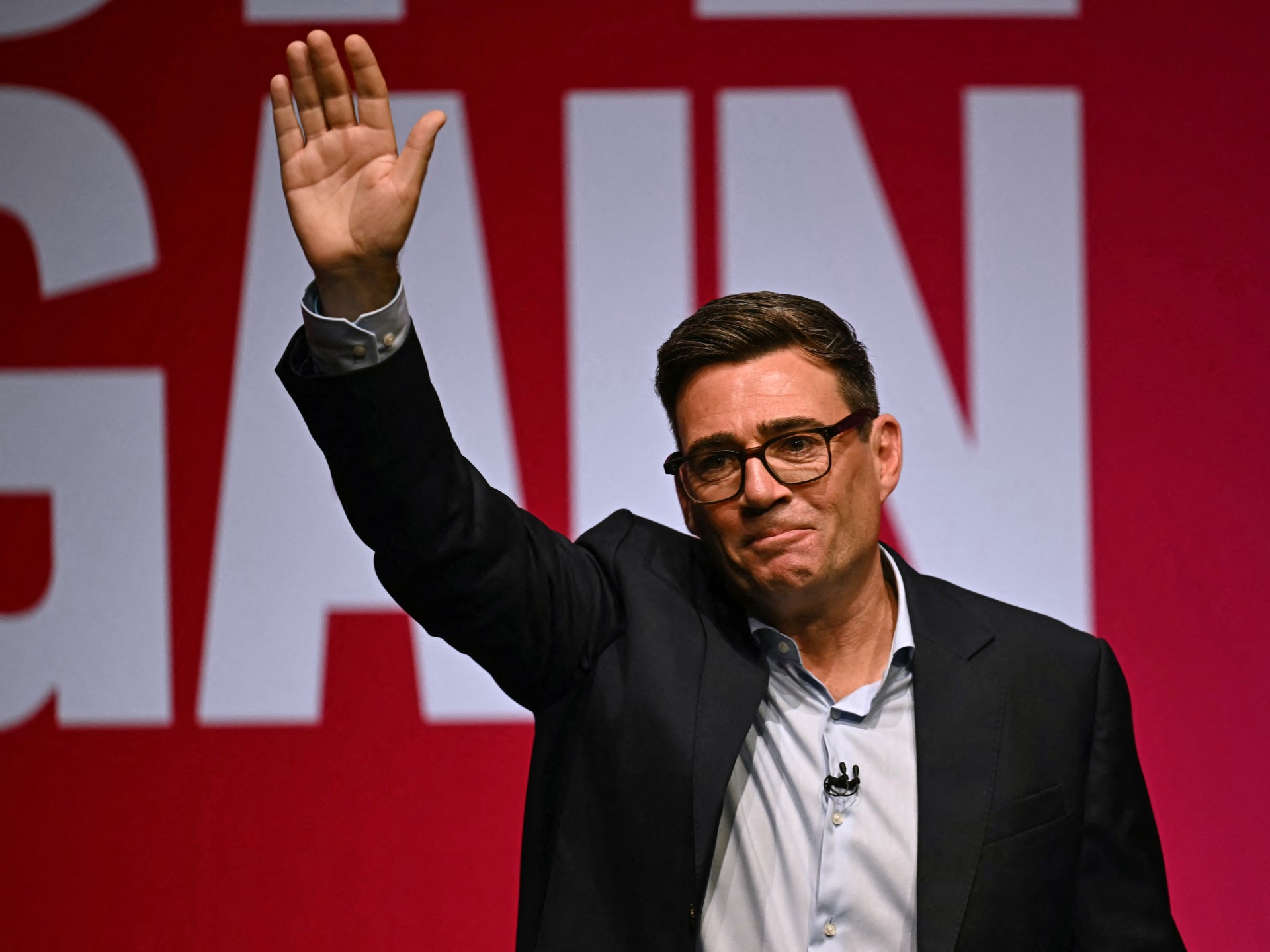
British Prime Minister Andy Burnham pledged a major expansion of public services and a change to future state pension increases in his first Labour Party conference speech as party leader and prime minister, telling delegates in Liverpool that Britain needed to break with decades of policy.
“Britain has been on the wrong path for a long time,” Burnham said Tuesday. He promised to “make a break with the direction of the past 40 years and put Britain on a new path,” arguing that “more of the same isn’t good enough.”
The speech set out plans for a National Care Service in England, changes to the pension system and a greater public role in utilities. Burnham said the care service would be free at the point of use, with everyone contributing and everyone covered. He described it as “person-centred, high-quality” care that would not erode people’s savings and would give care workers “proper recognition.”
To help pay for it, Burnham said he would honour Labour’s commitment to the state pension triple lock until the end of the current Parliament. The guarantee raises pensions each year by whichever is highest: inflation, average earnings growth or 2.5%.
From April 2030, pensions would instead rise by inflation or 2.5%, whichever is higher, with additional increases in some years when needed to keep pace with average worker earnings, the BBC reported. Burnham said the change would generate significant savings for the care service. Al Jazeera reported that he also pledged that low-income pensioners would not pay income tax during the current Parliament.
“I accept I may pay a political price,” Burnham told delegates. “But someone has to go through the pain barrier and rip the plaster off.”
On utilities, Burnham promised legislation later this year to repeal what he called former Prime Minister Margaret Thatcher’s “ideological ban on public ownership of water companies.” He said it would set the country on a 10-year path to a different water system, though he did not explicitly commit to renationalisation, according to the BBC.
He also announced a publicly owned “Great British Grid” to challenge private electricity operators, increase competition, lower costs and speed up connections, Al Jazeera reported. On housing, he said Labour wanted to make home ownership easier for young people by reducing the deposit needed to buy a property, according to Al Jazeera.
Burnham announced a national commission on electoral reform and said Labour would fight the next election on a pledge to change the voting system. “We will contest the next election with a manifesto commitment to change the electoral system so that everyone’s vote counts and everyone’s voice is heard,” he said.
On foreign policy, Burnham pledged continued support for Ukraine and said he would stand up to threats from Russia and Iran, Al Jazeera reported. He also backed Foreign Secretary Ed Miliband’s approach to securing a two-state solution between Israel and Palestine.
Near the end of the speech, Burnham paid an emotional tribute to his father, Roy, who died of Alzheimer’s earlier this month. Recalling his family’s first day in Downing Street, he said: “The son of a man who failed his 11-plus becoming prime minister.” He pledged to build “the kind of Britain my dad wanted to see.”



Be First to Comment