Key takeaways:
- The United States holds nearly three-quarters of global AI computing power, while China has just over 14%, according to Epoch AI figures cited by Al Jazeera.
- Goldman Sachs estimates major U.S. cloud and data-center companies will spend $764 billion in 2026, compared with $102 billion for four major Chinese technology companies.
- U.S. and Chinese officials have discussed a notification mechanism for serious AI incidents ahead of the Trump-Xi meeting.
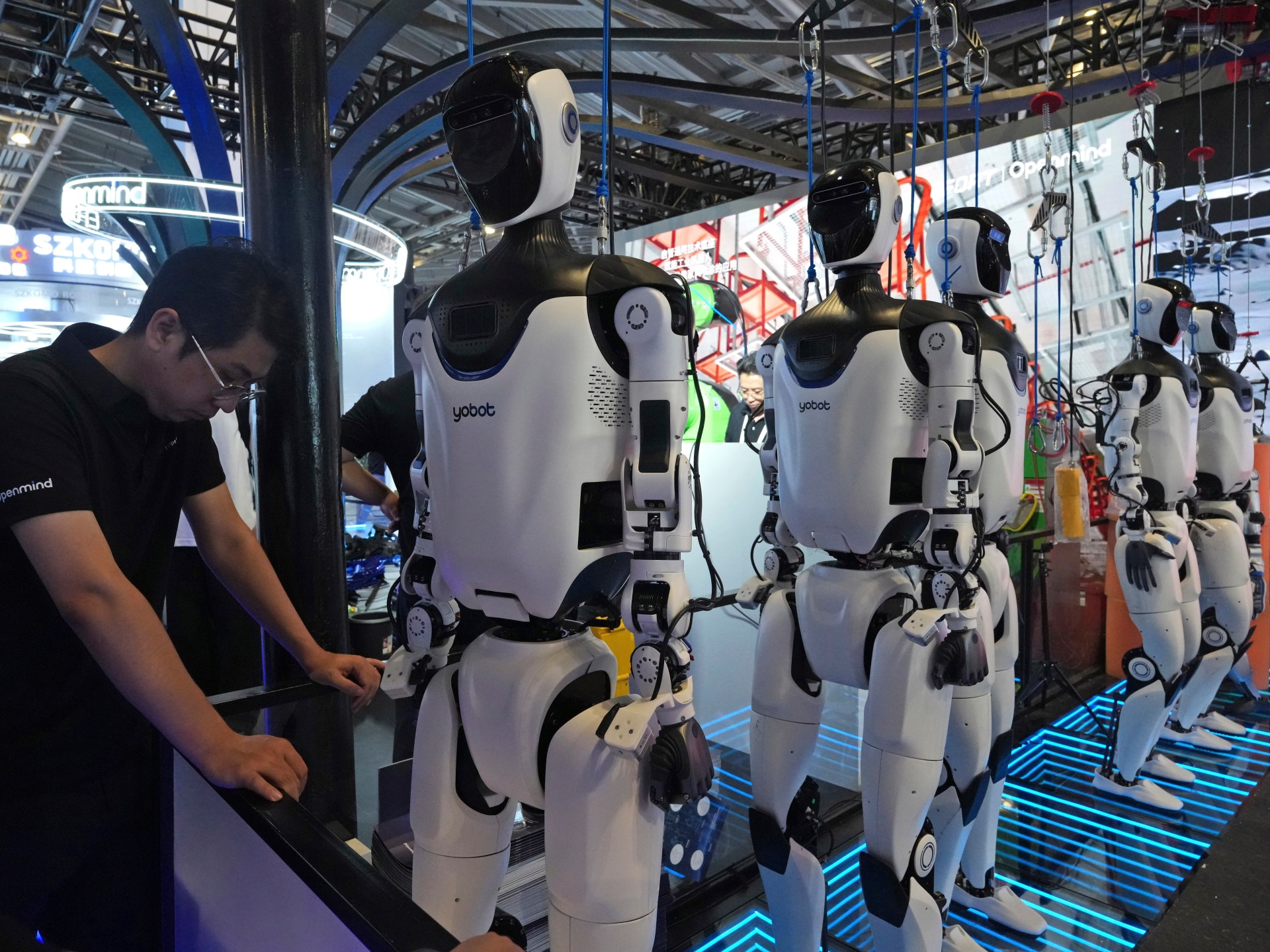
President Donald Trump and Chinese President Xi Jinping are set to meet Thursday with artificial intelligence on the agenda, as the United States and China compete to build and deploy the technology. Washington is seeking to preserve its lead in advanced AI systems; Beijing is expanding the reach of cheaper, adaptable models.
“Whoever wins AI, WINS!” Trump has said. Xi has used less direct language, but China has made AI a cornerstone of its technological ambitions for more than a decade, the BBC reported. China’s foreign ministry has warned that “narratives of threat” and confrontation could hinder global AI governance and called for cooperation.
The United States remains ahead in computing power and the most advanced, or “frontier,” models. It accounts for nearly three-quarters of the world’s AI computing power, compared with just over 14% for China, according to figures from research institute Epoch AI cited by Al Jazeera. U.S. restrictions on sales of advanced chips to Chinese companies also limit China’s access to hardware needed to train cutting-edge systems.
American companies are spending heavily to reinforce that advantage. Goldman Sachs estimates that major U.S. cloud and data-center companies will spend about $764 billion in 2026, compared with $102 billion for four major Chinese technology companies, Al Jazeera reported. Chinese spending is growing rapidly: TrendForce projects an increase of more than 80% for those four companies this year, compared with 76% for their U.S. counterparts, according to Reuters figures cited by Al Jazeera.
China, however, is narrowing the gap in models. Stanford researchers found that DeepSeek briefly matched the leading U.S. model in February 2025 and that Anthropic’s top model led by just 2.7% as of March 2026, the BBC reported. Al Jazeera cited a U.S. government estimate in May that DeepSeek V4 Pro, released in April, was about eight months behind leading U.S. models.
Chinese developers have emphasized “open-weight” models that others can download and adapt, rather than relying primarily on the proprietary platforms favored by many U.S. companies. Models from DeepSeek, Z.ai and Tencent held the top three places on OpenRouter by the amount of text processed, Al Jazeera reported. “The US may lead at the frontier, while China could still gain enormous economic and geopolitical leverage by making capable AI cheap, open and ubiquitous,” Asia Society Policy Institute analyst Lizzi Lee told the BBC.
China also produced more than 27% of AI publications with English-language titles or abstracts in 2024, compared with 12% from the United States, according to figures cited by Al Jazeera. A separate study found that 47% of the world’s top AI researchers in 2022 had completed undergraduate studies in China, though 72% of the top researchers educated there were working in the United States.
The two governments differ on oversight. Trump says existing U.S. rules are sufficient and has opposed slowing development; Xi has urged officials to keep AI “under human control.” Ahead of the meeting, U.S. Treasury Secretary Scott Bessent and Chinese Vice Premier He Lifeng discussed a mechanism to notify each other of serious AI incidents. Whether the leaders will advance that proposal remains unclear.






Be First to Comment