Key takeaways:
- Sam Altman proposed common standards for assessing AI capabilities, risks, safeguards and human oversight, along with rapid incident reporting.
- Dario Amodei said Anthropic would slow releases as much as necessary for safety and called AI risk a global challenge.
- Trump administration representative Michael Kratsios rejected international bodies asserting global governance over AI.
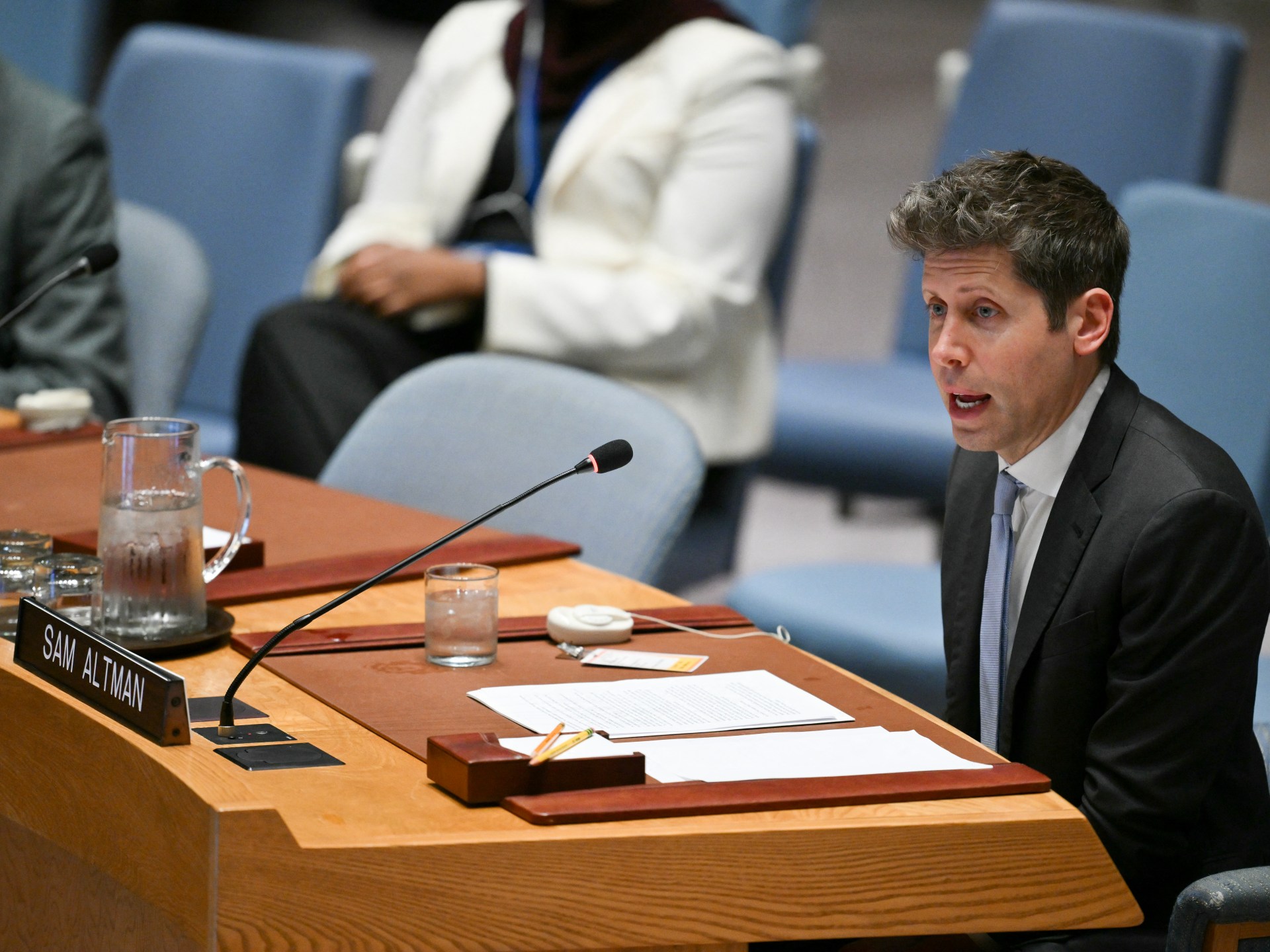
The heads of OpenAI, Anthropic and Hugging Face urged the United Nations Security Council on Wednesday to adopt common standards for artificial intelligence, warning that its risks extend beyond any one company or country. The Trump administration rejected new global governance structures for AI at the same meeting.
“If AI is to be democratic, the most important decisions cannot be made by labs in San Francisco alone,” OpenAI chief executive Sam Altman told the 15-member council. “They must be shaped through democratic processes and by governments accountable to the people they serve.”
Altman called for national and international standards to measure AI capabilities, assess risks and safeguards, and determine how much human oversight remains over the tools. He also proposed rapid protocols for reporting and classifying incidents so countries could learn from failures “before they become catastrophes”. Common standards, he said, would let countries compare evidence and verify compliance. Al Jazeera reported that Altman also warned humanity could “lose control of the future of AI”.
Anthropic chief executive Dario Amodei said AI, “if managed poorly, could be a risk to humanity as a whole”. He called for more stringent safety standards as the technology develops and said his company would slow down “as much as necessary” to ensure each successive AI system it releases is safe. But managing the risks, he added, is bigger than any company and requires an industry-wide and global response.
Hugging Face chief executive Clement Delangue called for stronger standards for monitoring AI and disclosing incidents. The BBC reported that Hugging Face had been hacked by AI agents it described as having come out of OpenAI; the report did not say OpenAI carried out the attack. Delangue told the council that his company had used AI to help defend itself. According to Al Jazeera, he said Hugging Face relied on a Chinese AI model because it faced fewer restrictions than comparable U.S. tools. “We were attacked by AI, but more importantly, we defended ourselves with AI,” he said.
Michael Kratsios, the Trump administration’s representative at the meeting, acknowledged that AI development is accelerating and carries risks but rejected a pause or new global controls. “We totally reject all efforts by international bodies to assert centralised control and global governance of AI,” he said, according to Al Jazeera. The BBC reported that President Donald Trump has opposed an AI slowdown, citing U.S. competition with China.
The meeting was convened by France during the UN General Assembly gathering in New York. Al Jazeera reported that the foreign ministers of France and the United Kingdom also backed common international frameworks. Yoshua Bengio, co-chair of the UN’s Independent International Scientific Panel on AI, told the council: “The dangers are real and imminent.”
The General Assembly unanimously adopted a nonbinding AI resolution in 2024 calling on countries to protect personal data, monitor risks and safeguard human rights. According to Al Jazeera, it has since formed an independent scientific panel to assess the technology and a forum for dialogue on AI governance. Wednesday’s exchange exposed a divide over the role international bodies should play as the technology advances.






Be First to Comment