Key takeaways:
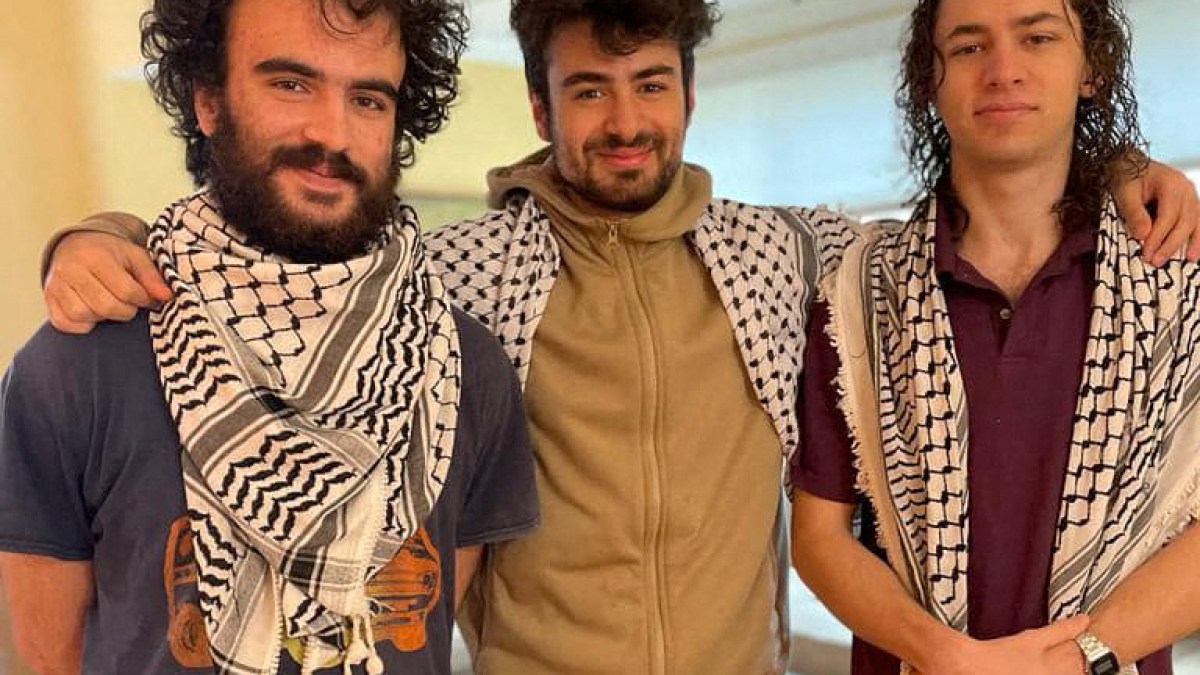
- Jason Eaton, 51, was convicted of attempted murder in the November 2023 shooting of Hisham Awartani, Tahseen Aliahmad and Kinnan Abdalhamid near the University of Vermont campus.
- Eaton did not dispute being the shooter, but jurors rejected his defense that he was not guilty by reason of insanity because he believed the CIA, Mossad and God were directing him.
- Awartani was paralyzed from the waist down; Aliahmad was shot in the collarbone and Abdalhamid was shot in the right buttock.
A Vermont jury convicted Jason Eaton of attempted murder in the 2023 shooting of three Palestinian college students near the University of Vermont, rejecting his claim that he was insane and believed he was acting under orders from intelligence agencies and God.
Eaton, 51, faces up to life in prison for the attack in Burlington, which left Hisham Awartani paralyzed from the waist down and wounded his friends Tahseen Aliahmad and Kinnan Abdalhamid. Sentencing has not yet been scheduled. Eaton was ordered held in jail after the verdict.
The jury deliberated for several hours Monday after a weeklong trial that included testimony from the three men and psychiatric experts for both the defense and prosecution. Eaton stared ahead blankly as the verdict was read. Awartani and Aliahmad, seated in the front row of the courtroom gallery, smiled and hugged people around them.
“Justice has been rendered for Hisham, Kinnan and Tahseen. After three years of sorrow, loss, and struggle, our families finally feel relief,” the families of the three men said in a joint statement. “The verdict cannot undo what happened or erase the trauma our families still carry. But it affirms something fundamental: Jason Eaton is responsible for what he did.”
Eaton had pleaded not guilty but did not dispute that he shot the three men in November 2023. His lawyers argued that he should be found not guilty by reason of insanity, saying he suffered from a delusional psychotic disorder after losing his job at a credit union two weeks before the shooting.
The defense said Eaton believed the CIA and Israel’s Mossad were sending him messages through FM radio. Joshua O’Hara, supervising attorney at the Chittenden County Public Defender Office, told jurors Eaton believed the agencies had assigned him to “overwatch duty” to protect a Jewish family across the street and that God was commanding him to act.
Prosecutors rejected the insanity defense. Al Jazeera reported that they told jurors a state psychiatrist had concluded Eaton did not have a mental disease or defect and that the evidence showed he intended to kill the three men. If Eaton had been found not guilty by reason of insanity, he could have been ordered to undergo mental health treatment.
Awartani, Aliahmad and Abdalhamid, all now 23, grew up together in Ramallah in the occupied West Bank before moving to the United States for college. They were visiting Awartani’s grandmother in Burlington over the Thanksgiving holiday and had gone bowling to celebrate the birthday of Awartani’s twin cousins before taking a walk near campus after dusk.
Awartani testified that the friends were smoking cigarettes and speaking a mix of English and Arabic. Two were wearing keffiyehs, traditional Palestinian scarves. He said he noticed Eaton standing on the porch of the apartment building where Eaton lived. Within seconds, Eaton walked toward them without speaking, his face expressionless.
When Eaton was about five to 10 feet away, Awartani testified, “he pulled out a handgun and started shooting at us.”
Awartani, then a Brown University student, was shot in the chest and paralyzed from the waist down. Aliahmad, who attended Trinity College, was shot in the collarbone. Abdalhamid, a Haverford College student, was shot in the right buttock. Al Jazeera reported that police later found three shotguns in Eaton’s apartment and a Ruger.380-caliber handgun that crime laboratory testing identified as the weapon used in the shooting.
The attack prompted calls for a hate crime investigation, but no hate crime charges were filed. In their statement, the families said Eaton repeatedly used “hateful” words to describe their sons during the trial and said they viewed the shooting as a hate crime.
“They were not the words of a man confused about who he shot, or why,” the families said. “They are the words of a man who saw three young men celebrating their friendship and wearing what made them feel closer to their far away families and home – and decided to kill them because of his own prejudices.”





Be First to Comment