Key takeaways:
- Nine women have been found dead in Ekurhuleni, east of Johannesburg, in about two months, and police say they have not established that all cases are connected.
- Elizabeth Moselakgomo, a 38-year-old mother and runner, disappeared during her usual run and was later found dead, prompting memorial runs across South Africa.
- South Africa records more than 100 reported rape cases and about 15 women killed daily, according to police statistics cited by NPR.
The killing of nine women in the same area east of Johannesburg has intensified anger and fear in South Africa, where police are investigating whether the deaths are connected and women’s rights groups say the cases reflect a wider national crisis of gender-based violence.
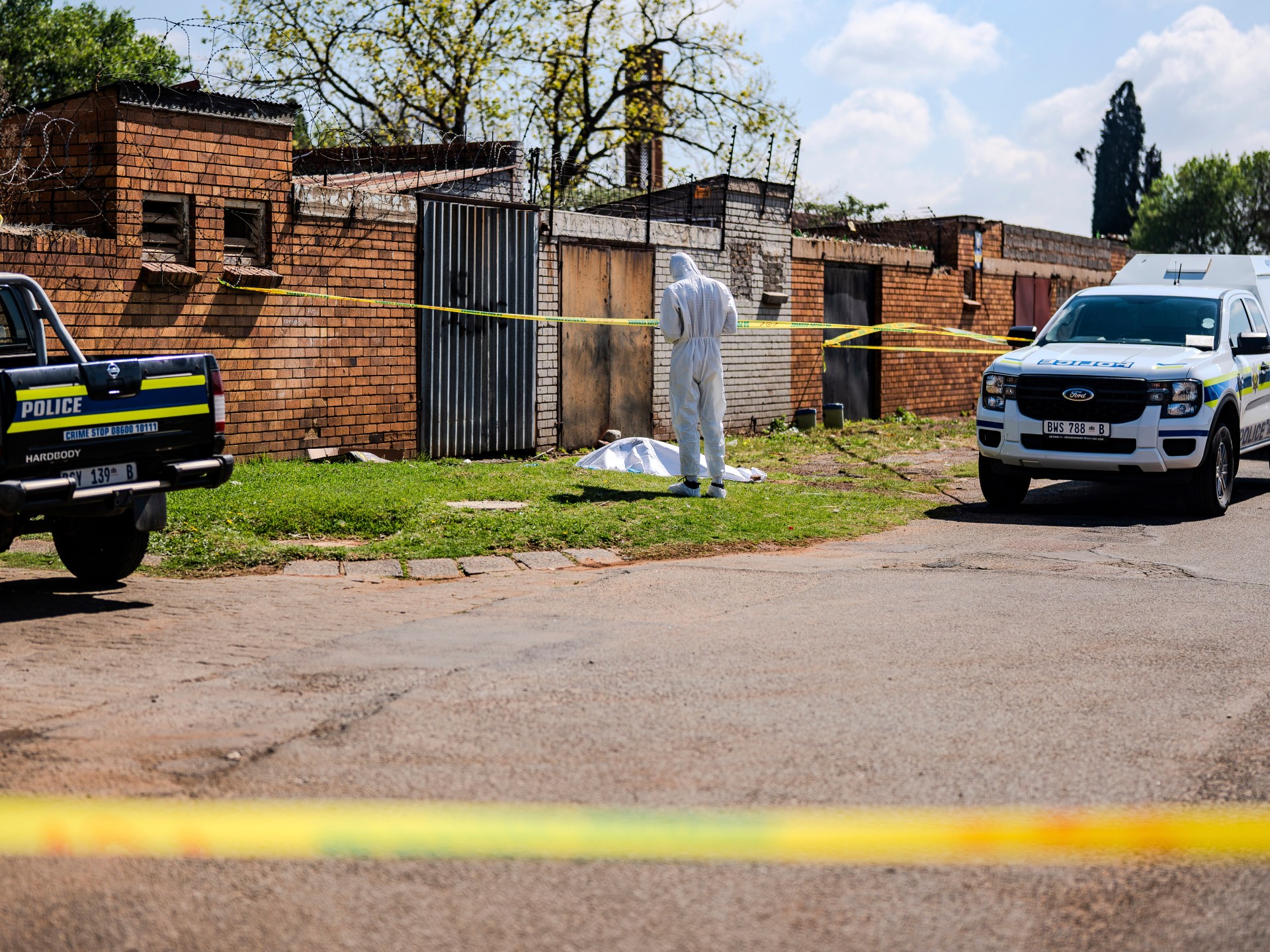
The latest victim was found Thursday morning in Dawn Park, a residential area of Boksburg in Ekurhuleni municipality, east of Johannesburg, Al Jazeera reported. She was believed to be in her 30s and was found half-naked and wrapped in a sheet.
Police say nine women have been found slain in the area in about two months, most of them within a few weeks. NPR reported that the majority were sexually assaulted. Authorities have not ruled out a serial killer, but they have also said they have not established links among all the cases.
“We are still investigating whether we are dealing with one perpetrator or a group of men that are behind the murders of these women,” South African Police Service spokesperson Athlenda Mathe told Reuters on Sept. 15, according to Al Jazeera. Mathe said investigators were also examining whether copycat crimes could be involved. “This is not an investigation that you can rush, because it is quite complex,” she said. “It may at this stage involve multiple perpetrators. But let’s leave it to the detectives.”
Among the victims was Elizabeth Moselakgomo, a 38-year-old manager, mother and runner who disappeared after leaving for her usual run near the Johannesburg airport. NPR reported that when she failed to return, her 8-year-old daughter called relatives, who contacted police, and that Moselakgomo’s half-naked body was found five days later with her face badly beaten. Al Jazeera reported she left home about 5:30 p.m. on Sept. 9 and was found dead on Sept. 12.
The killings have prompted protests in Kempton Park, where many of the deaths occurred, and in Cape Town. Running clubs around the country have also held events in Moselakgomo’s honor and in memory of the victims. At one Johannesburg run, participants dressed in black and observed a minute of silence.
“Gender-based violence, but particularly femicide, is such a big issue in South Africa. As a woman you can’t do anything alone,” runner Shari Maluluke, 26, told NPR. “You jog, you can get killed, you go to the post office, you can get killed, in your homes you can get killed…It just makes me angry that I can’t move freely, my whole country feels like a prison.”
South Africa records more than 100 reported rape cases and about 15 women killed daily, according to police statistics cited by NPR. Parliament says the country’s femicide rate is five times the global average, Al Jazeera reported.
President Cyril Ramaphosa has promised that “no stone will be left unturned” in the search for those responsible, and authorities say patrols and deployments have increased in high-risk areas. But critics say the government has not done enough since gender-based violence and femicide were classified as a national disaster in November 2025.
“Women in South Africa continue to be hunted and denied the most basic right to life and security,” said Shenilla Mohamed, Amnesty International’s South Africa director. “Women are tired of platitudes. We want to know what is going to be done to make women and children feel safe.”
Police warnings urging women to be vigilant, avoid isolated areas and not walk or run alone have also drawn criticism. “A lot of the women in South Africa right now are saying, ‘You are basically telling us to adjust our lives to perpetrators,’” Princess Eurika Mogane, a commissioner at South Africa’s Commission for Gender Equality, told Al Jazeera. “This is a war. It feels like individuals are being hunted.”
The National Shelter Movement of South Africa said its helpline and shelters are seeing increasingly severe abuse, including death threats, stalking, strangulation, coercive control and repeated violations of protection orders. “These are not isolated incidents,” the group told Al Jazeera. “They are indicators of a broader crisis in which violence against women has become deeply normalised in many communities.”





Be First to Comment